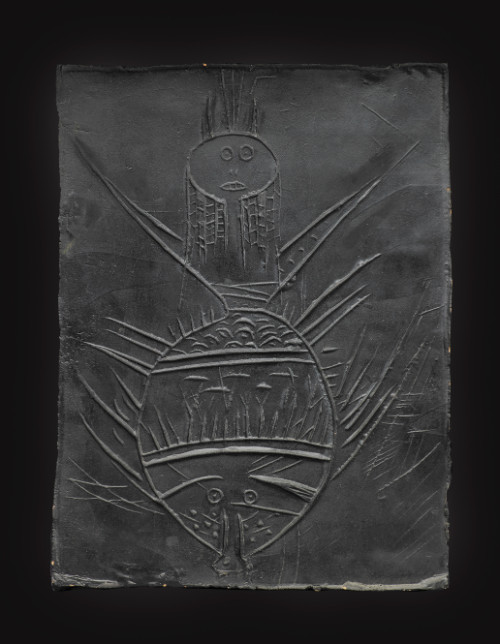
Glazed ceramic, black in color. Abstract portrayal of an androgynous figure with devil horns, upraised arms and a rounded belly. It is surrounded by rays that seem to portray hair and/or protrusions from the body. A mythical or religious idol, it seems part human,plant, animal and supernatural creature.
Ídolo (Idol)
Courtesy of the Harn Museum of Art, Photography by Randy Batista

Ídolo (Idol)

Artist Wifredo Lam (Cuban, 1902 - 1982)
Date1958
Place of originCuba, North and Central America
MediumTerracotta black glazed relief
Dimensions15 × 11 1/2 × 1 5/8 in. (38.1 × 29.2 × 4.1 cm)
ClassificationsSculpture
Credit LineMuseum purchase, funds provided by friends of the Harn Museum of Art
Object number2008.40.1
Collections
Visual DescriptionGlazed ceramic, black in color. Abstract portrayal of an androgynous figure with devil horns, upraised arms and a rounded belly. It is surrounded by rays that seem to portray hair and/or protrusions from the body. A mythical or religious idol, it seems part human,plant, animal and supernatural creature.
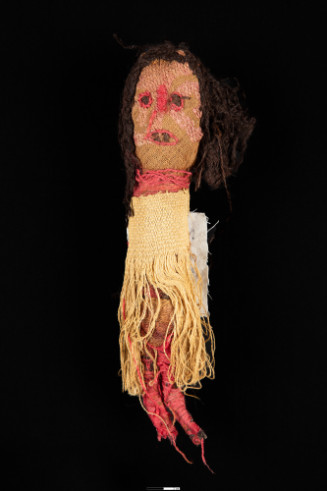
Figure made with woven fibers (probably wool, possibly camelid); large head with embroidery on face (pink) some loss of threads; features on face defined by black thread, possibly camelid wool; black threads for hair; white tunic with fringe; legs taper to two points, and are covered with pink and red patterned wool; threads seem friable and hair is tangled; stuffing seems to be bundled fiber.
Chancay Artist
1000-1450
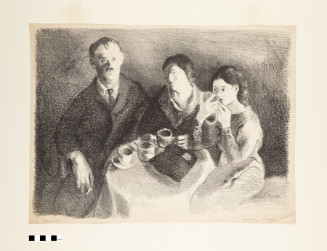
Three figures, a man, a woman, and a girl, sit around a table with mugs on it. The girl appears to have a mirror help up to her face in one hand, and seems to be applying something to her face with the other hand.
Isaac Soyer
1935-1943
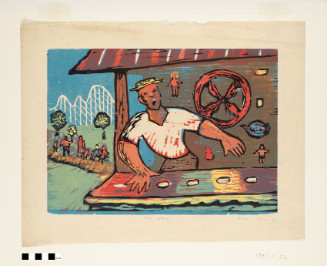
A person in a booth appears to be speaking. Behind them, a wheel looks to be mounted on the wall, surrounded by what seems to be dolls, teapots, vases, and dishes. The background shows a grassy field with people walking around, and a roller coaster in the distance.
Ida Binney
c. 1935-1943
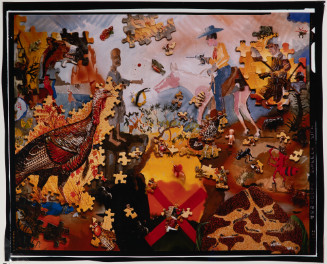
Two figures face each other, separated by a rift on the ground. The figure on the right looks to be dressed like a cowboy and is mounted on a horse while pointing a gun at the other figure, who seems to wear only a gown and holds their arms out. The piece is overlaid with puzzle pieces that make images of other animals and people, along with other objects that depict animals and people.
Robert Fichter
1979-80
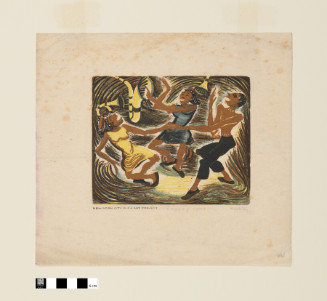
Three African Americans are dancing- one man and two women. Three Horns are visible in the rhythmic patterns which portray the music- (WPA print)
Mildred Rackley
c. 1935-1943
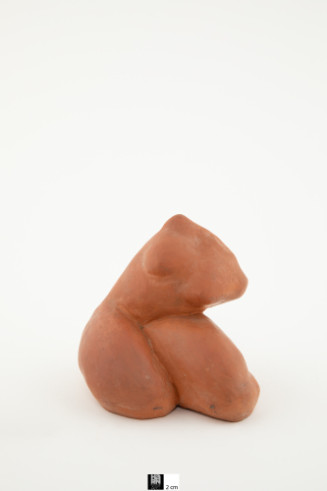
Terracotta female figure, no head or arms, very round and massive portrayal, knees are tucked under the sitting figure, the torso is leaning to its left side.
Lily Deitchman Ente
c. early 1940s
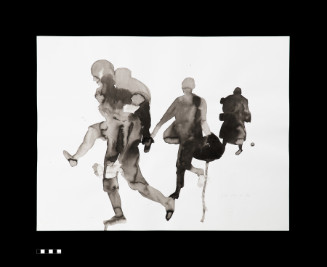
Three running figures that seem to be carrying another person and baggage. The subtle gradations of the black ink wash dissolve and solidify their forms.
Didier Viodé
2016
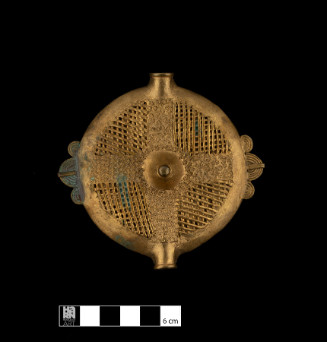
A circular gold-colored disk featuring an intricately textured surface and a raised central node. Small protrusions extend from its top, bottom, left, and right edges.
Asante Artist
20th century
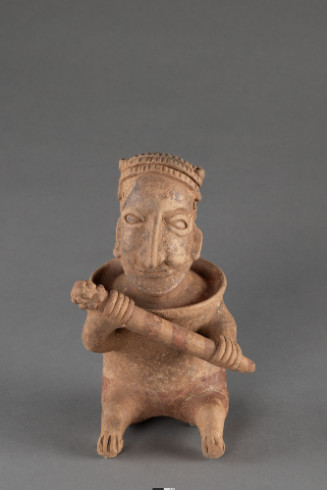
Hollow buff gray potter figure; red paint around collar of armor and on upper legs and alternating with strips of cream paint on club.
West Mexican Artist
1-200
null