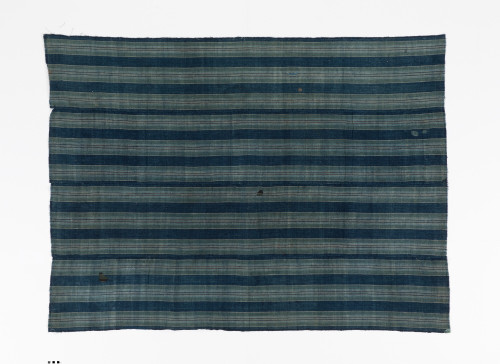
A four-paneled bed cover made of narrow strips of handwoven cotton that has been colored in an elegant striped design with indigo dyes. The worn areas have been carefully repaired with patches of fabrics of various sorts.
Bedding Cover (futonji)
Courtesy of the Harn Museum of Art, Photography by Foad Seyed Mohammadi

Bedding Cover (futonji)

Maker Japanese Artist
DateMeiji period (1868-1912)
(not assigned)Japan
MediumHandwoven cotton, thread
Dimensions5 ft. 8 3/4 in. x 50 in. (174.6 x 127 cm)
ClassificationsTextiles
Credit LineGift of Norma Canelas Roth and William D. Roth
Object number2010.95.8
Collections
Visual DescriptionA four-paneled bed cover made of narrow strips of handwoven cotton that has been colored in an elegant striped design with indigo dyes. The worn areas have been carefully repaired with patches of fabrics of various sorts.
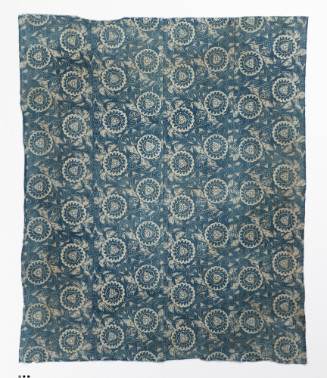
Bed cover made from 4 strips of handwoven cotton that was hand printed (katazome) in indigo in a large swirling floral pattern.
Japanese Artist
Meiji period (1868-1912)
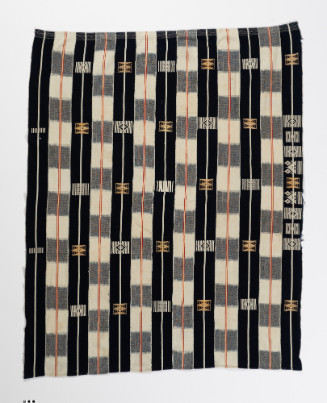
White, blue dominant striped pattern; strip woven cloth hand sewn at selvedges; indigo dyed yarns, and synthetic dyes; red, yellow; machine stitching. Scrolling design on one border with muslin cloth backing.
Senufo Artist
20th century
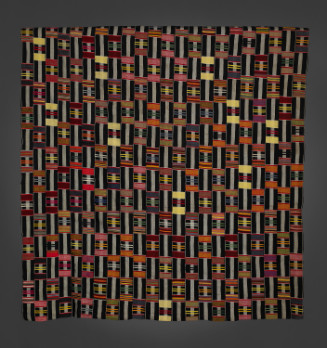
Navy and gray stripe with overshot color bands, 22 strip-woven panels hand-sewn together. Warp and weft threads dyes in 10 colors.
Ewe Artist
20th century
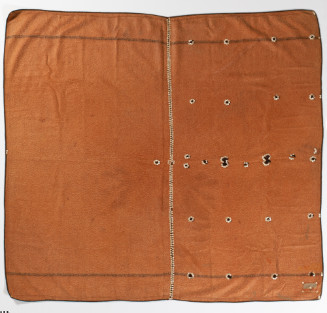
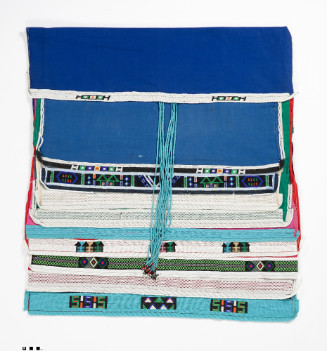
The Fengu blankets are similiar to those of the Xhosa. This one has the fur trim which the Fengu prefer as well as the older mother-of-pearl buttons. There is also the fine black wool embroidery work and the delicate use of the glass bead-work. The blanket would have been worn partially folded over by about one third the width. The origin is Mazizini.
Zulu Artist
1850-1950
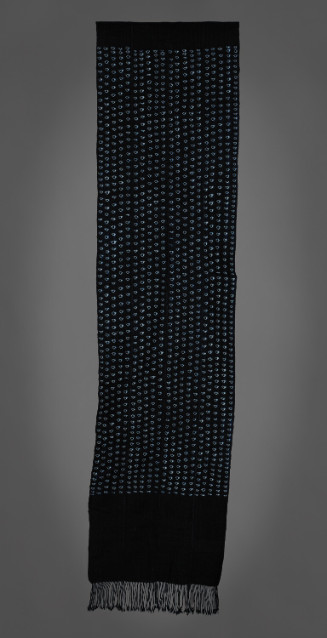
Handspun cotton, handwoven into strips, sewn on selvedges, resist dyed with indigo dye; allover pattern of small white triangles
Aboubakar Fofana
20th century
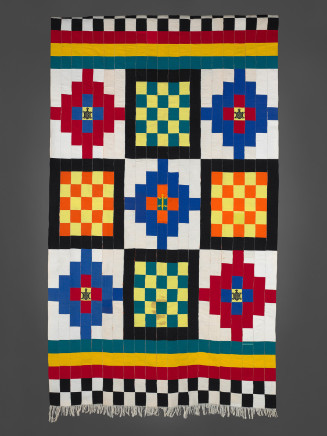
A rectangular textile featuring a grid of nine squares. The squares alternate between diamond shapes in red and blue on white backgrounds, and checkerboard patterns in yellow, orange, and blue on black backgrounds. Horizontal striped bands and black and white checkerboard bands and white fringe border the top and bottom.
Maryam Kienta
1981
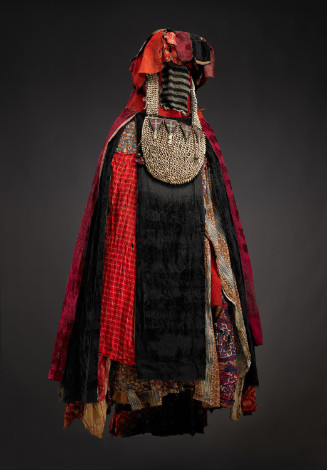
A long sleeve caftan/dress sewn from strips of wax print fabric likely Chinese imports and Woodin (a company that locally produces fabric in Ghana).  The bodice of the caftan features horizontal strips, whereas the skirt of the dress relies on vertical strips.  Each strip is formed from a mixture of long strips of fabric, interspersed with small squares of fabric.  The caftan includes a designer label, which states: “Cloth on cloth designs by Tei Huagie, made in Ghana”.
Tei Mensah Huagie
2000
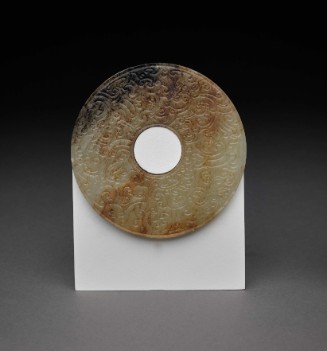
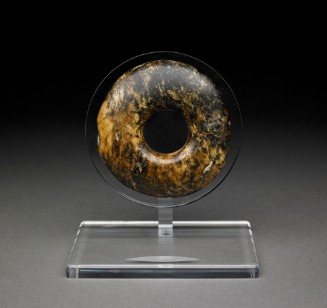
Disc with Cloud Pattern
Chinese Artist
Eastern Zhou dynasty (770-256 BCE)
Disc
Chinese Artist
Neolithic Period or later
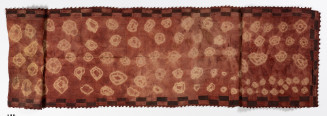
Skirt with tie-dyed circles. Handwoven palm fiber fabric with knotted decoration on hem. Dye is probably tukula (camwood).
Kuba Artist
20th century
null