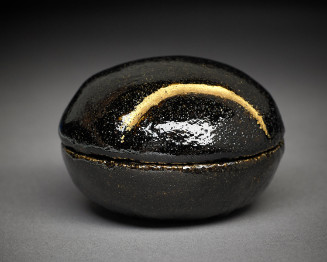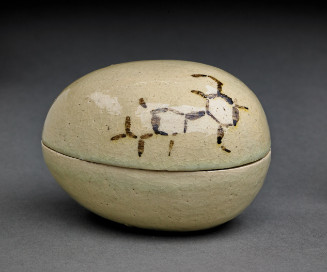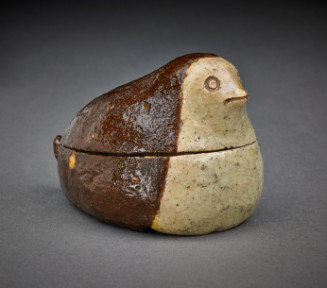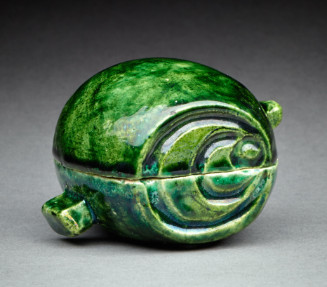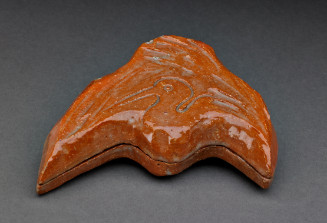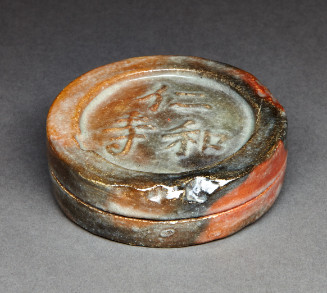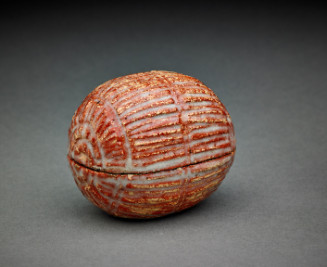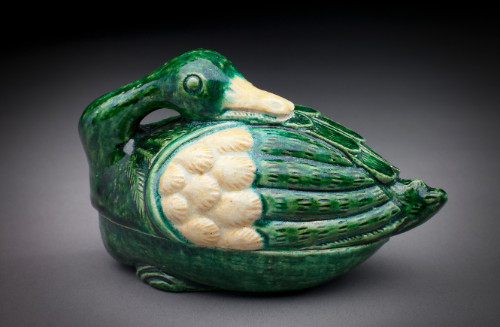
An incense container in the shape of a wild goose.
Incense container (kogo 香合)
Courtesy of the Harn Museum of Art, Photography by Randy Batista

Incense container (kogo 香合)

Artist Raku XI Keinyu 楽慶入 (Japanese, 1817 - 1902)
DateMeiji period (1868-1912), c. 1845-1871
Place of originJapan
MediumGlazed ceramic (Raku 楽焼)
Dimensions2 11/16 x 4 1/2 x 2 7/16 in. (6.9 x 11.5 x 6.2 cm)
ClassificationsFurnishings and Equipment
Credit LineBequest of the Estate of Sandra G. Saltzman
Object number2012.8.18
Collections
Visual DescriptionAn incense container in the shape of a wild goose.
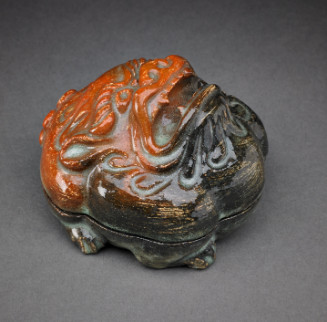
An incense container in the shape of a karashishi, a "lion-dog".
Raku XI Keinyu 楽慶入
Edo period (1615-1868), 19th century
An incense container in the shape of a covered bowl used for ritual offerings.
Raku XI Keinyu 楽慶入
Meiji period (1868-1912)
An incense container in the shape of an egg, partially covered with a hexagonal tortoise shell design. The container is described on the box lid as "tsuru tame kogo", crane and tortoise kogo. The inside is covered with gold leaf.
Raku X Tannyu 楽旦入
Edo period (1615-1868), c. 1811-1845
An incense container in the shape of a sparrow.
Raku III Donyu 楽道入
Momoyama period (16th century)
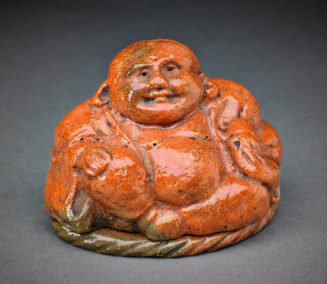
An incense container in the shape of a seated Hotei, a Japanese mythological figure depicted as a cheerful monk.
Raku VI Sanyu 楽左入
Edo Period (1615-1868), late 17th- early 18th century
An incense container in the shape of a duck.
Raku IX Ryonyu 楽了入
Edo Period (1615-1868), c. 1790-1825
An incense container in the shape of a kozuchi, a mallet that grants wishes.
Raku IX Ryonyu 楽了入
Edo period (1615-1868), c. 1811-1834
An incense container in the shape of a stylized crane.
Raku IX Ryonyu 楽了入
Edo period (1615-1868), c. 1825
An incense container in the shape of the face of a temple tile, with dark grey glazes billowing about the base.
Raku IX Ryonyu 楽了入
Edo period (1615-1868), c. 1825-1834
An incense container in the shape of a rice bale.
Raku X Tannyu 楽旦入
Edo period (1615-1868), 19th century
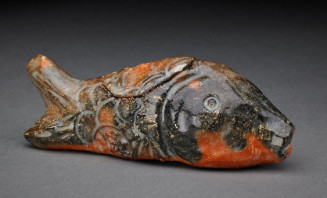
An incense container in the shape of a carp, with red glaze and black clouding.
Raku X Tannyu 楽旦入
Edo period (1615-1868), 19th century
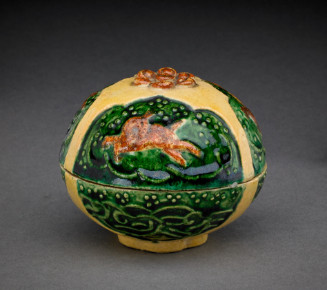
This incense container has wonderful areas of relief around the horses, with raised ridges, branches, and points suggesting movement and forming botanical backgrounds. The shape is an allusion to the zakuro (pomegranate), a Japanese symbol of prosperity (based on the huge number of seeds).
Raku X Tannyu 楽旦入
Edo period (1615-1868), c. 1826-1845
null