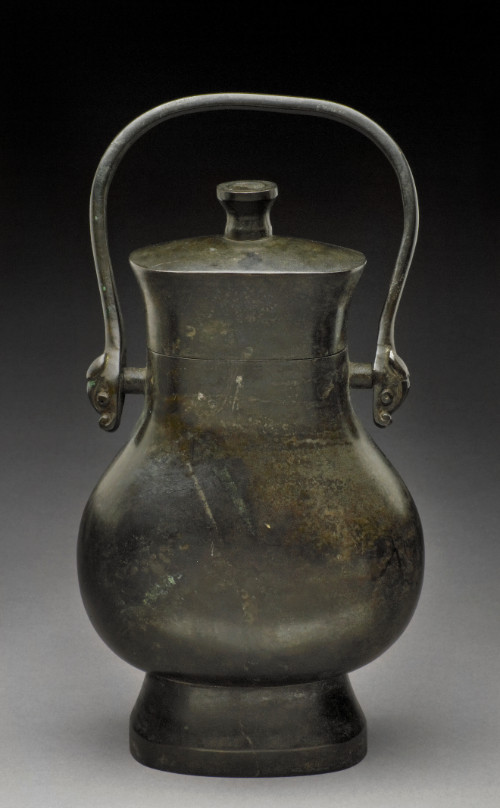
Plain surface, dark brown patina, dragon-head handles.
Lidded Jar with Handle
Courtesy of the Harn Museum of Art, Photography by Randy Batista

Lidded Jar with Handle

Artist Chinese Artist
DateSong Dynasty (960-1279)
Place of originChina, Asia
MediumBronze
Dimensions9 5/8 x 5 1/8 x 3 1/4 in. (24.4 x 13 x 8.3 cm)
ClassificationsFurnishings and Equipment
Credit LineMuseum purchase, funds provided by the Robert H. and Kathleen M. Axline Acquisition Endowment
Object number2003.37.1
Collections
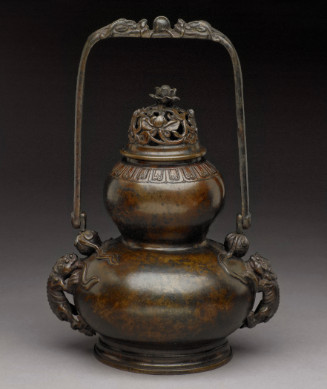
Visual DescriptionPlain surface, dark brown patina, dragon-head handles.
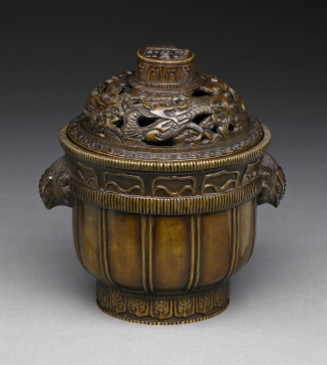
double-gourd shaped censer with dragons on sides, handle, and openwork top
Chinese Artist
Qing dynasty (1644-1911), 17th-18th century
Cup shaped censer with bird head handles and reticulated cover featuring dragons. The cover is marked with an apocryphal reign mark if the Ming dynasty Xuande emperor.
Chinese Artist
Qing Dynasty (1644-1911), late 17th-early 18th century
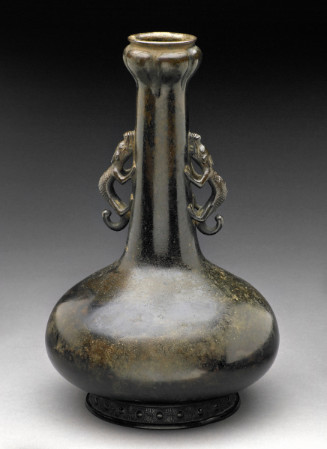
Compressed globular vase with garlic-head mouth and dragon-form handles.
Chinese Artist
Ming dynasty (1368-1644 CE), 16th-17th century
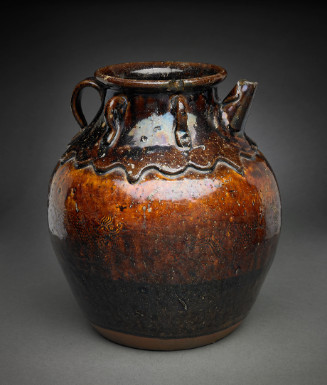
Two tones of brown glaze; unctuous dark brown to shoulder and on lower belly, revealing iron-rich clay body, below slightly irregular and thick glaze termination. Plain base, thick ruffle neck, loop handles. Jug mouth of wrapped clay cylinder type. Amber toned glaze around belly, revealing incised coursing dragon motif.
Thai Artist
15th-16th century
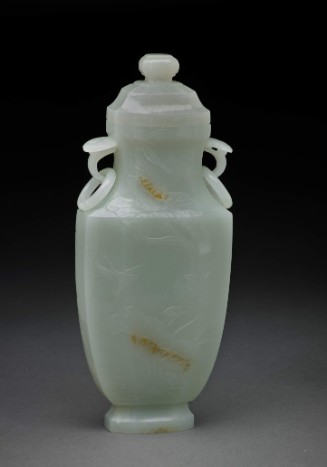
This striking octagonal vase is delicately worked from icy white jade with pale yellow surface skin markings. The artist has expertly incorporated the subtle yellow inclusions of the material with the edges of the broad graceful lotus leaves. The design extends the length of the vase to the concave neck. On either side, the covered vase is graced by handles in the shape of ruyi, or wish granting scepters. From each handle, circular rings are worked from the same jade boulder. In our opinion, the…
Chinese Artist
18th-19th century
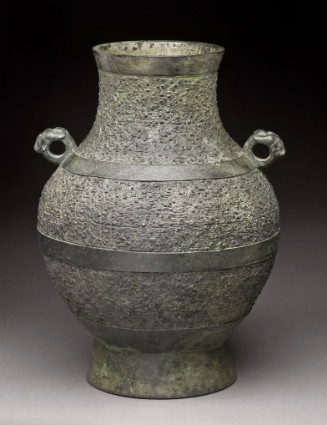
Bronze jar with ovoid body, ring handles, and bands of scrolling decoration.
Chinese Artist
Eastern Zhou Dynasty, Warring States period (481-256 BCE)
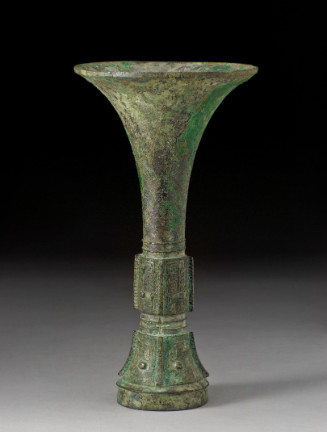
A tall, slender bronze vessel with a wide flared rim. Its narrow neck connects to a segmented midsection and splayed base, both decorated with raised geometric patterns and vertical ridges. The surface has a mottled green and brown patina.
Chinese Artist
Shang dynasty (c. 1600-1100 BCE), 12th century BCE
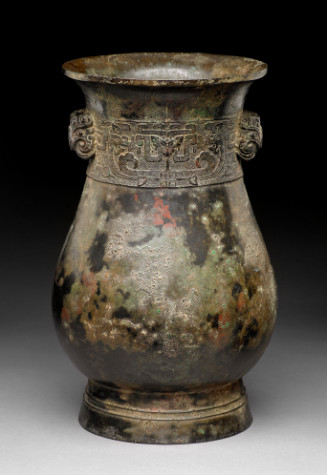
Pear-shaped vase with banded design and bird-head handles.
Chinese Artist
Ming dynasty (1368-1644), 16th-17th century
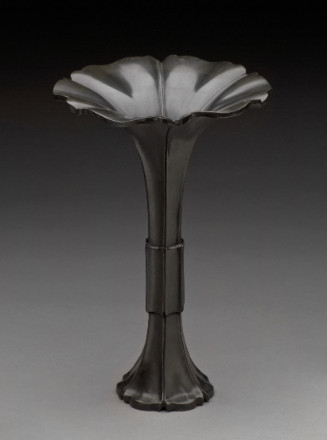
Trumpet shape, dark brown patina.
Chinese Artist
Qing dynasty, c. 18th century
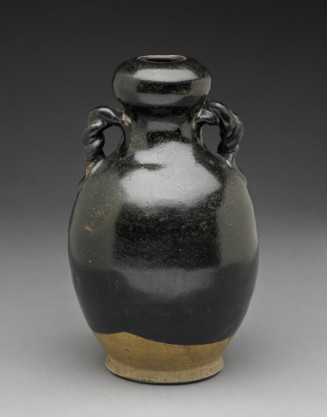
Ovoid body with bulbous mouth and braided handles
Chinese Artist
Song or Jin Dynasty, 12th-13th century
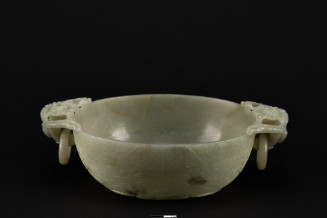
Well carved around the sides in low relief with a dense frieze of foliate blooms and furled leaves, issuing from a collar of petals encircling the base, forming a ring foot, the underside with a flowerhead, set with two flowerhead-form handles suspending loose rings, the interior center with a flowerhead, the greenish white stone striated with gray, minor chips.
Chinese Artist
Qing dynasty, 18th-19th century
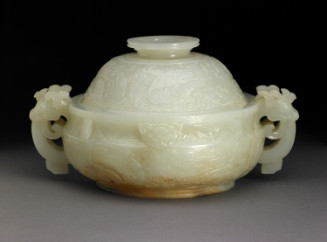
The bowl carved in archaistic style on each side with broad taotie masks on a leiwen ground, divided by dragon heads issuing loop handles, the domed cover with matching motif below a stepped knop, the thick white stone with a pale cloudy amber patch in the interior of the bowl
Chinese Artist
Qing dynasty (1644 -1911), 18th century
null