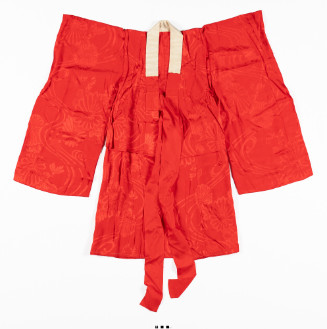
Red and cream sash used for tying undergarment and kimono and keep them in place.
Datejime
Courtesy of the Harn Museum of Art, Photography by Foad Seyed Mohammadi

Datejime

Artist Japanese Artist
DateShowa period (1926-1989), mid-20th century
Place of originJapan
MediumSilk
Dimensions7 ft. 2 in. × 3 3/4 in. (218.4 × 9.5 cm)
ClassificationsClothing and accessories
Credit LineGift of Shinichi Doi
Object number2016.56.23
Collections
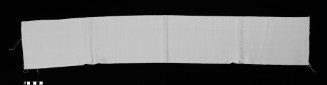
Visual DescriptionRed and cream sash used for tying undergarment and kimono and keep them in place.
White sash used for tying undergarment and kimono and keep them in place.
Japanese Artist
Showa period (1926-1989), mid-20th century
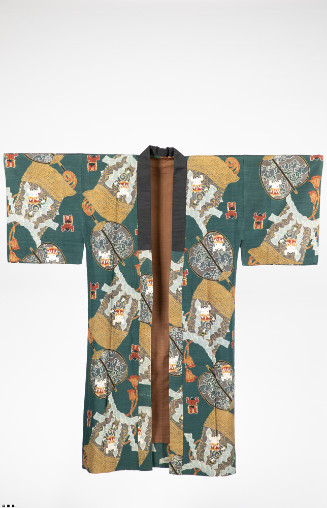
This vintage men's juban (undergarment) is made of thick green tsumugi silk. It has a wonderful sumo motif which is dyed boldly. "Mawashi", "gunpai" (referee's fan), sumo wrestler and dragon motifs can be seen.
Japanese Artist
undated
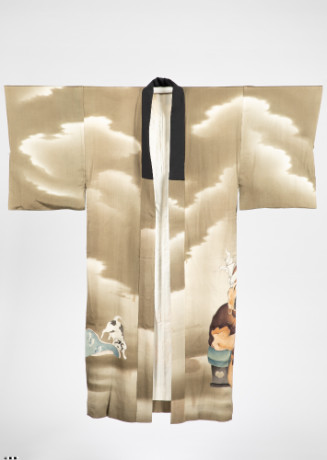
This is a men's juban (undergarment) with a design of a piece by Kawanabe Kyosai, which is dyed. Daruma has ear cleaning by a beautiful lady. Their faces are finely expressed. Textile is kinsha silk with small grains.
Japanese Artist
undated
Orange kimono with cream-colored neckband.
Japanese Artist
Showa period (1926-1989), mid-20th century
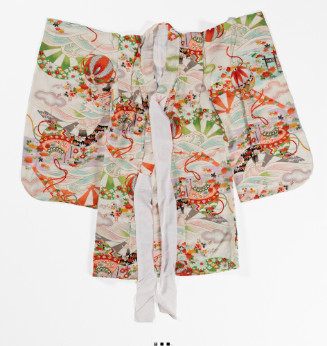
Cream colored kimono with patterning, white tie.
Japanese Artist
Showa period (1926-1989), mid-20th century
Light pink kimono with cream neckband.
Japanese Artist
Showa period(1926-1989), mid-20th century
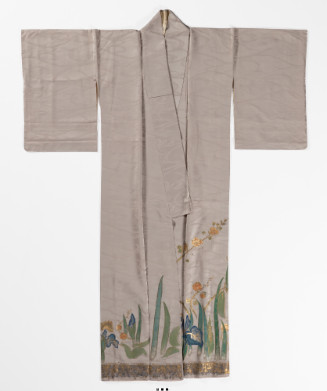
Light cream kimono with painted floral design.
Japanese Artist
Showa period (1926-1989), mid-20th century
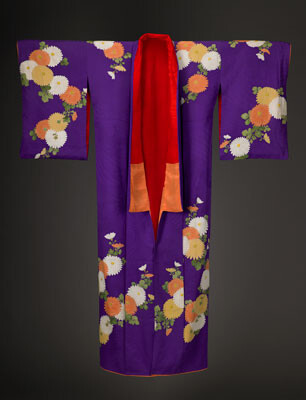
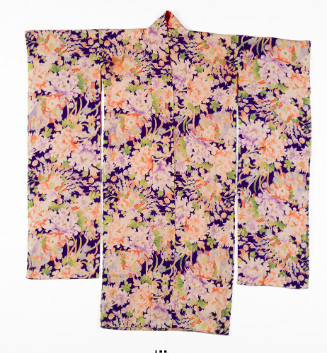
Textured purple silk kimono with white/orange/yellow flowers with leaves lined with red and light orange linings.
Japanese Artist
Taisho Period (1912-1926)
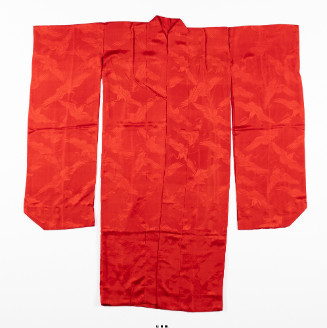
Deep red kimono slip.
Japanese Artist
Taisho Era 1912-1926
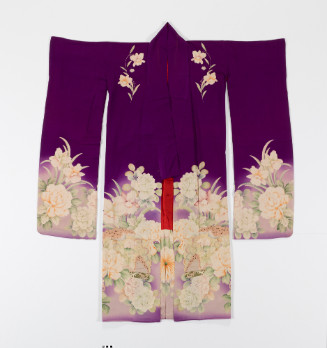
Woman's Kimono (furisode)
Japanese Artist
Taisho Era 1912-1926
Kimono slip with overall floral patterning.
Japanese Artist
Taisho Era 1912-1926
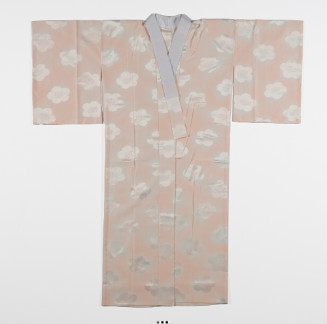
Pale peach kimono with floral motif.
Japanese Artist
Showa period(1926-1989), mid-20th century
null