Carved in the round
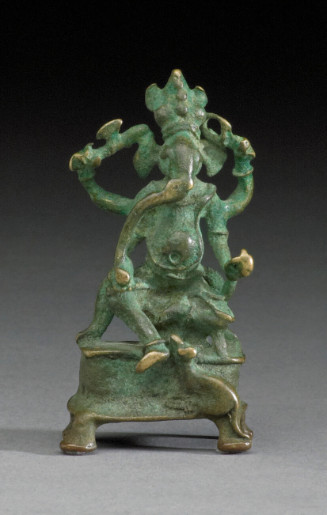
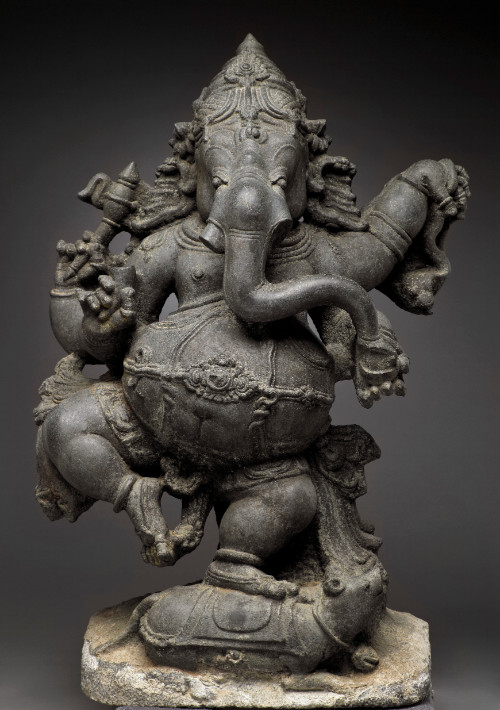
Dancing Ganesha
Courtesy of the Harn Museum of Art, Photography by Randy Batista

Dancing Ganesha

Maker Indian Artist
Date13th Century
Place of originIndia, Asia
MediumBlack stone
Dimensionsby sight: 33 7/8 x 14 1/2 x 11 1/4 in. (86 x 36.8 x 28.6 cm)
ClassificationsSculpture
Credit LineMuseum purchase, gift of Michael A. Singer with additional funds provided by the Robert H. and Kathleen M. Axline Acquisition Endowment
Object number2002.1
Collections
Visual DescriptionCarved in the round
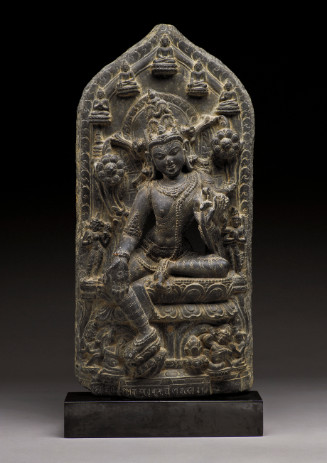
A dark stone relief stele of a central adorned figure seated with one leg extended. Large floral motifs and smaller carved seated figures surround them within an arched border.
Indian Artist
Pala period, late 11th-12th Century
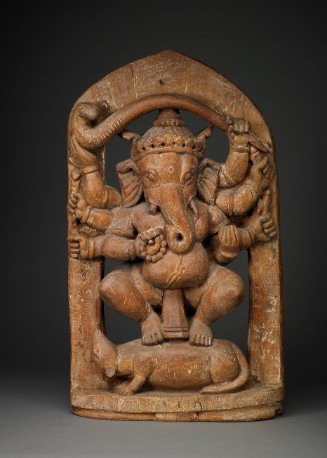
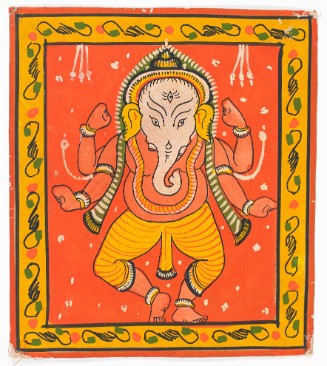
A reddish-brown terracotta plaque with an arched top featuring a relief of a multi-armed, elephant-headed figure. The stout figure wears a conical crown and stands with bent knees atop a small, four-legged animal.
Indian Artist
mid 20th century
Ganesha
Indian Artist
17th century
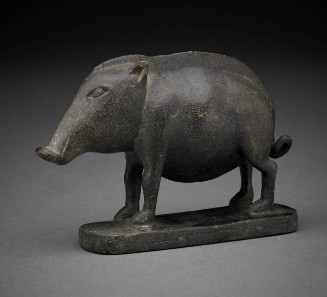
Dark statue of a boar standing on a rectangular base. It features a rotund body, a long, tapered snout, small ears, and a short, curled tail.
Indian Artist
20th Century
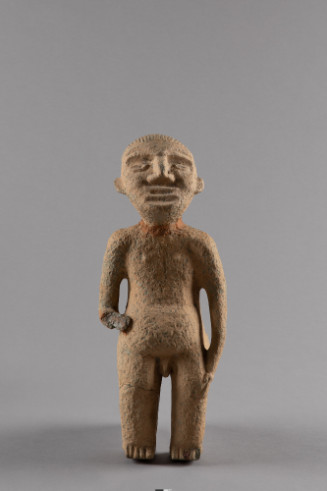
Standing figure with left hand on thigh and right arm resting on round stomach (hand missing); overall thick form with little detail; large head and facial features; carved linear design for hair.
Costa Rican Artist
undated
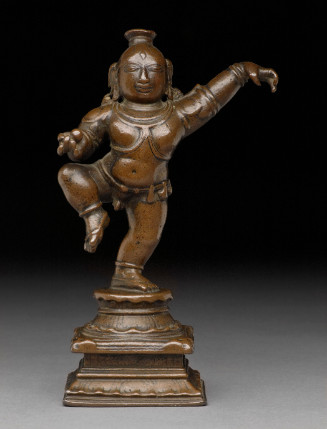
Dancing Krishna Holding Butterballs
Indian Artist
17th century
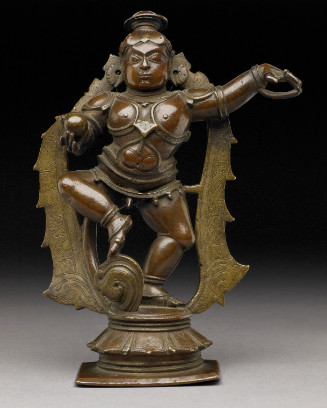
Krishna as the Dancing Butter Thief
Indian Artist
c. 18th century
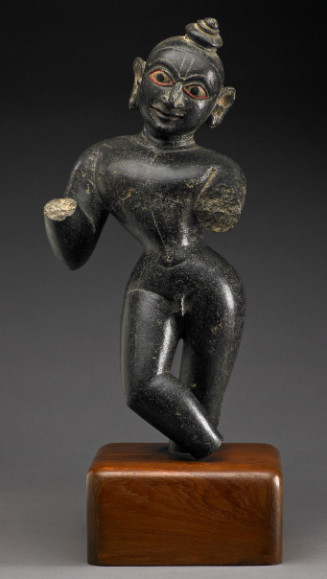
Dark stone sculpture of a standing figure with a smooth, polished finish. The figure features large, stylized eyes with red accents, elongated ears, and a topknot, posed with legs crossed on a wooden base.
Indian Artist
c. 18th century
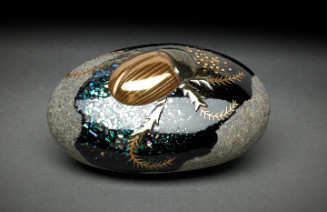
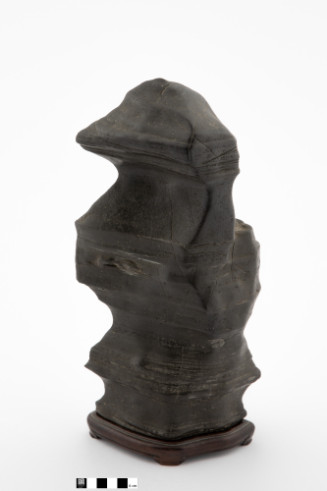
Scholar's Stone (suiseki)
Japanese Artist
19th century
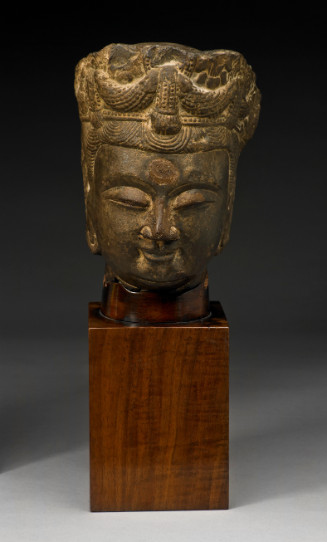
Head of a finely carved Bodhisattva with arched brows, elongated eyes, broad nose, and full lips. Wearing jeweled headdress held in place by a ribbon.
Chinese Artist
Northern Qi or Sui Dynasty, late 6th Century
null