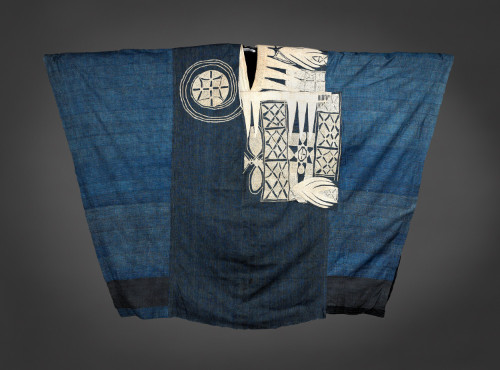
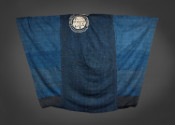
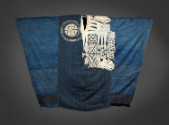
Riga indigo blue very narrow band (5cm w.) striped. Extensive embroidery on front with the numerous eyelets called "a thousand ant holes". Black has simple, well embroidered circle. Fabric is light/fine. 158 cm. (lower width)
Man's Robe (riga)
Courtesy of the Harn Museum of Art, Photography by Randy Batista

Man's Robe (riga)

Maker Hausa Artist
Datelate 20th century
Place of originNigeria, Africa
MediumCotton, indigo
Dimensions54 1/2 in. x 6 ft. 9 in. (138.4 x 205.7 cm)
ClassificationsClothing and accessories
Credit LineMuseum Purchase with funds from The Caroline Julier and James G. Richardson Acquisition Fund
Object number2009.32.10
Collections
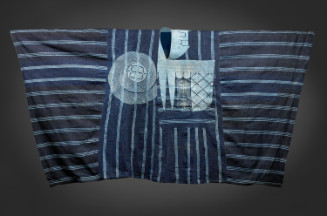
Visual DescriptionRiga indigo blue very narrow band (5cm w.) striped. Extensive embroidery on front with the numerous eyelets called "a thousand ant holes". Black has simple, well embroidered circle. Fabric is light/fine. 158 cm. (lower width)
Garment constructed of narrowband handspun, dyed dark indigo with small white threads in warp forming subtle squares in design; extensive embroidery; geometric designs including large embroidered circle on back.
Hausa Artist
late 20th century
Man's Robe (riga or girke fari)
Hausa Artist
early 20th century
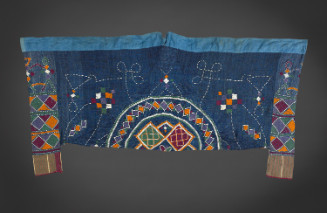
Blue handwoven cotton cloth, hand stitched, wide waist with narrow legs. Hand embroidery of geometric and arabesque motifs in orange, green, burgundy, and white wool thread; waistband lined with light blue commercial cotton sheeting.
Hausa Artist
20th century
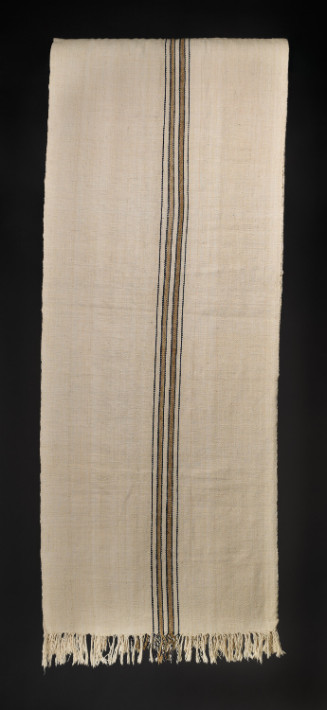
Natural cotton women's weave with center stripe of indigo (dark blue) and kola dyed threads.
Hausa Artist
c. 1973
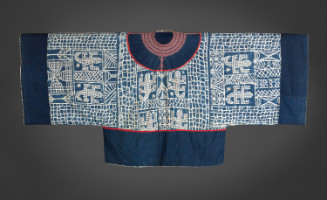
Tunic with wide sleeves made of commercial cotton sheeting, with machine stitching; hand embroidered collar using red and tan thread against dark blue cloth, red ribbon trim on collar and waist level; resist dyed linear motifs in white against indigo, geometric patterns and 8 crocodiles or lizards on front, symmetrical design.
Bamileke Artist
20th century
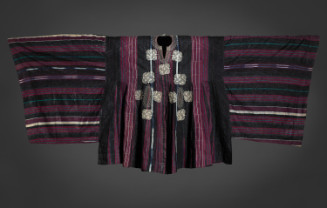
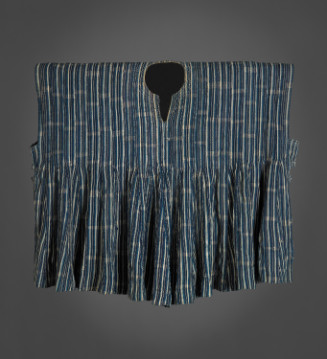
White and blue striped tunic with open neck, wide sleeves and pleats made of handspun and handwoven narrow strips; lined with sacking material
Dagomba Artist
20th century
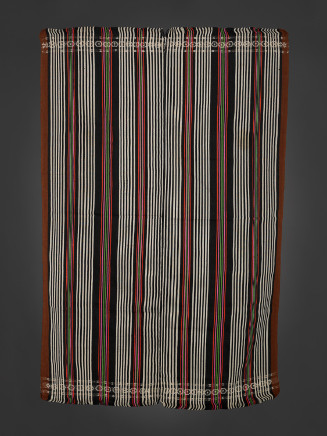
Striped, multi-colored cotton warp w/ predominately black and white striped interspersed with orange, pink and lime green narrow stripes w/ brown bands on selvedges; cotton weft design in white cotton along the ends. Two pieces of equal width sewn together.
Malagasy Artist
late 20th century
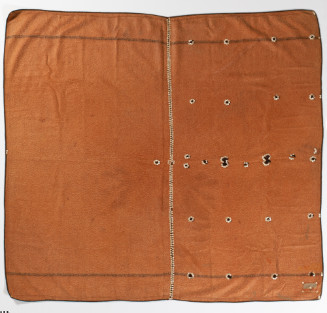
The Fengu blankets are similiar to those of the Xhosa. This one has the fur trim which the Fengu prefer as well as the older mother-of-pearl buttons. There is also the fine black wool embroidery work and the delicate use of the glass bead-work. The blanket would have been worn partially folded over by about one third the width. The origin is Mazizini.
Zulu Artist
1850-1950
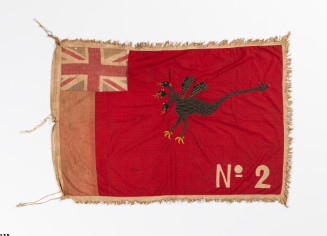
Asafo flag. Red cotton background w/three-headed composite dragon-like animal w/ long tail. Design is applied with yellow thread applique. The Union Jack is in the top left corner (25 cm x 38 cm.)
Fante Artist
mid 20th century
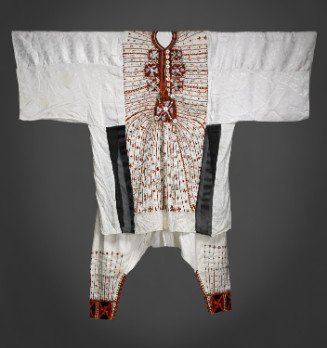
Two-piece ensemble Tunic made of synthetic damask cloth w/ silk embroidered geometric patterns in black, yellow, red, green; with mother of pearl buttons large and small sewn throughout in geometric patterns; see-through synthetic black panels on side of top "asherah nahuak; white cotton muslin trousers "srauleen" w/ silk embroidery on lower legs in red, orange, green, yellow and black thread"
Amazigh Artist
late 20th century
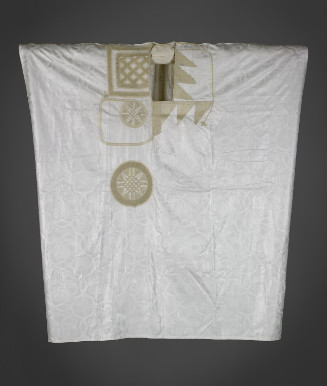
Cotton damask cloth (bazin); geometric designs embroidered on front and back, and openwork in off-white silk thread (tunic); headtie and skirt are made of same damask (no embroidery)
Baba Djitteye
20th century
null