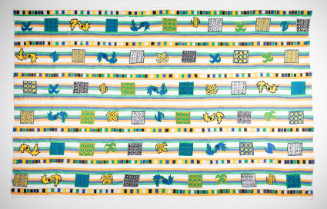
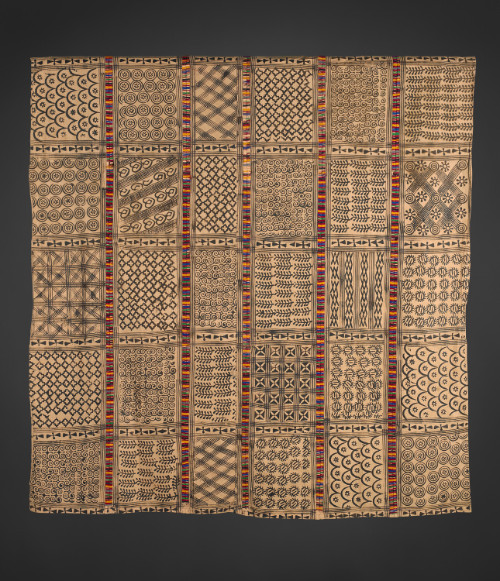
Sandy/light beige commercial cotton background with six panels with a band of embroidered threads in burgundy, black, yellow, blue, grey and green between each panel and this holds the panels together; w/black stamped Adinkra patterns done in squares which are outlined in five black lines framing these squares including: spider (ananse), unity (obi nka obie), fern (aya), spiritual cleanliness (musuyidie), circular house (fihankra), and rams' horns and other patterns.
Adinkra Cloth
Courtesy of the Harn Museum of Art, Photography by Randy Batista

Adinkra Cloth

Maker Akan Artist
Datelate 20th century
Place of originGhana, Africa
MediumCotton, natural and synthetic dye
Dimensions7 ft. 4 3/16 in. x 10 ft. 11 7/8 in. (224 x 335 cm)
ClassificationsClothing and accessories
Credit LineMuseum Purchase with funds from The Caroline Julier and James G. Richardson Acquisition Fund
Object number2009.32.13
Collections
Visual DescriptionSandy/light beige commercial cotton background with six panels with a band of embroidered threads in burgundy, black, yellow, blue, grey and green between each panel and this holds the panels together; w/black stamped Adinkra patterns done in squares which are outlined in five black lines framing these squares including: spider (ananse), unity (obi nka obie), fern (aya), spiritual cleanliness (musuyidie), circular house (fihankra), and rams' horns and other patterns.
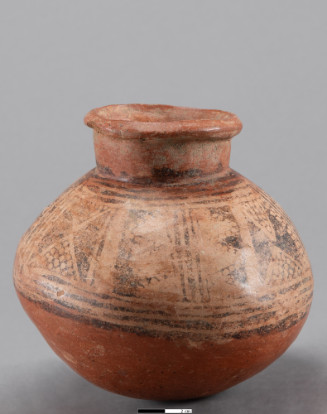
Small globular jar with rounded bottom curving into wall, turning at half height, straight neck with outward flared rim, rounded on exterior. Three-color negative paint with geometric alligators. Brown ware with red slip, upper half of wall painted black with resist pattern in buff - two large panels separated by bordered break, multiple lined border around squares with triangle patterns filled or surrounded with dots.
Diquis Artist
1000-1500
Cloth with white warp and weft, plainweave, appliqued patterns based on adinkra symbols; stool, cutlass, Sankofa Bird, Green, red and purple appliques.
Samuel Cophie, b. 1939
2009
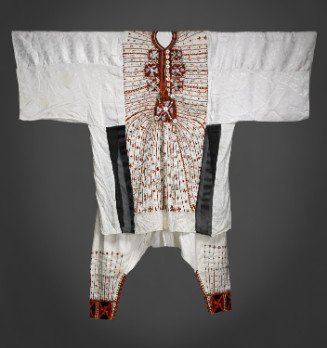
Two-piece ensemble Tunic made of synthetic damask cloth w/ silk embroidered geometric patterns in black, yellow, red, green; with mother of pearl buttons large and small sewn throughout in geometric patterns; see-through synthetic black panels on side of top "asherah nahuak; white cotton muslin trousers "srauleen" w/ silk embroidery on lower legs in red, orange, green, yellow and black thread"
Amazigh Artist
late 20th century
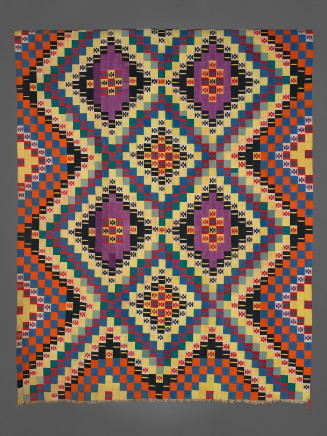
handwoven narrow strips of cotton, commercial cotton warp (?) handstitched together, weft-faced squares, polychrome (white, black, red, blue, lavender, pale green, blue yellow) form stepped diamond pattern, woven inserts in center of some squares
Bamana Artist
20th century
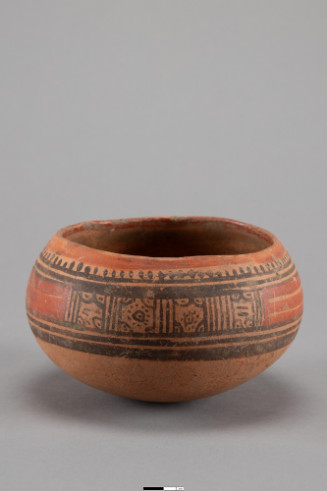
Bowl with rounded bottom, curving up into wall, rounding inward on upper half to rim. Red band around rim, three black rings above and below panel ring, separated into three sections by red horizontal bands. Panels have squares of "solar cross" motif. Circle in center, surrounded by dots with semicircles in corners.
Costa Rican Artist
1200-1550
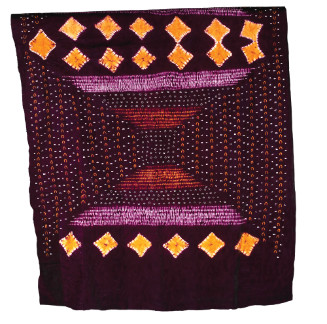
Resist dyed damask, with burgundy field, small orange and white tie-dyed areas made by thread resist; central pattern has small tie-dyed shapes configured in concentric squares
Malian Artist
20th century
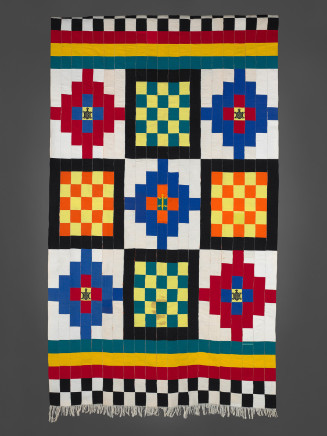
A rectangular textile featuring a grid of nine squares. The squares alternate between diamond shapes in red and blue on white backgrounds, and checkerboard patterns in yellow, orange, and blue on black backgrounds. Horizontal striped bands and black and white checkerboard bands and white fringe border the top and bottom.
Maryam Kienta
1981
Cloth
Kuba Artist
20th century
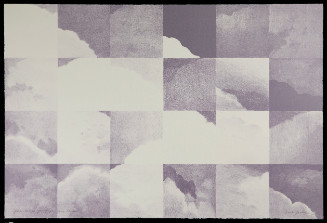
A rectangular print divided into a grid of squares. The squares contain textural, cloudy forms in muted greys and off-whites. The mismatched tiles are rearranged, breaking the continuous patterns to create a disjointed, checkerboard composition.
Herb Jackson
undated
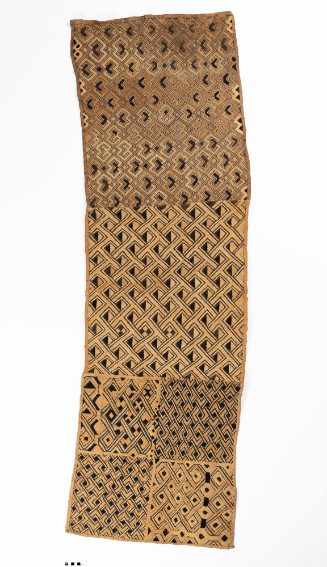
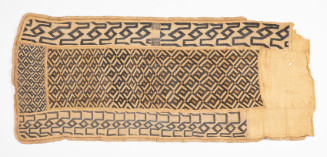
Raffia fiber woven cloth, multiple panels hand-sewn selvedges; multi-strand twined and plaited, stem-stitched embroidery, enhanced with openwork and frilled edging; black, brown and blue geometric patterns (border = lo liyoongd’dy or chameleon’s footprint motif—see Joseph Cornet, Art Royal Kuba 1982); signs of wear on plain end panel.
Kuba Artist
late 19th-early 20th century
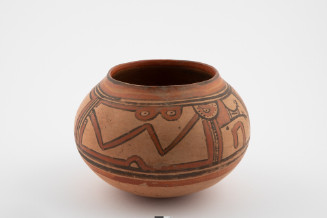
Filadelfia ware, Lunita variety; bowl with broad rounded bottom carving up into steep wall with slight inward curve on top half to low raised rim; bands of black and red around large panel ring on upper wall - two panels of abstracted animal form, identified as a spider monkey, panels separated by red square; Janus alligator painted band, abstracted glyph regalia/upper band
Costa Rican Artist
c. 1350-1522
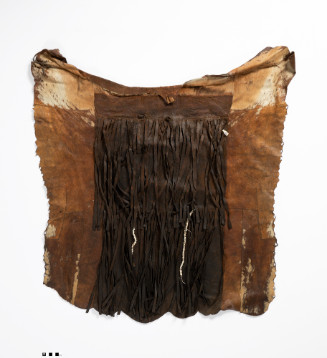
Apron
Yei Artist
20th century
null