Sphinx Fuciformis
Sphinx Fuciformis
Courtesy of the Harn Museum of Art, Photography by Foad Seyed Mohammadi

Sphinx Fuciformis

Artist John Abbot (British, 1751 - 1840)
Date1797
MediumEngraving, hand-colored
Dimensions16 x 20 in. (40.6 x 50.8 cm)
ClassificationsPrints
Credit LineMuseum purchase, funds provided by Lawrence Reed Miller
Object number2010.11.1
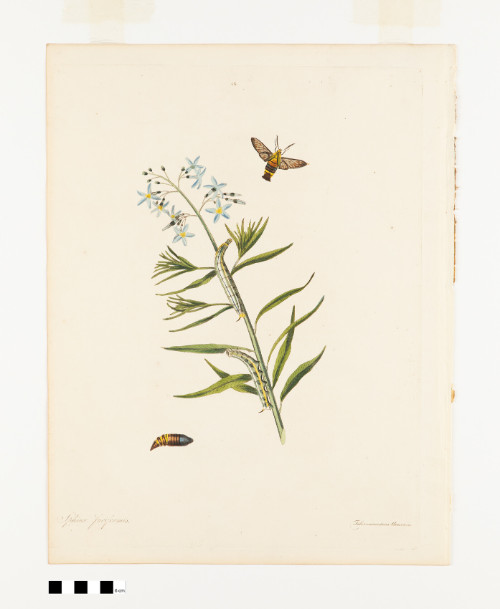
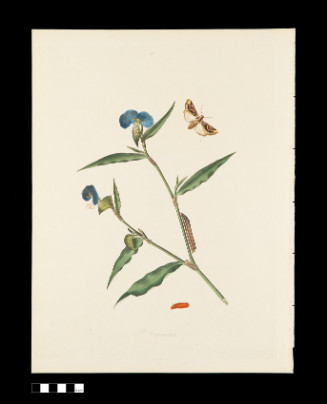
Visual DescriptionSphinx Fuciformis (humble-bee / hawk-moth) as a caterpillar, chrysalis, and finally moth on a leafy green plant with light blue flowers (tabernawmontana amsonia. linn. / alternate-leaved tabernaemontana). Plate 43 from "The Natural History of the Rarer Lepidopterous Insects of Georgia", by John Abbot (1715-c.1840) and Sir James Smith (British 1759-1828), London: printed by T. Bensley for J. Edwards [etc.] 1797.
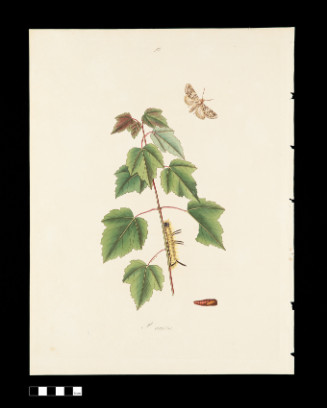
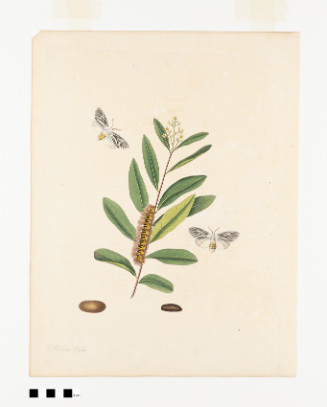
P. Aceris
John Abbot
1797
P. Commelinae
John Abbot
1797
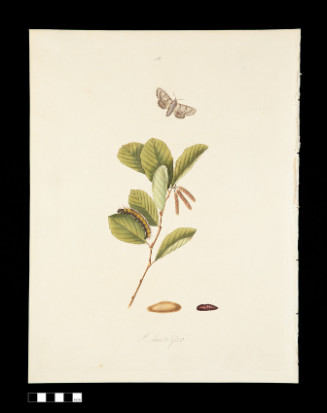
Phalana Echo
John Abbot
1797
Phastulifera
John Abbot
1797
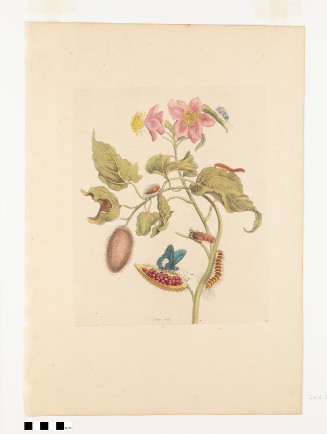
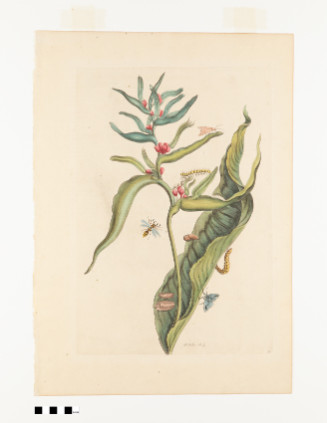
Bixa orellana (Achiote plant) in flower, with red seeds inside a fuzzy seed pod.  Hesperiidae (the blue moth) and Pyralidae (the blue and white moth) and their larvae/caterpillars and pupae resembling the subfamily Arctiinae (Family Erebidae) crawl on the plant.
Maria Sibylla Merian
1705
A green plan with small red flowers and one spiky yellow caterpillar, one smooth yellow caterpillar, three cocoons, one blue moth, and one tan moth on it.  A yellowjacket hornet flies nearby.
Maria Sibylla Merian
1705
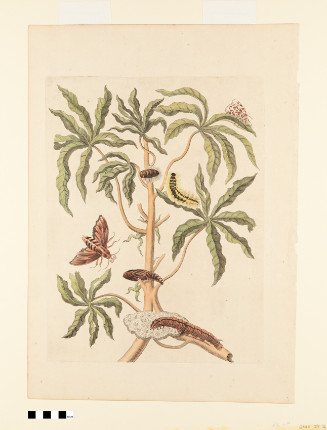
One orange caterpillar, one spiky yellow caterpillar, two cocoons, one brown-red moth, and one brown and white spotted moth crawl on a plant with light brown stems and green leaves.
Maria Sibylla Merian
1705
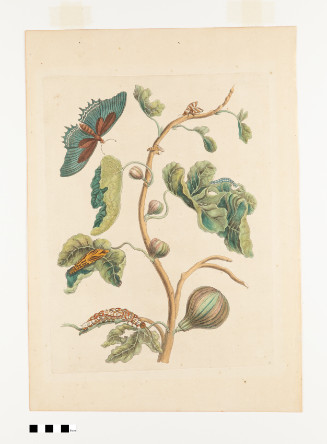
One brown and white caterpillar, one blue and white striped caterpillar, two cocoons, one brown and white moth, and one brown and blue moth crawl on a plant with a light brown, woody stem and green leaves.
Maria Sibylla Merian
1705
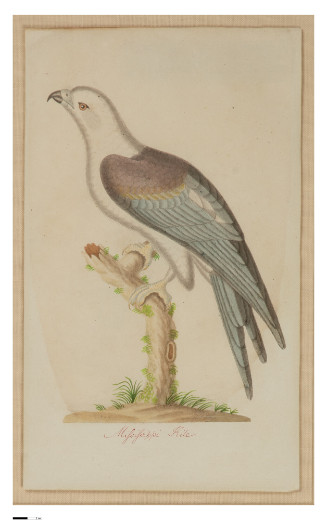
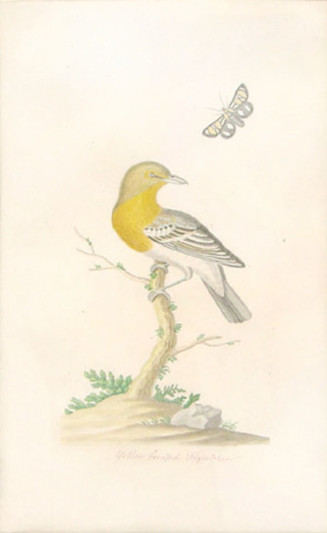
Watercolor on paper, Georgia ca. 1823.
John Abbot
1823
Blue Warbler
John Abbot
1823
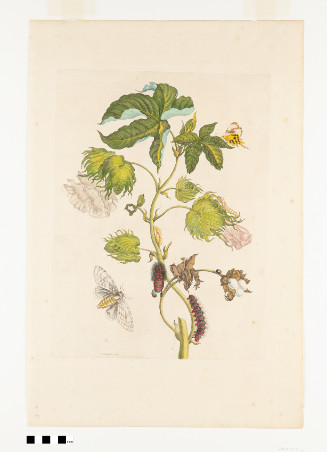
Gossypium arboretum (Surinamese Cotton Tree) with the white and pink flower in various stages, along with two separate species of moths and their corresponding larva (caterpillar) and pupa (cocoon) stages.
Maria Sibylla Merian
1705
null