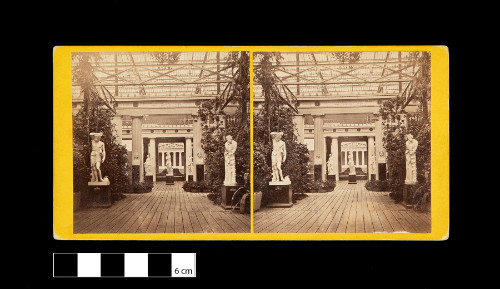
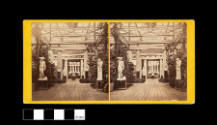
A sepia-toned duplicate photograph of a sculpture gallery. Several sculptures stand on pedestals at the left and right foreground. Behind them are plants and fluted columns that frame the central sculpture in the background. The glass ceiling lets in natural light.
[Sculpture gallery]
Courtesy of the Harn Museum of Art, Photography by Foad Seyed Mohammadi

[Sculpture gallery]

Artist Unknown
Dateundated
MediumAlbumen print, stereograph
Dimensionscard: 6 3/4 x 3 3/8 in. (17.1 x 8.6 cm)
image: 6 1/8 x 3 1/8 in. (15.6 x 7.9 cm)
ClassificationsPhotographs
Credit LineGift of William Zewadski
Object number2010.52.6
Collections
Visual DescriptionA sepia-toned duplicate photograph of a sculpture gallery. Several sculptures stand on pedestals at the left and right foreground. Behind them are plants and fluted columns that frame the central sculpture in the background. The glass ceiling lets in natural light.
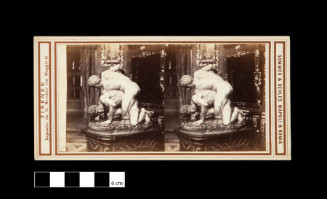
A duplicate photograph of the sculpture Wrestlers (Roman, marble copy of Greek original, Uffizi Gallery). The sculpture depicts two nude Greek wrestlers. The top figure straddles the bottom figure and creates leverage with his arm. The bottom figure twists, preparing to throw off the top figure. The sculpture is placed on a wooden pedestal and sits in front of a gilded frame and curtain.
Sommer and Behles
undated
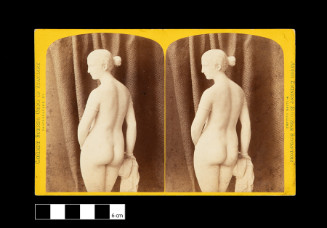
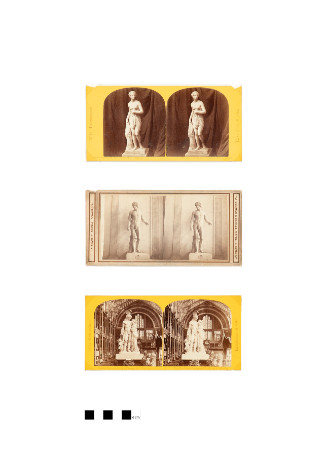
A sepia-toned duplicate photograph of a marble sculpture of a nude woman is viewed from behind, the figure facing left. She holds a cloth in her right hand. Her left hand wraps around the front of her body, invisible to the viewer.
William England
undated
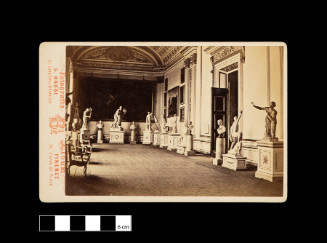
A sepia-toned photograph of an interior scene. Many marble sculptures line the walls of a room, standing on decorated pedestals. The room itself is ornate, with gilded doorframes and a vaulted, coffered ceiling.
Giacomo Brogi
undated
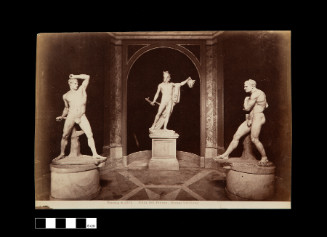
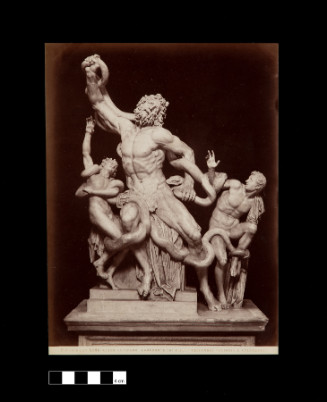
A sepia-toned photograph of the sculpture Laocoön and His Sons (Hellenistic Greece, marble, Vatican Museums). The central figure of Laocoön and his sons flanking him struggle to free themselves from serpents. Their writhing bodies create sinuous lines that convey movement.
Unknown
undated
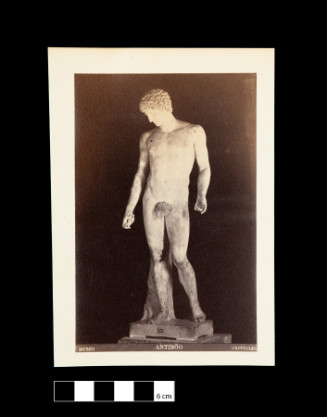
A sepia-toned photograph of the sculpture Antinous Farnese (Rome, 130–137 CE, marble, Naples National Archaeological Museum). Antinous stands in contrapposto, placing his weight on his right leg, which is supported by a marble pillar. He looks to his bottom right while bending his left arm.
Unknown
undated
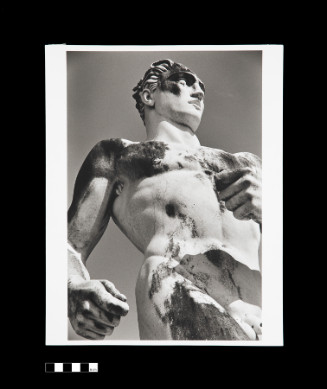
[Nude male sculpture]
Sommer and Behles
undated
Mars, Venus and Cupid by L.K.....,International Exhibition of 1862
The London Stereographic and Photographic Company
undated
null