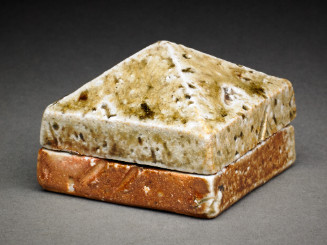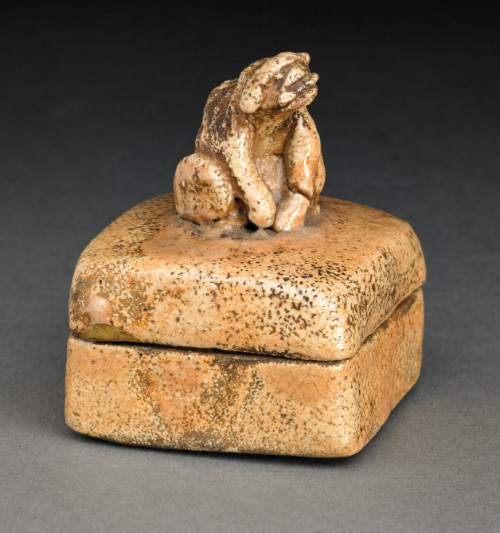
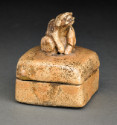
A square incense container with a frog atop the cover.
Incense container (kogo 香合)
Courtesy of the Harn Museum of Art, Photography by Randy Batista

Incense container (kogo 香合)

Maker Japanese Artist
Date19th century
Place of originJapan
MediumGlazed ceramic (Hagi 萩燒)
Dimensions2 3/16 x 1 3/4 x 1 9/16 in. (5.5 x 4.5 x 4 cm)
ClassificationsFurnishings and Equipment
Credit LineBequest of the Estate of Sandra G. Saltzman
Object number2012.8.87
Collections
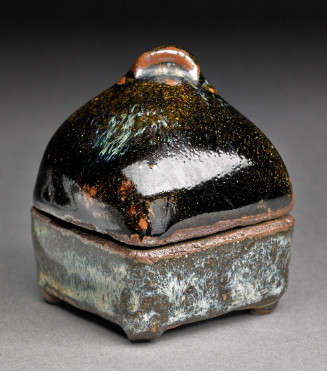
Visual DescriptionA square incense container with a frog atop the cover.
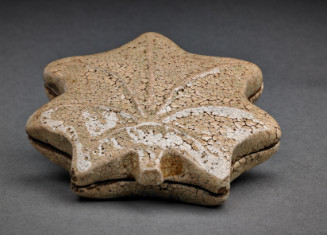
An incense container in the shape of a maple leaf.
Japanese Artist
Edo period (1615-1868), 1857
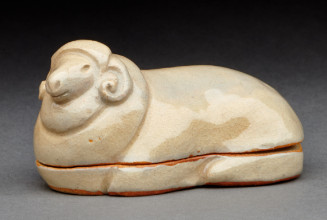
An incense container in the shape of a crouching sheep.
Sakata Deika 坂田泥華
20th century
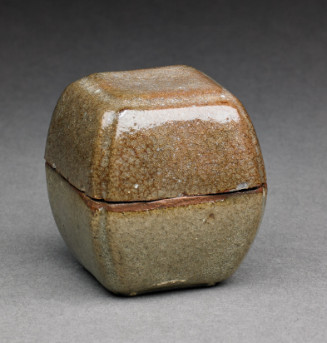
A square incense container with a cover.
Japanese Artist
18th-19th century
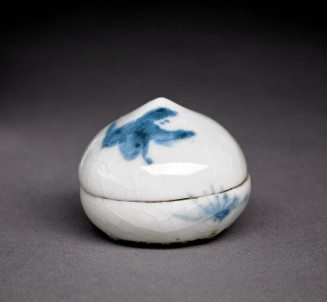
A pointed globular incense container with underglaze painting of a bird and a plant.
Japanese Artist
Edo period (1615-1868), 18th century
An incense container in the shape of a covered box.
Japanese Artist
19th century
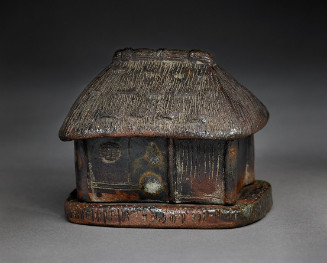
An incense container in the shape of a highly detailed hut or teahouse. The foundation holds the incense, while the wattle walls and roof are of one piece.
Yoshimitsu
Edo period (1615-1868), 18th century
An incense container in the shape of a wayside shrine. Wayside shrine (called Tsuji-do in Japanese) is a general architectural term describing a small and free-standing building.
Takahashi Rakusai III 高橋樂齋(三代)
Showa period (1926-1989)
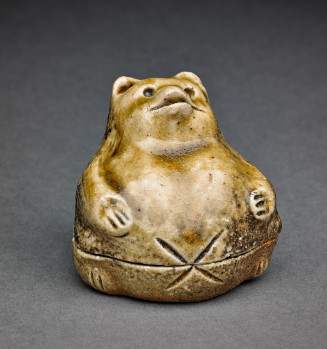
An incense container in the shape of a tanuki, a raccoon-dog.
Takahashi Rakusai IV 高橋樂齋(四代)
Showa period (1926-1989)
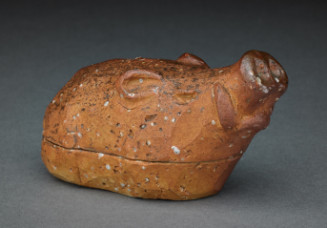
An incense container in the shape of a sitting boar (inoshishi).
Kizu Sozen
Meiji period (1868-1912)
An incense container in the shape of Fukinoto (i.e., Butterbur) sprout.
Eiraku XI Hozen 永樂保全
Edo period (1615-1868), c. 1843-1848
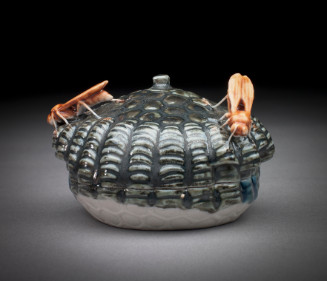
An incense container in the shape of a beehive with two bees sitting on top of it.
Sakaida Kakiemon XII
Meiji period (1868-1912), c. 1915
A square incense container with a green glazed cover.
Japanese Artist
19th century
null