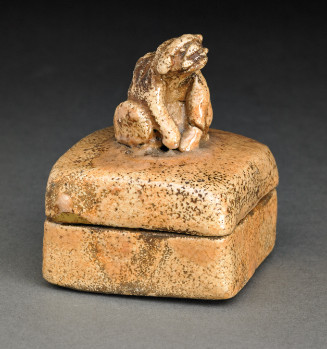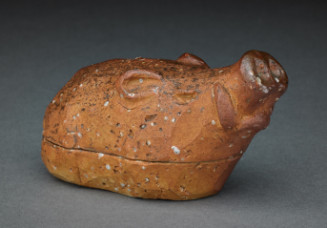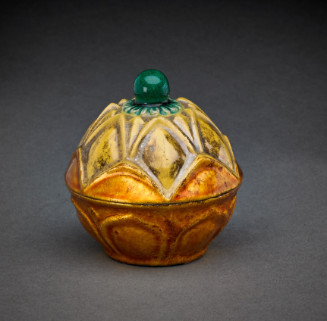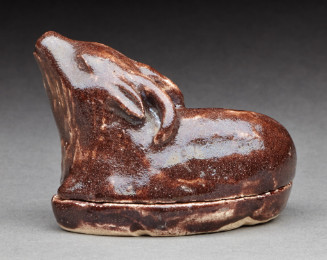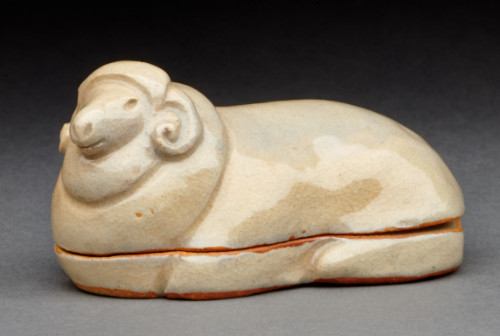
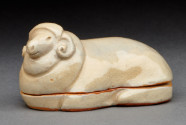
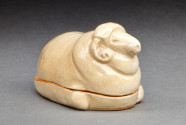
An incense container in the shape of a crouching sheep.
Incense container (kogo 香合)
Courtesy of the Harn Museum of Art, Photography by Randy Batista

Incense container (kogo 香合)

Artist Sakata Deika 坂田泥華 (Japanese, 1915 - 2010)
Date20th century
Place of originJapan
MediumGlazed ceramic (Hagi 萩燒)
Dimensions1 13/16 x 3 1/8 x 1 3/4 in. (4.6 x 8 x 4.5 cm)
ClassificationsFurnishings and Equipment
Credit LineBequest of the Estate of Sandra G. Saltzman
Object number2012.8.92
Collections
Visual DescriptionAn incense container in the shape of a crouching sheep.
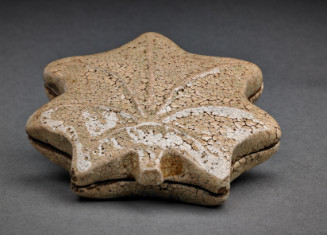
An incense container in the shape of a maple leaf.
Japanese Artist
Edo period (1615-1868), 1857
A square incense container with a frog atop the cover.
Japanese Artist
19th century
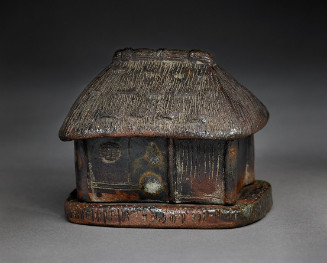
An incense container in the shape of a highly detailed hut or teahouse. The foundation holds the incense, while the wattle walls and roof are of one piece.
Yoshimitsu
Edo period (1615-1868), 18th century
An incense container in the shape of a wayside shrine. Wayside shrine (called Tsuji-do in Japanese) is a general architectural term describing a small and free-standing building.
Takahashi Rakusai III 高橋樂齋(三代)
Showa period (1926-1989)
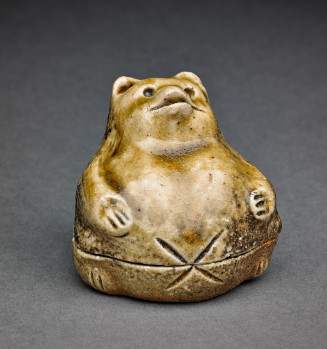
An incense container in the shape of a tanuki, a raccoon-dog.
Takahashi Rakusai IV 高橋樂齋(四代)
Showa period (1926-1989)
An incense container in the shape of a sitting boar (inoshishi).
Kizu Sozen
Meiji period (1868-1912)
An incense container in the shape of Fukinoto (i.e., Butterbur) sprout.
Eiraku XI Hozen 永樂保全
Edo period (1615-1868), c. 1843-1848
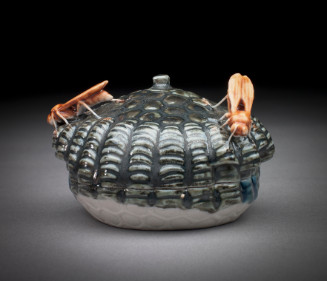
An incense container in the shape of a beehive with two bees sitting on top of it.
Sakaida Kakiemon XII
Meiji period (1868-1912), c. 1915
An incense container in the shape of a covered box.
Japanese Artist
19th century
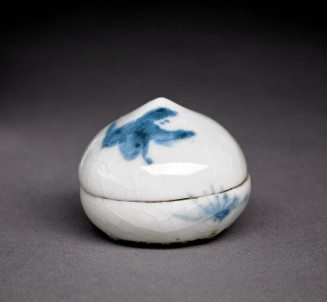
A pointed globular incense container with underglaze painting of a bird and a plant.
Japanese Artist
Edo period (1615-1868), 18th century
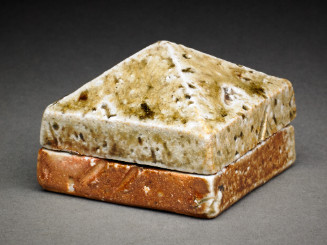
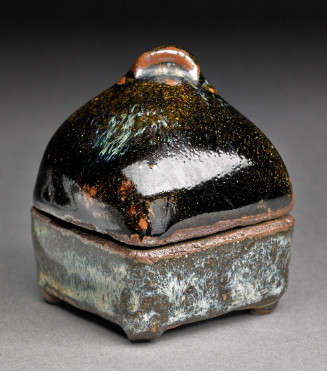
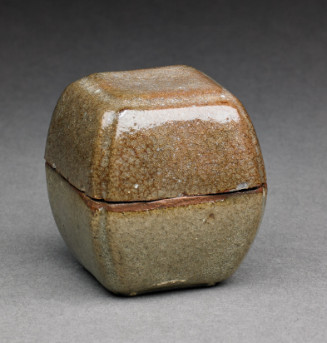
A square incense container with a cover.
Japanese Artist
18th-19th century
null