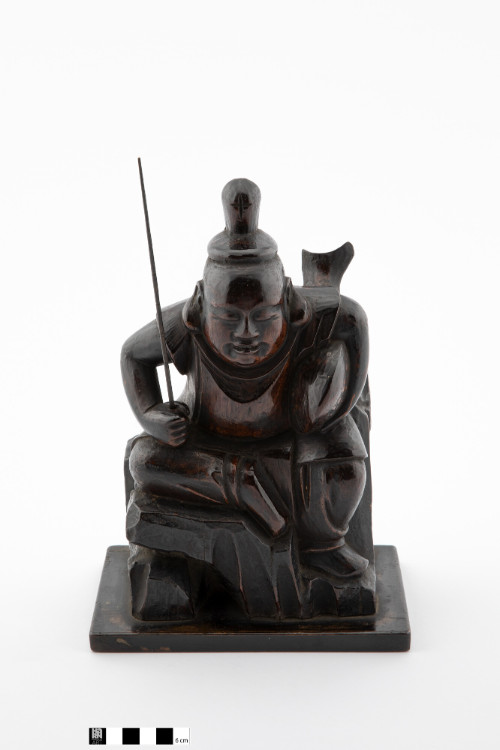
Mingei sculpture of Ebisu, Shintō household god of the sea’s bounty, sailors and good fortune.
Ebisu
Courtesy of the Harn Museum of Art, Photography by Foad Seyed Mohammadi

Ebisu

Maker Japanese Artist
DateEdo period (1615-1868), late 18th–early 19th century
Place of originJapan
MediumCarved cypress with lacquer
Dimensions11 × 7 5/8 × 5 in. (27.9 × 19.4 × 12.7 cm)
ClassificationsSculpture
Credit LineGift of Kagedo Japanese Art
Object number2016.73.6
Collections
Visual DescriptionMingei sculpture of Ebisu, Shintō household god of the sea’s bounty, sailors and good fortune.
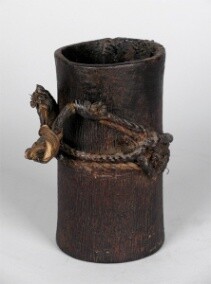
Urushi-oke or lacquer artisan's pail, of carved and assembled cypress wood with splashes and drips of the artisan's lacquer, and carrying rope.
Japanese Artist
early Meiji era, c. 1870
Jizai or hearth hanger wood in an Ebisu style with a sweeping wave-like curve. Carved of zelkova wood with a lacquer finish and dark patina.
Japanese Artist
Edo period (1615-1868), 18th-early 19th century
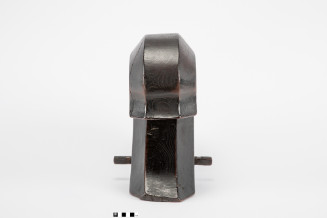
Sculpture of a head of a man with a gold face, red lips, dark painted-on handlebar moustache and goatee, and wearing a tight-fitting black headpiece with a high crest.
Chinese Artist
Ming Dynasty (1368-1644 CE)
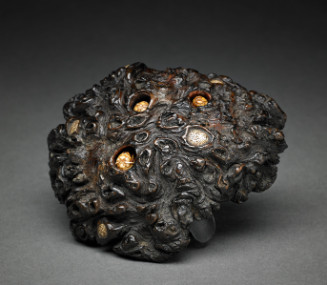
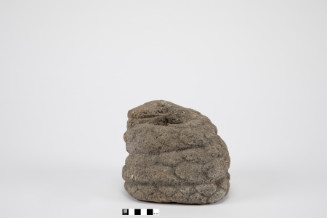
A rough, brownish-grey sculpture with a lumpy, textured surface, appearing as uneven, stacked layers or coils with a small depression near the top.
Aztec Artist
1400 - 1520
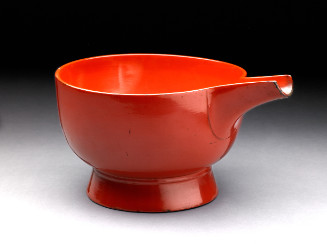
Simple spouted vessel lacquered red with area of black showing through.
Japanese Artist
Edo period (1615-1868), 17th century
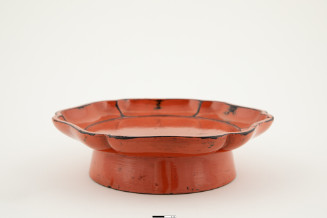
Red and black flower-shaped footed tray.
Japanese Artist
16th century
Covered container on a raised foot decorated with multi-colored fern shoots and silver nail heads.
Japanese Artist
Edo period (1615-1868), 18th-19th century
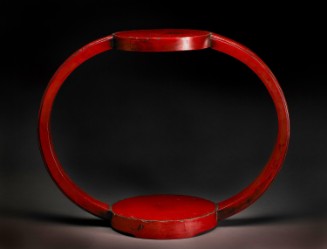
Stand for displaying an incense burner, in a circular form of two discs connected by flying supports, of bentwood and negoro red and black lacquer.
Japanese Artist
Late Muromachi - Momoyama period, 16th century
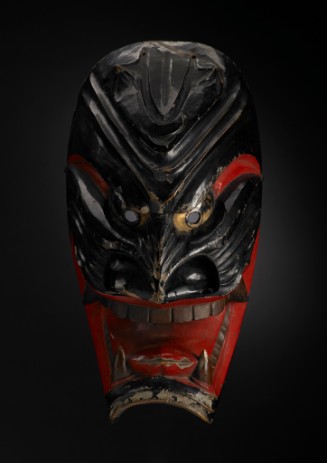
Saga area demon mask
Japanese Artist
early 19th century
null