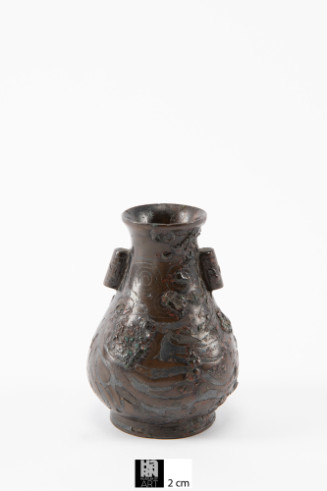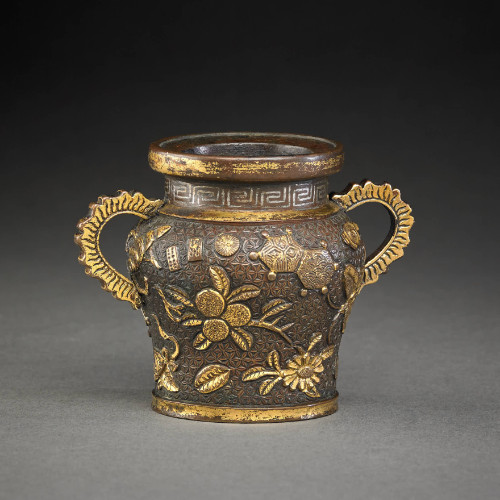
The sides cast with various auspicious emblems, flowers and fruit sprigs and a butterfly, the base with Hu Wenming mark, wear to gilding
Jar
Courtesy of the Harn Museum of Art, Photography by Randy Batista

Jar

Artist Hu Wenming (Chinese, active late 16th - early 17th century)
Date17th century
Place of originChina, Asia
MediumBronze
Dimensions2 5/16 x 3 1/16 x 2 1/16 in. (5.9 x 7.8 x 5.2 cm)
ClassificationsFurnishings and Equipment
Credit LineBequest of Dr. David A. Cofrin
Object number2009.48.53
Collections
Visual DescriptionThe sides cast with various auspicious emblems, flowers and fruit sprigs and a butterfly, the base with Hu Wenming mark, wear to gilding

Gerard Hawthorne description:
A fine and rare cast and chased parcel-gilt bronze miniature incense burner of baluster form set with two separately cast flame-form handles, the body decorated with the Eight Buddhist Emblems amid fruit and flowers raised on a floral diaper ground, the neck inlaid in silver with a continuous leiwen design. The base with an incised four-character inscription in rounded seal-script in a square gilt reserve hu wen ming zhi (made by Hu Wenming)
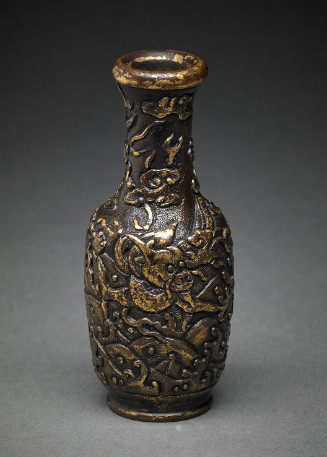
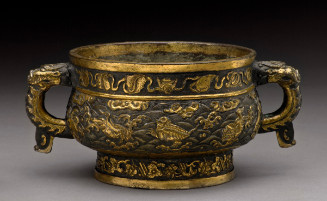
A fine and rare cast and chased parcel-gilt bronze incense tool vase, supported on a low foot rim, the body and slender neck decorate din gilded low relief with dragon amid clouds above a carp swimming amidst crested waves on a ring-punched ground. The underside of the recessed foot with a chiseled four-character mark in rounded seal script hu wen ming zhi (made by Hu Wenming) in a square gilded reserve.
Hu Wenming
17th century
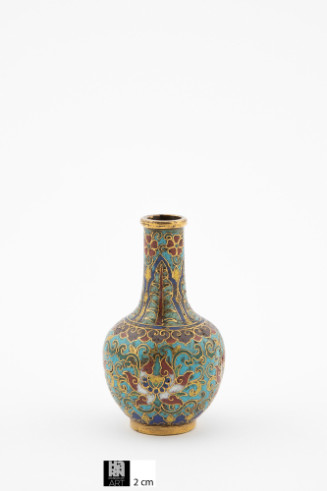
A fine cloisonné enamel vase of globular bottle form with a cylindrical neck and low gilt foot rim, decorated with ruyi-head lappets at the foot and around the shoulder; the body decorated with formalized lotus flowers, leaves and stems; the neck decorated with flowers above tall leaf-form lappets; all enameled in red, yellow, white, lapis blue, light and dark green, and aubergine on a turquoise ground.
Chinese Artist
18th Century
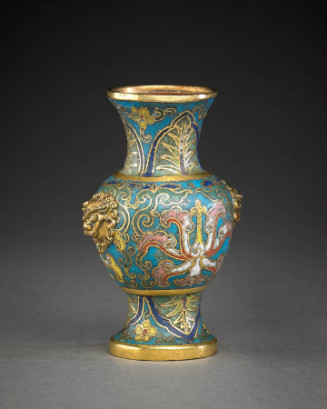
A fine miniature cloisonné enamel vase of baluster form, the rounded body set with two high relief gilt-bronze mask handles and decorated with lotus flowers and leaves, the tall flared foot decorated with flower heads and leaf lappets, the tall flared neck similarly decorated. All enameled in red, yellow, white, light and dark green, pink, and lapis blue on a turquoise blue ground.
Chinese Artist
18th Century
bombe-form censer with central band of waves and mythical sea creatures
Hu Wenming
Ming Dynasty (1368-1644), 16th-17th century
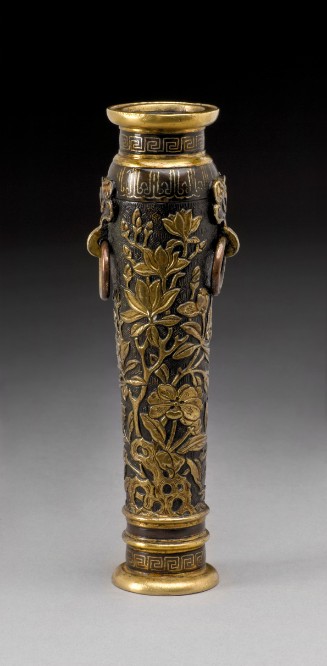
A high-shouldered vase with ring handles decorated with design of magnolia and peony blossoms.
Hu Wenming
Ming dynasty (1368-1644)
A fine miniature bronze hu of rounded pear shape with flared mouth rim, supported on a low foot set at the neck with two solid tubular handles, decorated with two stylized phoenix inlaid in scrolling silver wire and silver sheet, partially covered by areas of heavily applied archaistic style encrustation.
Chinese Artist
17th century or later
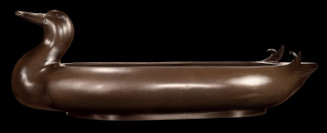
Suiban or tray style flower arranging vase, in the form of a swimming duck. Of cast and cold-chiseled bronze.
Tsuda Shinobu
1929
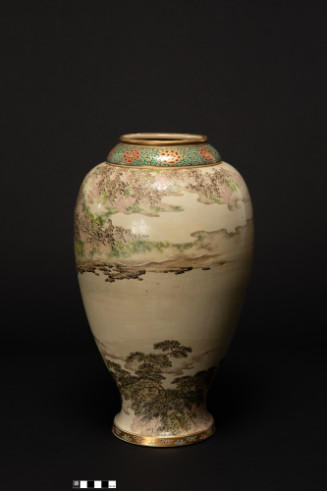
Of baluster form and decorated in polychrome enamels, gilt over a clear crackled glaze with a continuous frieze of a landscape with a lakeside and cherry trees in blossom, the neck painted with a foliate scroll and foot with a band of key frets
Japanese Artist
early 20th century
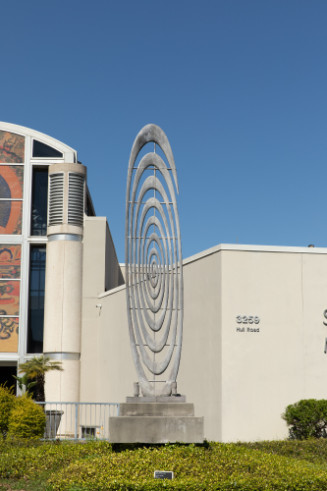
Large cast aluminum spiral on concrete base.
Paul Fullerton
1990
null