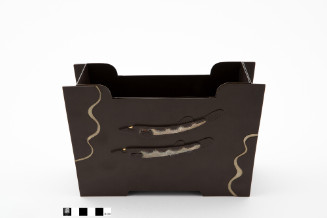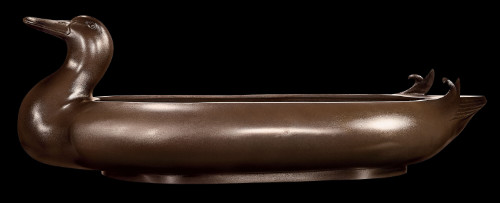
Suiban or tray style flower arranging vase, in the form of a swimming duck. Of cast and cold-chiseled bronze.
Vase

Vase

Artist Tsuda Shinobu (Japanese, 1875 - 1946)
Date1929
Place of originJapan
MediumBronze
Dimensions6 1/2 x 20 1/8 x 11 7/8 in. (16.5 x 51.1 x 30.2 cm)
ClassificationsSculpture
Credit LineMuseum purchase, funds provided by the David A. Cofrin Fund for Asian Art
Object number2013.42.2
Collections
Visual DescriptionSuiban or tray style flower arranging vase, in the form of a swimming duck. Of cast and cold-chiseled bronze.
Bibliography
Kagedo: Yukei, Reflective Paths
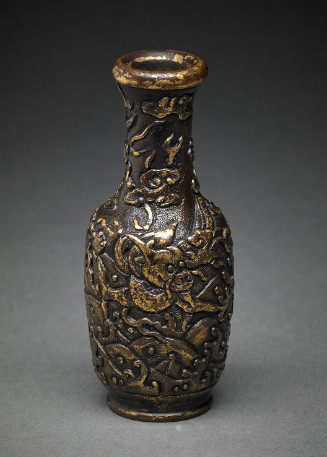
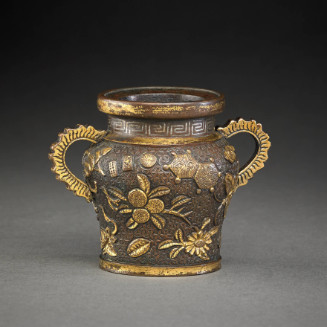
A fine and rare cast and chased parcel-gilt bronze incense tool vase, supported on a low foot rim, the body and slender neck decorate din gilded low relief with dragon amid clouds above a carp swimming amidst crested waves on a ring-punched ground. The underside of the recessed foot with a chiseled four-character mark in rounded seal script hu wen ming zhi (made by Hu Wenming) in a square gilded reserve.
Hu Wenming
17th century
The sides cast with various auspicious emblems, flowers and fruit sprigs and a butterfly, the base with Hu Wenming mark, wear to gilding
Hu Wenming
17th century
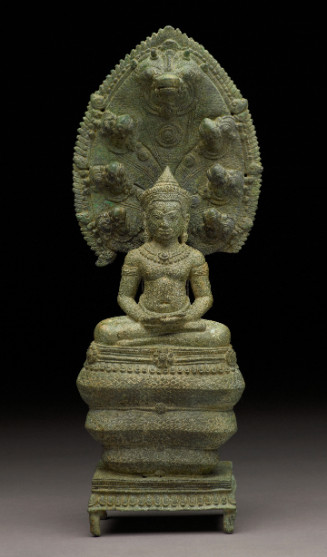
A sculpture cast in two parts, one being the seated bronze Buddha, deep in meditation, the other the seven-headed Naga snakes shielding surrounding Buddha’s head like a halo.
Thai Artist
Bayon period, 12th-13th century
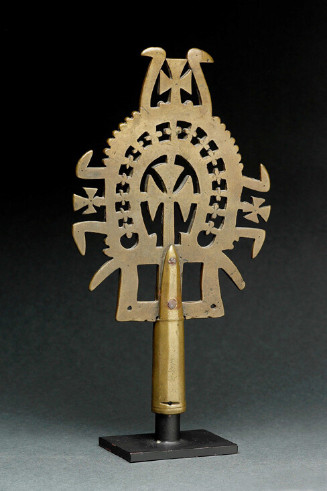
Cast bronze cross surrounded with openwork double "triumphal arch"  surmounted with smaller crosses and bird's head motifs.
Ethiopian Artist
14th-15th century
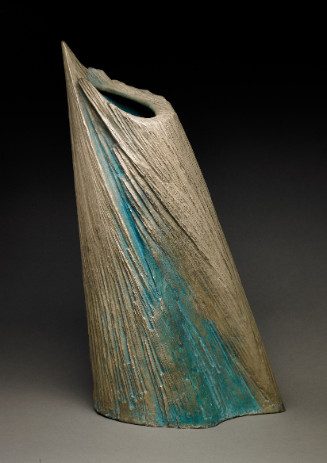
bronze flower vase with hues of blue and white patina
Kishizawa Takeo
Shöwa 42 or 1967
A Mughal-style vase and cover carved from celadon green nephrite with lighter inclusions. The vase is carved in an unusual flattened and fluted form that is elliptical in cross-section. Either side of the vase is carved with three leafy acanthus scrolls and hanging loose rings. The long flaring neck is carved on either side
Chinese Artist
19th century or later
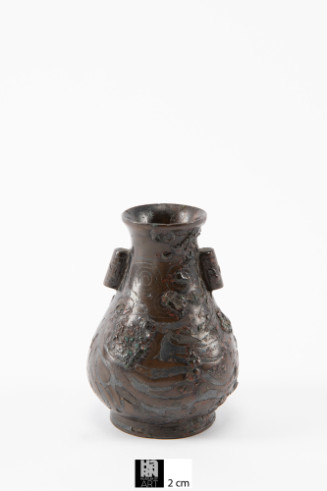
A fine miniature bronze hu of rounded pear shape with flared mouth rim, supported on a low foot set at the neck with two solid tubular handles, decorated with two stylized phoenix inlaid in scrolling silver wire and silver sheet, partially covered by areas of heavily applied archaistic style encrustation.
Chinese Artist
17th century or later
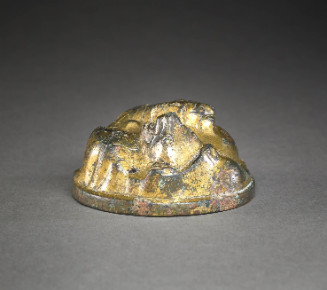
Solid bronze; cast in the shape of a bear and a tiger locked in combat; the bear is caught with open eyes and mouth; the tiger bites the bear's back with a ferocious demeanor; engraved details.
Chinese Artist
Han dynasty (206 BCE-220 CE)
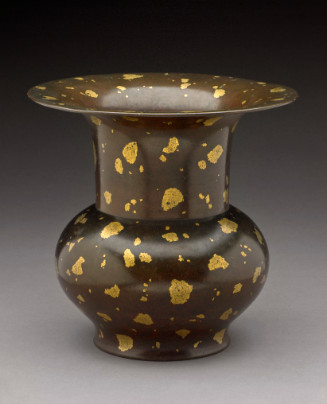
Bronze vase with flaring rim and gold splash design
Chinese Artist
Qing dynasty (1644-1911), 17th-18th century
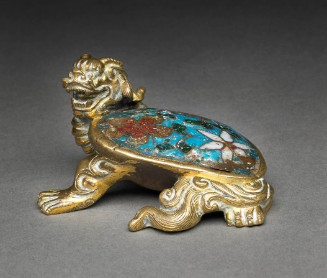
Heavily and finely cast as a three-legged bixi, a mythological dragon-tortoise with dragon-like head with forked antlers and bushy tail, the carapace inlaid with a cloisonné enamel fragment of 16th century date decorated with thee flower heads and green leafy tendrils reserved on a turquoise-blue ground
Chinese Artist
17th - 18th Century
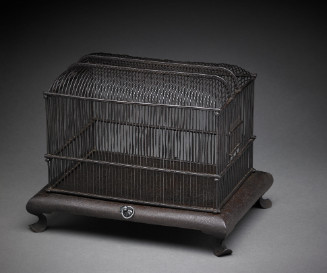
Cricket cage in a rectangular form with a domed roof. Of hammered iron with hammered silver, chrysanthemum-motif fittings. Signed on the reverse with a chiseled signature: Kōzan, and with a kakihan (Takase Kōzan or Kōzan I, 1868 – 1934).
Takase Kōzan
1890-1920
null