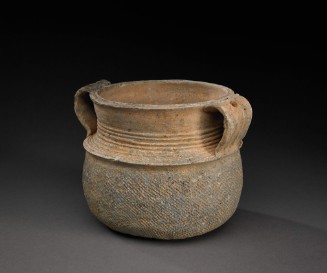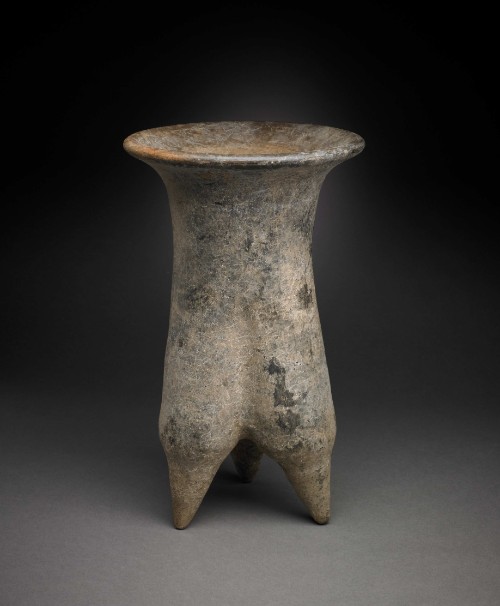
Gray tripod vessel with flaring rim.
Tripod vessel
Courtesy of the Harn Museum of Art, Photography by Randy Batista

Tripod vessel

Maker Chinese, Xiajiadian Culture
DateNeolithic Period, c. 2200-1800 BCE
Place of originChina, Asia
MediumGray earthenware
Dimensions10 5/8 in. (27 cm)
ClassificationsFurnishings and Equipment
Credit LineMuseum purchase, funds provided by friends of the Harn Museum
Object number2005.32.2
Collections
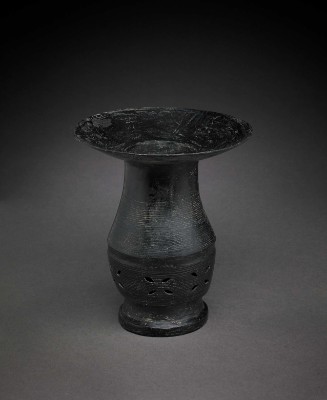
Visual DescriptionGray tripod vessel with flaring rim.
Thinly-potted black goblet with flaring rim and incised designs on the exterior.
Chinese, Longshan Culture
Neolithic Period, c. 2500-2000 BCE
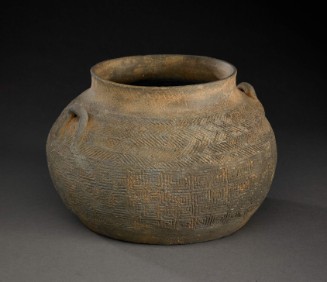
Squat jar with two handles and textured body.
Chinese Artist
Western Zhou Dynasty (c. 1100-771 BCE)
Squat jar with incised and impressed decoration.
Chinese Artist
Western Zhou Dynasty (c. 1100-771 BCE)
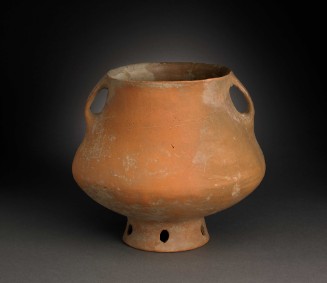
Reddish ovoid jar on perforated foot.
Chinese, Qijia Culture
Neolithic Period, c. 3000-2000 BCE
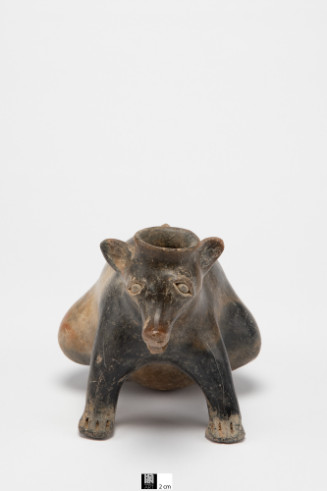
Dog of hollow burnished gray pottery; orange and black firing clouds; rimmed mouth of vessel opens on top of head.
West Mexican Artist
100 BCE-100 CE
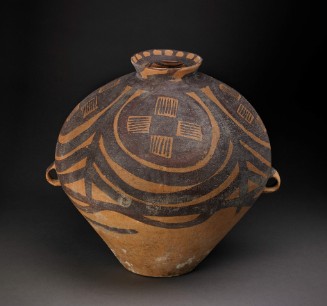
Large jar rising from a tapered bottom; painted decoration on shoulder and lip.
Majiayao Culture
Neolithic period, c. 3000-2500 BCE
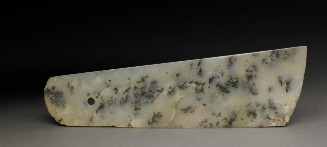
The tapered weapon carved with a sharp blade, with fitted groove opposite a circular hole on one end, the fitted groove opposite a circular hole on one end, the translucent milky green stone with dark brown flecks, chips
Chinese, Dawenkou Culture
Shang dynasty (c. 1600-1100 BCE)
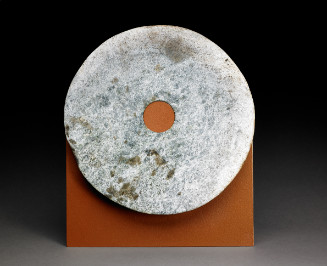
This large bi disc has been meticulously worked with a subtle concave rim rarely seen on bi discs of this size. Small circular bracelet-form jades from recent Liangzhu excavations show edges which are slightly concave in shape. This suggests an original bone-derived stylistic element. Although these wearable jades with concave edges are more frequently seen, this bi example of large size is most unusual. The surface of the bi disc is highly polished, and there has been much attention to both sha…
Chinese, Liangzhu culture
Neolithic period or later
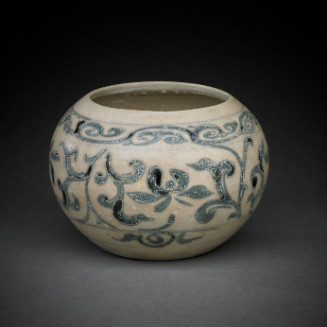
Globular pot with under and overglaze enamels with floral scroll bands and circles containing repeated sprig design. Base unglazed, with carved foot ring.
Vietnamese
15th-16th century
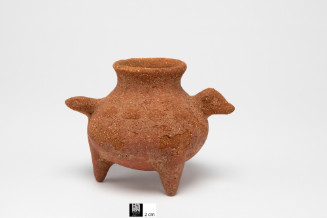
Small rounded jar with short, conical tripod legs, rounded bottom, curving outwards into wall, curving inwards on top half, raised neck with outward flaring rim.
Coarse red ware with red slip, attached animal head and tail on opposite sides - small nub ears with pointy snout, short wide tail, ring of oval pills attached to wall between head and tail.
Costa Rican Artist
1000-1550
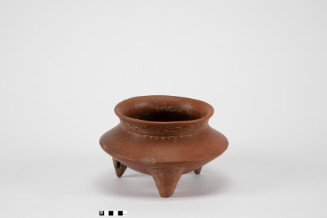
Large pot with wide, rounded bottom supported by long conical tripod legs with firing slits on sides, sharp angle break to steeply inward sloping wall, raised neck with outward flaring rim; inscribed panels of diagonal lines forming weave pattern, separated by sections of vertical lines, bordered on bottom (of neck) by two rings with triangular tooth design underneath lower ring
Costa Rican Artist
1000-1550
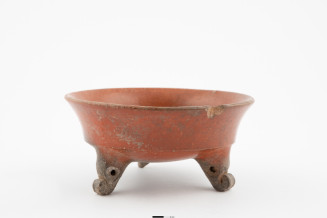
Deep dish with rounded bottom, supported by long tripod legs, fire holes on each side of leg, with ends flattened and turned upwards to form curled snouts.  Angle break from base, wall rises vertical, flaring outwards on top half to rim.  Orange red slip on entire surface, legs blackened from oxidation.
Quiché Maya Artist
950-1200
null