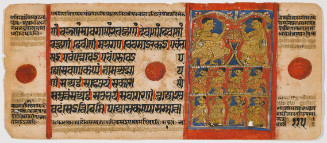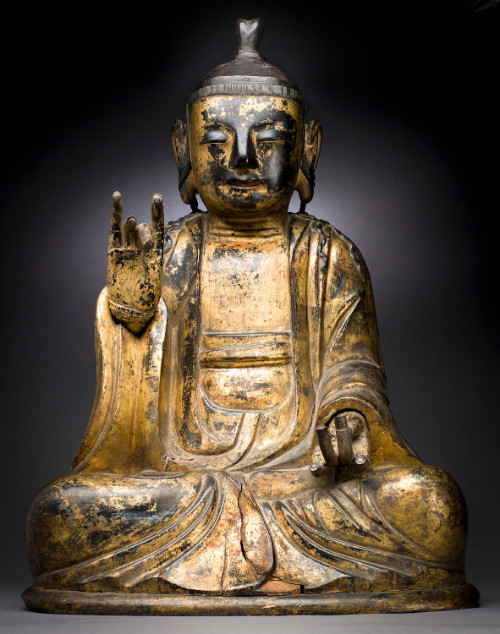
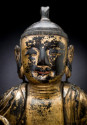
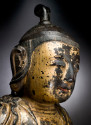
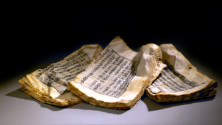
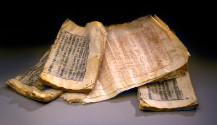
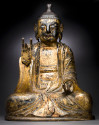
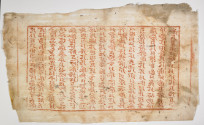
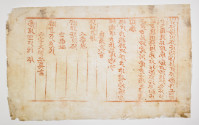
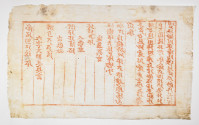
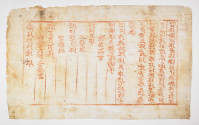
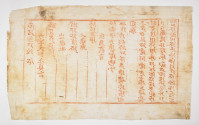
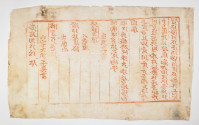
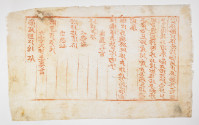
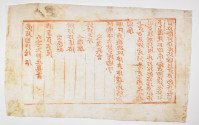
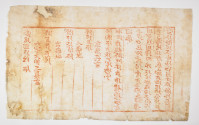
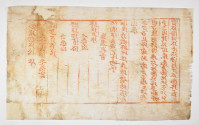
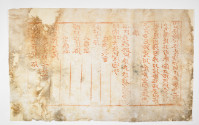
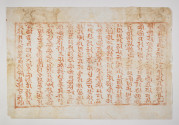
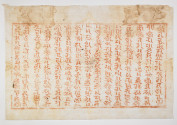
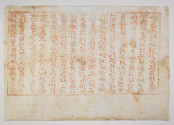
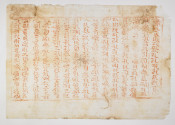
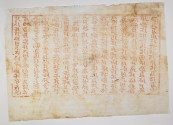
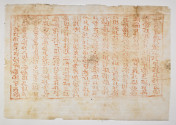
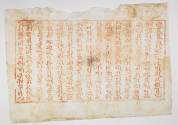
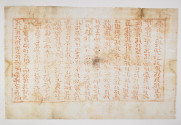
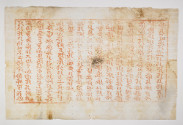
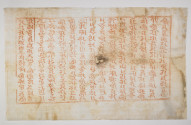
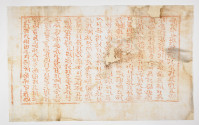
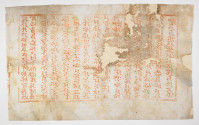
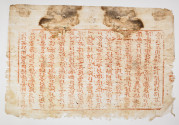
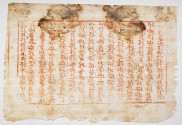
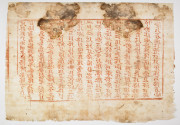
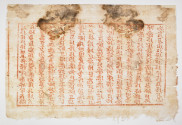
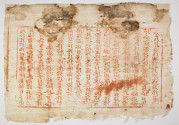
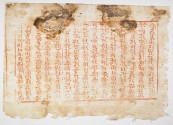
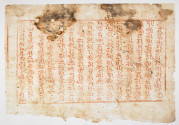
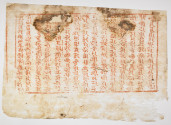
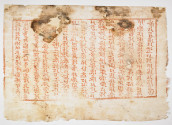
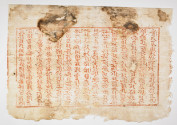
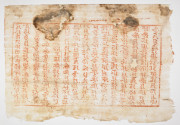
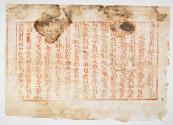
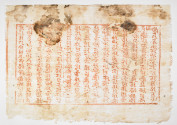
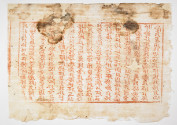
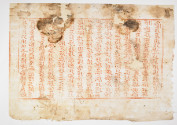
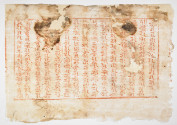
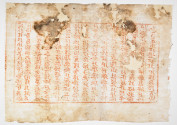
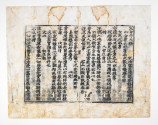
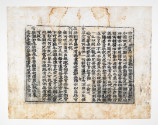
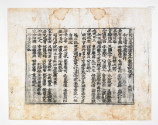
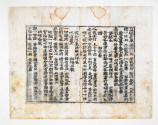
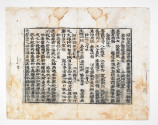
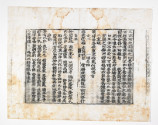
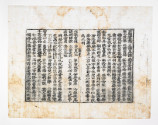
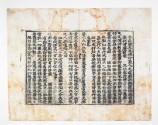
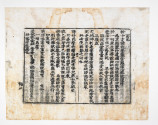
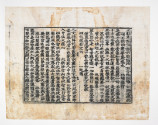
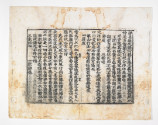
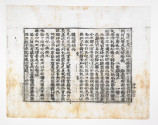
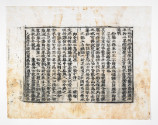
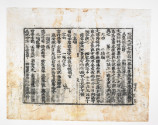
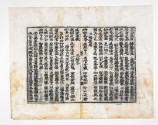
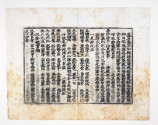
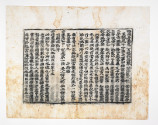
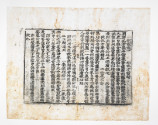
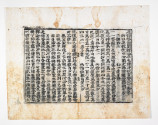
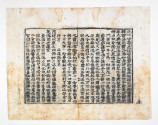
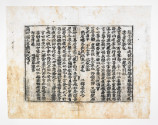
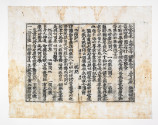
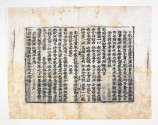
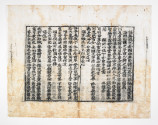
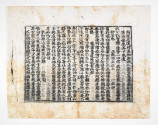
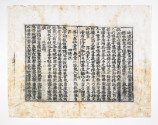
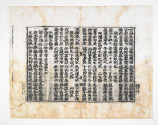
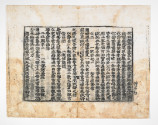
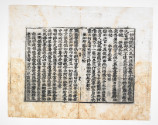
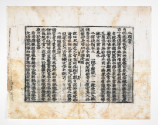
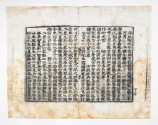
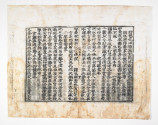
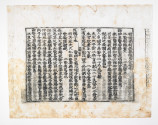
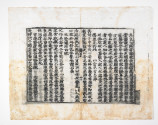
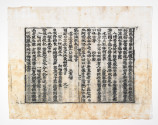
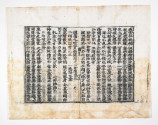
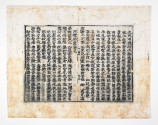
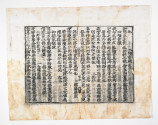
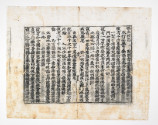
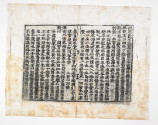
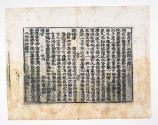
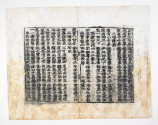
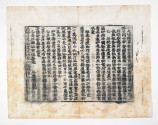
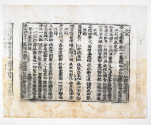
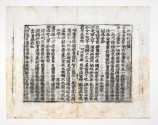
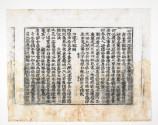
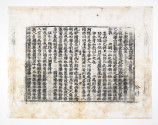
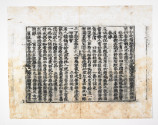
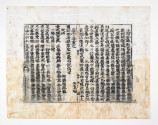
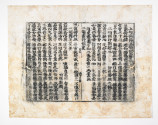
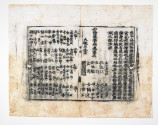
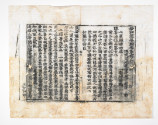
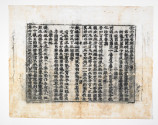
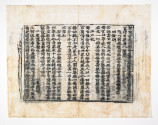
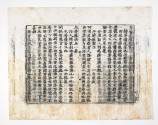
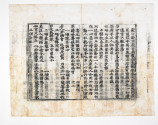
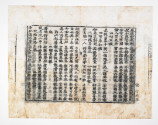
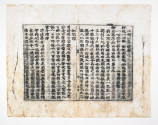
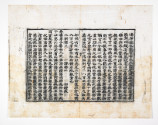
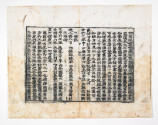
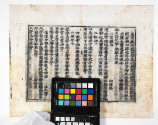
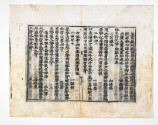
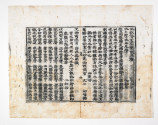
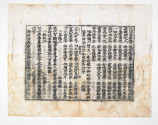
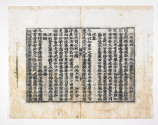
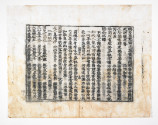
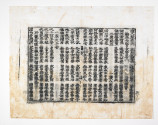
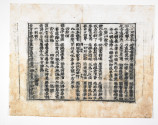
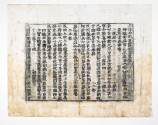
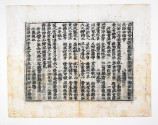
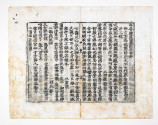
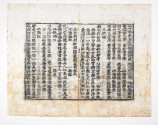
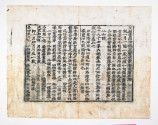
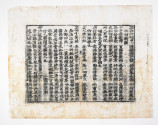
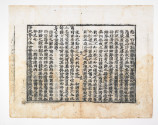
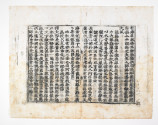
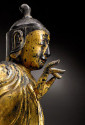
Gilt wood seated Bodhisattva accompanied by original sutra pages printed in red and black inks of the Lotus Sutra. Red ink sutra is written in Siddham language.
Wooden Seated Bodhisattva 목조보살좌상
Courtesy of the Harn Museum of Art, Photography by Randy Batista

Wooden Seated Bodhisattva 목조보살좌상

Artist Korean Artist 작자미상 作者未詳
DateJoseon Dynasty (1392-1910), 17th century
Place of originKorea, Asia
MediumGilded wood with traces of pigment. Original sutra pages were found within the body cavity of the sculpture.
Dimensions25 1/2 x 17 1/4 x 13 1/2 in. (64.8 x 43.8 x 34.3 cm)
Sutra Pages: 11 5/8 x 7 3/8 in. (29.5 x 18.7 cm)
Sutra Pages: 16 3/4 x 12 1/8 in. (42.5 x 30.8 cm)
ClassificationsSculpture
Credit LineMuseum Purchase, Gift of Michael and Donna Singer
Object number2008.20
Collections
Visual DescriptionA gold-gilded wood seated Bodhisattva accompanied by original sutra pages printed in red and black inks of the Lotus Sutra which were stowed in the body cavity of the statue.
Bibliography
Reading a Bodhisattva Image from 17th Century Korea
The Samuel P. Harn Museum of Art
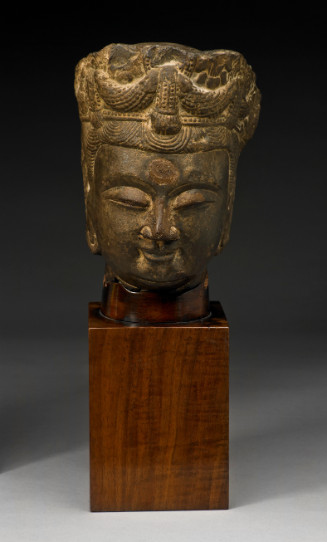
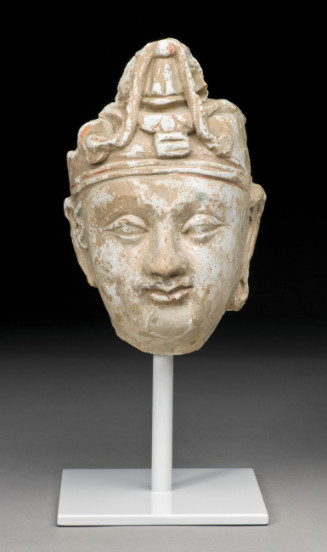
Head of a finely carved Bodhisattva with arched brows, elongated eyes, broad nose, and full lips. Wearing jeweled headdress held in place by a ribbon.
Chinese Artist
Northern Qi or Sui Dynasty, late 6th Century
A head of the bodhisattva Maitreya with half-closed eyes and a small mouth. The painted wavy mustache shows the Classical features of Greco-Roman influence.
Afghani
4th-5th Century
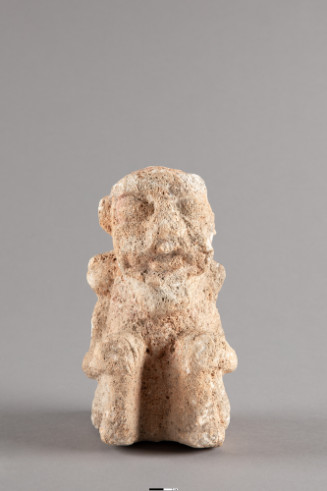
Seated male figure with legs flexed and pulled up torso, arms at side, hands on knees, wide bony shoulders, large head, jutting jaw, were-jaguar mouth with extended tongue, wide flat nose, bulbous rectangular eyes, low crown of head, back of figurine is very rough; traces of pigment on surface of figure.
Olmec Artist
1000-300 BCE
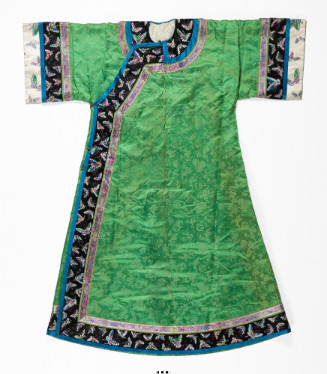
Body of robe is green damask densely patterned with Three Friends of Winter motif; white satin cuffs and both the black binding and a woven pink binding are embroidered with butterflies.  There is a narrow blue silk binding at hem and between white cuffs and bindings on sleeves; there is a gold ribbon on either side of pink binding panel.  The buttons are a textured gilded brass, and the lining is an off-white silk.
Chinese Artist
Qing dynasty (1644-1911), late 19th century
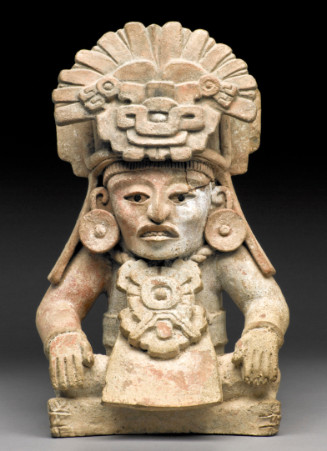
Seated male figure with legs crossed in front, hands on knees hollow cylindrical body with opening at top of headdress good proportions to figure, good modeling of features, wears  large ornamental headdress, ear spools, necklace with large pendant and bracelets.

White pigment on part of the face and body, also at spots in headdress and pendant.
Zapotec Artist
300 - 500
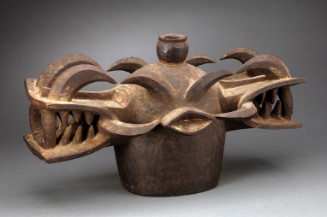
A dark, carved wooden mask with a cylindrical base and central dome topped with a small cylinder. It features wide, horizontal snouts with jagged teeth and several curved, crescent-like shapes projecting outward and upward.
Senufo Artist
20th century
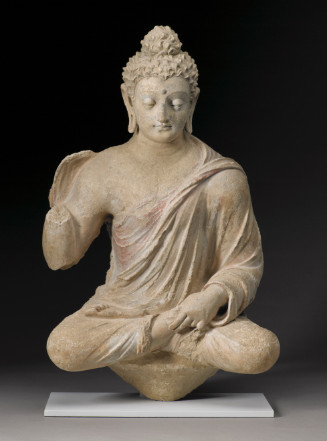
Seated Buddha, right forearm missing, his left hand holds the end of his robe, wearing a toga-like garment.
Gandharan
4th-5th Century
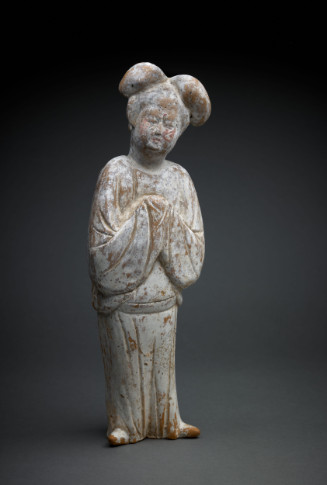
A fine pottery figure of an elegant court lady, standing, wearing a loosely fitted robe tied at the waist with a belt, the feet protruding from underneath the hen, the hands covered by the long sleeves. She tilts her head at an angle, the hair is dressed in two elaborate top knots. The buff pottery covered with a thin layer of white slip, the face with the remains of red pigment.
Chinese Artist
Tang dynasty (618–906), 8th century
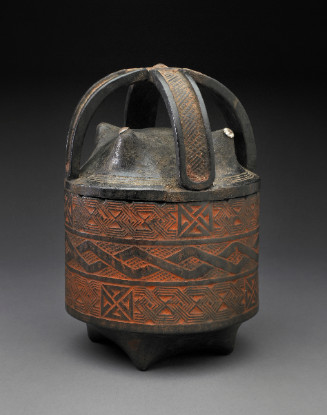
Cylindrical box with openwork top of four arches. Side with relief carving of interlace and lozenge patterns. Red pigment rubbed into incised areas.
Kuba Artist
c. 1950
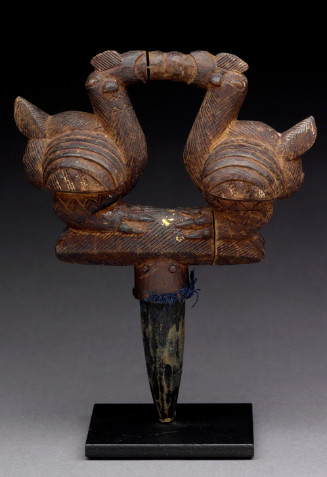
Finial surmounted by two confronted birds on a platform, and with traces of gold leaf and pigment.
Akan Artist
undated
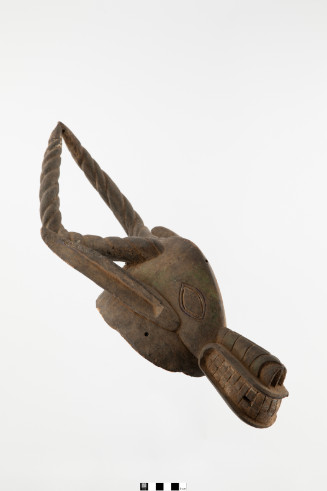
Mask in form of antelope with slender snout with carved teeth, domed head, long ears, inward curving spiraling horns, and pigment.
Yoruba Artist
mid 20th century
null