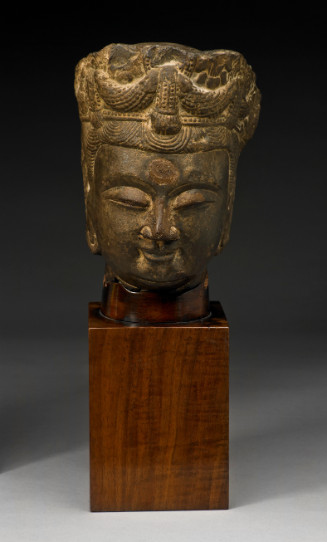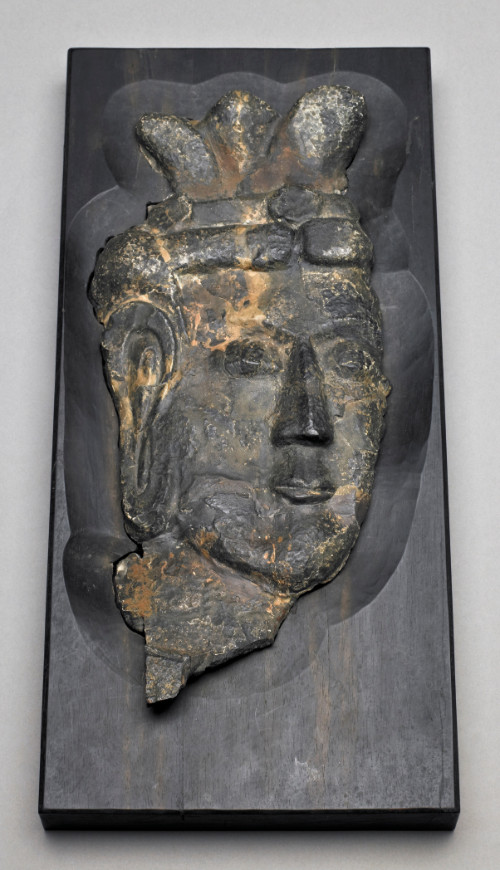
Dark gray limestone head of a Bodhisattva with polychrome traces carved in low relief as a three-quarter view depicting a slightly grinning bud-shaped mouth and hair-knot dressed with diadem
Bodhisattva Head
Courtesy of the Harn Museum of Art, Photography by Randy Batista

Bodhisattva Head

Artist Chinese Artist
DateNorthern Wei Dynasty 6th century (520s CE)
Place of originLongmen Caves, Henan Province, China, Asia
MediumLimestone
Dimensions14 3/4 x 6 9/16 x 1 3/4 in. (37.5 x 16.7 x 4.4 cm)
ClassificationsSculpture
Credit LineMuseum purchase, funds provided by friends of the Harn Museum and the Robert H. and Kathleen M. Axline Acquisition Endowment
Object number2008.24.1
Collections
Visual DescriptionDark gray limestone head of a Bodhisattva with polychrome traces carved in low relief as a three-quarter view depicting a slightly grinning bud-shaped mouth and hair-knot dressed with diadem
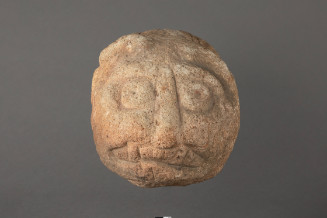
Carved stone head representing a jaguar; round face with extension of neck in back, features cut and grooved into smoothed surface.  Wide mouth, teeth showing with large incisors; nose indicated by two grooves, large donut-shaped eyes, stubby feline ears, low and rounded.  Traces of red pigment in grooved areas and pits of limestone.
Olmec Artist
800-1000
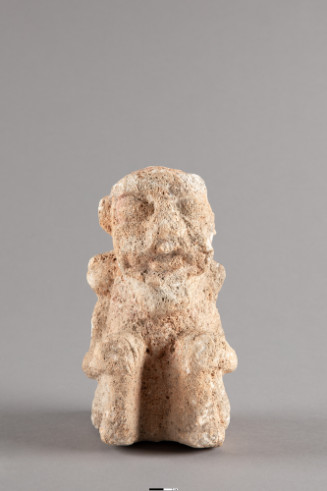
Seated male figure with legs flexed and pulled up torso, arms at side, hands on knees, wide bony shoulders, large head, jutting jaw, were-jaguar mouth with extended tongue, wide flat nose, bulbous rectangular eyes, low crown of head, back of figurine is very rough; traces of pigment on surface of figure.
Olmec Artist
1000-300 BCE
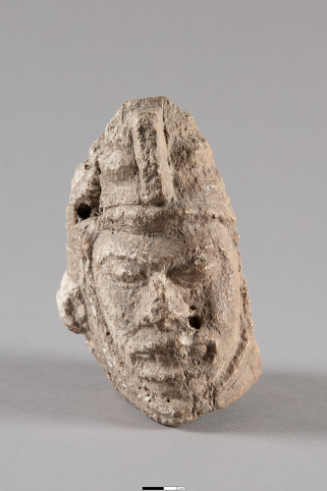
Carved stone head with grimacing mouth, lips pulled back, teeth exposed, wide flat nose, heavy lidded eyes, prominent brow, large headdress with central, vertical comb, extending down around face to chin, right side is squared off, as is bottom of jaw.
Maya Artist
600-950
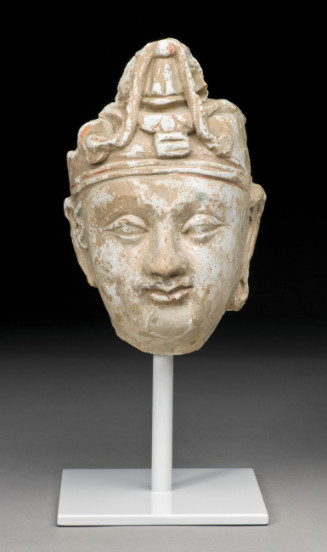
A head of the bodhisattva Maitreya with half-closed eyes and a small mouth. The painted wavy mustache shows the Classical features of Greco-Roman influence.
Afghani
4th-5th Century
Head of a finely carved Bodhisattva with arched brows, elongated eyes, broad nose, and full lips. Wearing jeweled headdress held in place by a ribbon.
Chinese Artist
Northern Qi or Sui Dynasty, late 6th Century
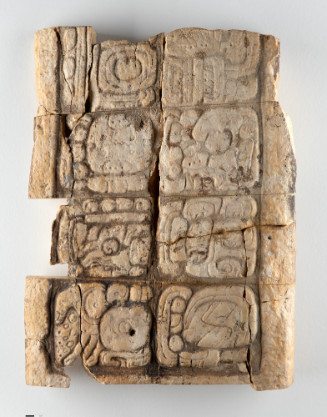
Carved stone panel containing eight Maya glyphs in two columns, border of smoothed, rounded stone on sides, small border on bottom, none on top.
Maya Artist
700-850
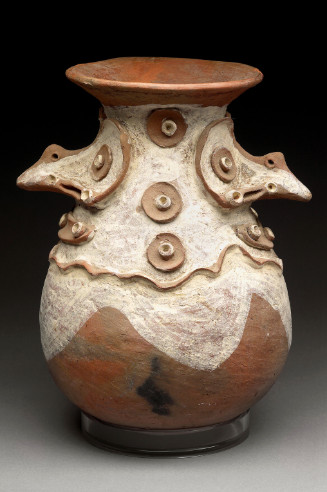
Fired clay pot with rounded bottom and two long beaked faces (janus style) on neck in high relief. Red clay with white design on surface. Scalloped raised line (red) runs around center. Face has circular raised eyes with white centers. Raised red mouth with three white raised circles. Three raised "buttons" run horizontally between face. Traces of black on one side of jar.
Iatmul
20th century
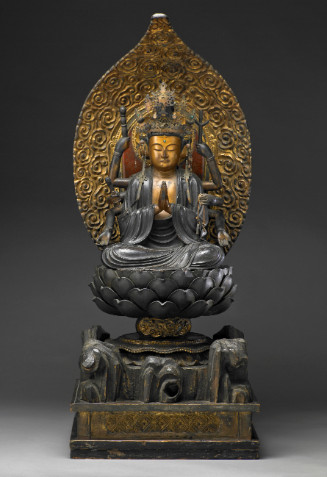
Eight-armed, three-headed, seated bodhisattva on the lotus throne set upon a rock formation with gilt mandorla.
Japanese Artist
18th century
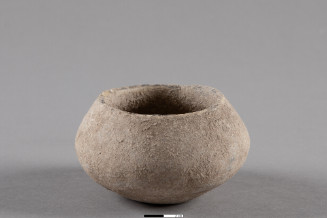
Small bowl with small diameter, flat bottom, low outward sloped walls curving up at one third height, straightening with inward slope to rim - slightly lop-sided.
Buff ware with traces of black pigment around rim.
Diquis Artist
800-1500
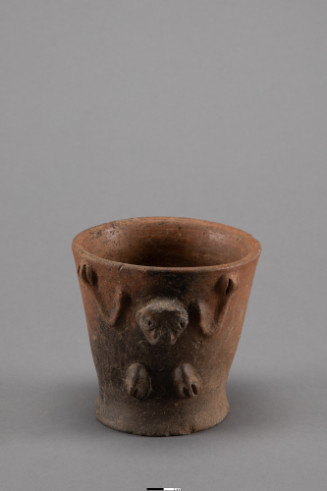
Small cup with flat base, raised on a ring at edge, wall angles at base, then straight upwards with an outward slope to rim, interior is rounded at bottom; brown ware with traces of red slip, animal figure, probably monkey, on one side, head in full relief, lower legs and arms in bas-relief, arms upraised, hands at rim, face worn down, open circular mouth.
Chorotegan Artist
1-500
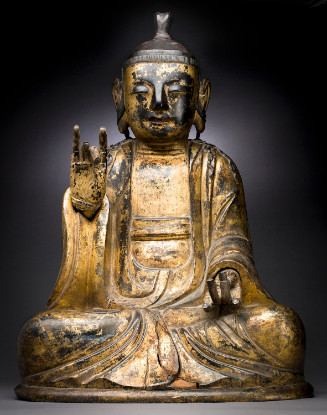
Gilt wood seated Bodhisattva accompanied by original sutra pages printed in red and black inks of the Lotus Sutra. Red ink sutra is written in Siddham language.
Korean Artist 작자미상 作者未詳
Joseon Dynasty (1392-1910), 17th century
null