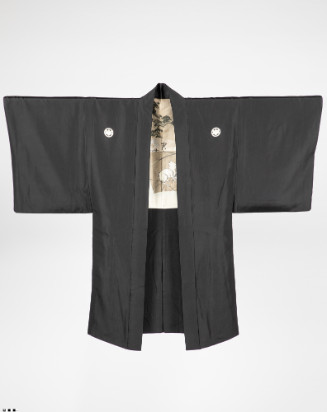
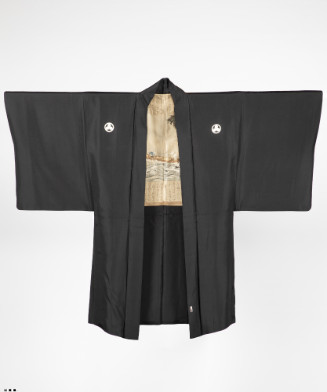
Patterned black silk with woven design on clouds, ropes, symbols, done with gold, silver, and red threads. Lining is Art Deco in feel with patterned ships, cards and animals.
Woman's Haori
Courtesy of the Harn Museum of Art, Photography by Randy Batista

Woman's Haori

Maker Japanese Artist
DateTaisho Period (1912-1926)
Place of originJapan
MediumSilk
Dimensions50 1/2 x 36 in. (128.3 x 91.4 cm)
ClassificationsTextiles
Credit LineGift of Norma Canelas Roth and William D. Roth
Object number2008.45.6
Collections
Visual DescriptionPatterned black silk with woven design on clouds, ropes, symbols, done with gold, silver, and red threads. Lining is Art Deco in feel with patterned ships, cards and animals.
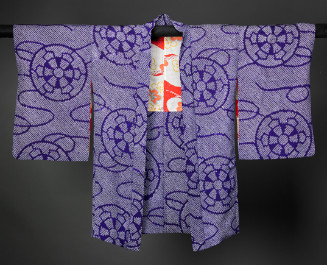
Purple silk with dot pattern overall that develop roundels with floral design within. Lining is red-orange, cream and turquoise in floral design.
Japanese Artist
Taisho Period (1912-1926)
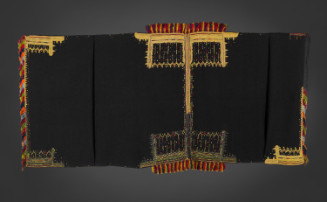
Two panels (handsewn together with red silk) in fine spun wool dyed black with heavy embroidery at the four corners in gold thread, yellow, green, red, blue silk. Embroidered patterning consists of geometric motifs resembling an architectural setting (gables and columns) or a jeweled crown with pendants; along the borders, linking the heavy inlay at the corners are small silk crosses in the above-mentioned colors. Fringes at either end are made of twisted silk threads in red, orange, mauve, gree…
Amazigh Artist
20th century
This is a men's black formal haori with unique pattern lining. Textile is habutae silk. The lining has woven pattern of rabbit, pine tree, kougou and characters.
Japanese Artist
undated
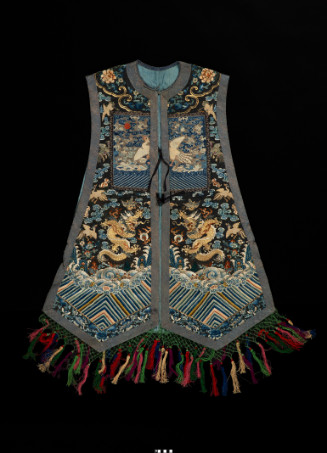
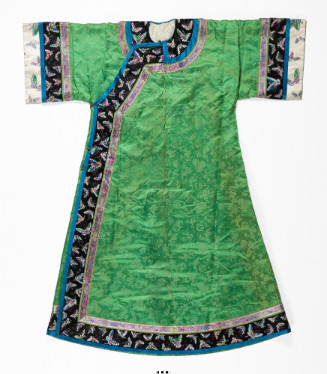
Body of robe is green damask densely patterned with Three Friends of Winter motif; white satin cuffs and both the black binding and a woven pink binding are embroidered with butterflies.  There is a narrow blue silk binding at hem and between white cuffs and bindings on sleeves; there is a gold ribbon on either side of pink binding panel.  The buttons are a textured gilded brass, and the lining is an off-white silk.
Chinese Artist
Qing dynasty (1644-1911), late 19th century
This is a men's black formal haori with unique pattern lining. The textile is habutae silk. The linking has woven patter- "ukai" (ancient fishing method catching Japanese trout by using tamed cormorants) and characters motif.
Japanese Artist
undated
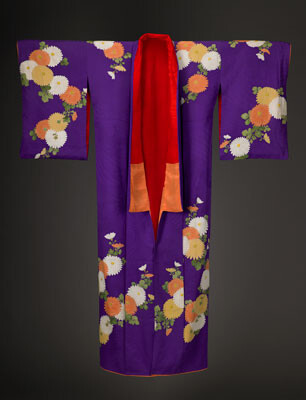
Textured purple silk kimono with white/orange/yellow flowers with leaves lined with red and light orange linings.
Japanese Artist
Taisho Period (1912-1926)
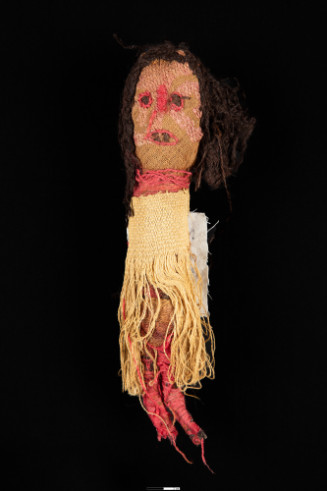
Figure made with woven fibers (probably wool, possibly camelid); large head with embroidery on face (pink) some loss of threads; features on face defined by black thread, possibly camelid wool; black threads for hair; white tunic with fringe; legs taper to two points, and are covered with pink and red patterned wool; threads seem friable and hair is tangled; stuffing seems to be bundled fiber.
Chancay Artist
1000-1450
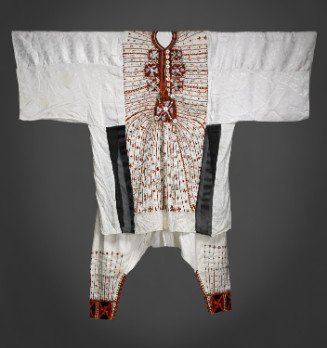
Two-piece ensemble Tunic made of synthetic damask cloth w/ silk embroidered geometric patterns in black, yellow, red, green; with mother of pearl buttons large and small sewn throughout in geometric patterns; see-through synthetic black panels on side of top "asherah nahuak; white cotton muslin trousers "srauleen" w/ silk embroidery on lower legs in red, orange, green, yellow and black thread"
Amazigh Artist
late 20th century
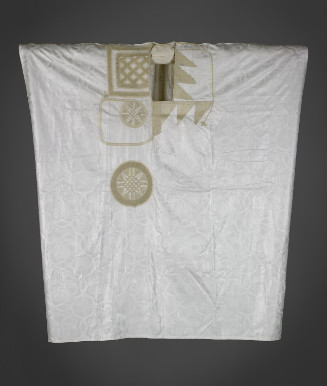
Cotton damask cloth (bazin); geometric designs embroidered on front and back, and openwork in off-white silk thread (tunic); headtie and skirt are made of same damask (no embroidery)
Baba Djitteye
20th century
null