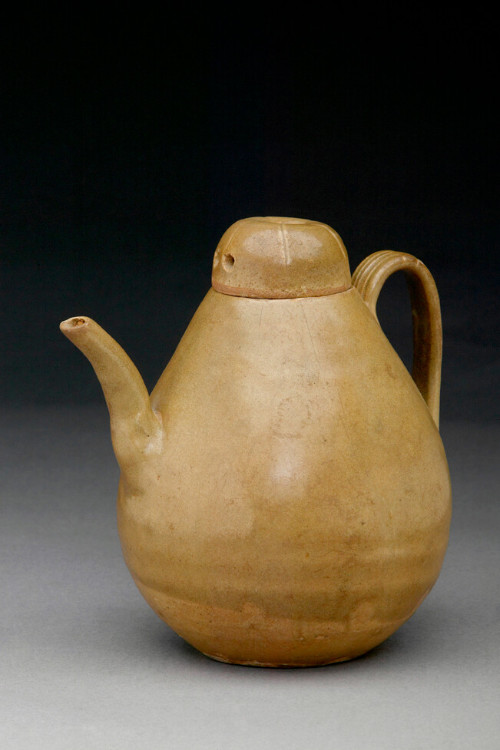
Cover and body divided into five lobes, curved spout and ribbed handle
Melon-form Ewer with Olive Glaze
Courtesy of the Harn Museum of Art, Photography by Randy Batista

Melon-form Ewer with Olive Glaze

Artist Chinese Artist
DateFive Dynasties or Song Dynasty, 10th-12th century
Place of originChina, Asia
MediumGlazed stoneware
Dimensions9 5/8 x 6 1/4 in. (24.4 x 15.9 cm)
ClassificationsFurnishings and Equipment
Credit LineMuseum Purchase, funds provided by the David A. Cofrin Art Acquisition Endowment
Object number2001.29.11
Collections
Visual DescriptionCover and body divided into five lobes, curved spout and ribbed handle
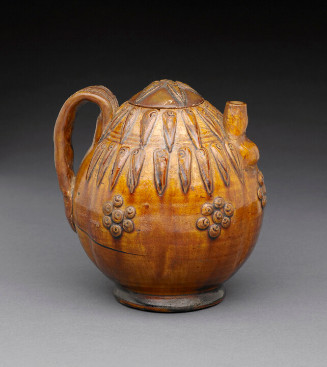
Ewer form with spout and handle; decoration includes "fish egg" design in floral motif and leaf motif
Chinese Artist
Liao Dynasty (907-1125), 10th Century
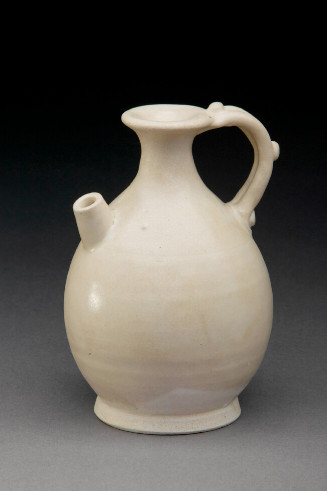
Pear-shaped body with short spout and handle with three bosses.
Chinese Artist
Tang Dynasty (618-906)
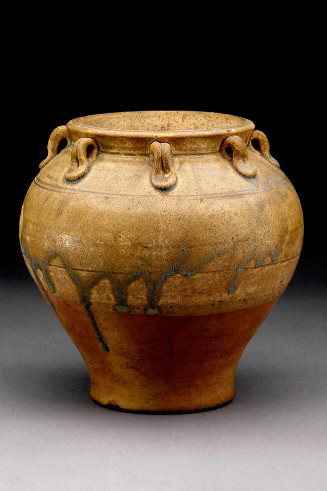
A bulbous ceramic jar with a wide mouth, featuring small loop handles around its short neck. A tan glaze coats the top half and drips heavily downward, stopping to expose the unglazed, reddish-brown clay of the tapered lower body.
Chinese Artist
Sui dynasty (581-618), 6th century
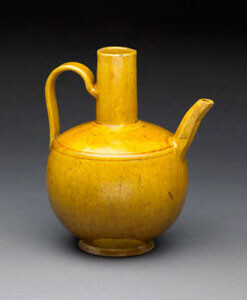
A yellow-glazed ewer with round body, cylindrical neck, strap handle, and octagonal-shaped spout.
Chinese Artist
Northern Song (960–1127), 10th-11th Century
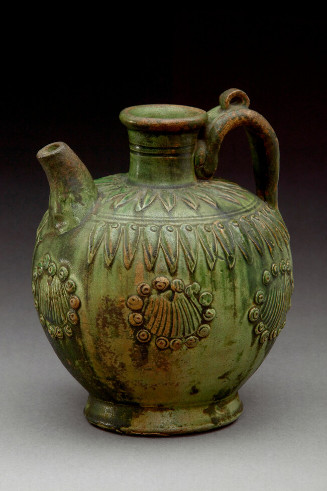
Ewer form with spout and handle, decoration of shells, "fish eggs" and leaves
Chinese Artist
Liao Dynasty (916-1125), 10th Century
Broad-shouldered form with lugs at the lip; inscribed
Chinese Artist
Tang dynasty (618-907), 8th-9th century
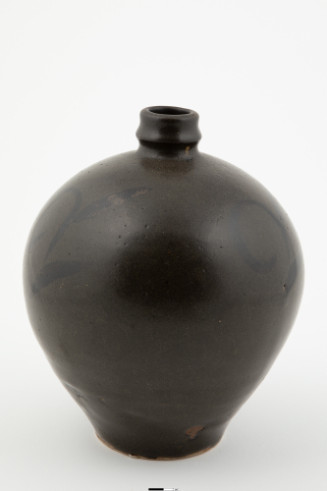
Bottle with ovoid form, double-ringed lip, three foliate sprays.
Chinese Artist
Jin Dynasty or Yuan Dynasty, 13th-14th century
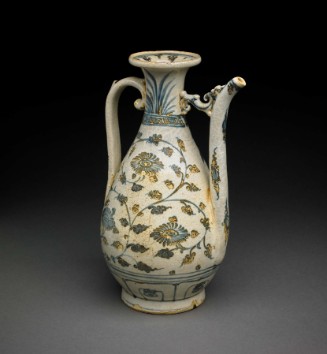
Persian style ewer with decoration of flowers, grass and trefoil design.
Vietnamese
15th-16th Century
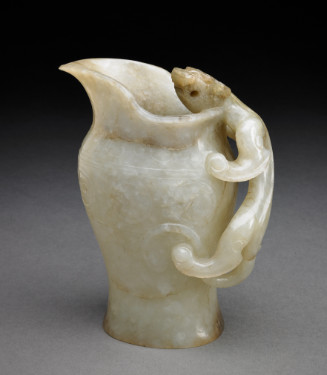
An oval vase-shaped ewer with curved spout elegantly carved from translucent jade. The mottled white material has greenish-gray tones and inclusions. The handle is carved aways from the cup in the sculptural from of a chih dragon with turned head clutching the rim. The dragon has a raised spine, spiraling articulations, and stylized wings on the thighs and shoulders.
Chinese Artist
possibly Ming Dynasty (1368-1644)
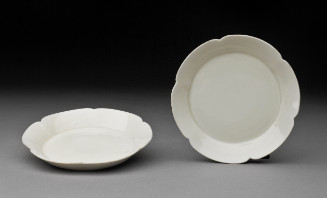
Flaring sides end in hexagonal lobes
Chinese Artist
Northern Song dynasty (960-1125), 10th-11th century
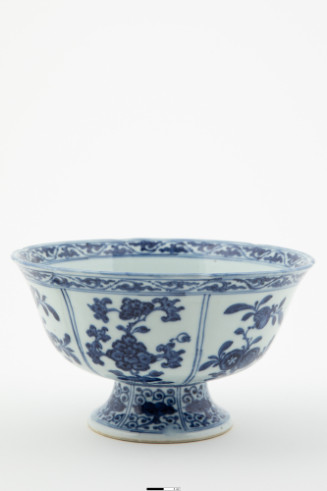
Blue and white stem bowl with six lobes decorated with peaches, pomegranates and finger citron.
Chinese Artist
Qing dynasty (1644-1911), 18th century
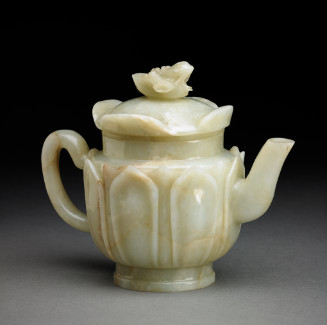
Of tapering globular shape, carved with two layers of eight lotus petals rising from the shallow, pedestal foot, with angular spout, curved handle and plain, straight-cut neck rising from the rounded shoulder, the cover carved as a lotus pad with a four up-turned leaves centered by a mandarin duck holding a lotus spray in its beak, some russet flaws and pale inclusions
Chinese Artist
Ming dynasty (1368-1644)
null