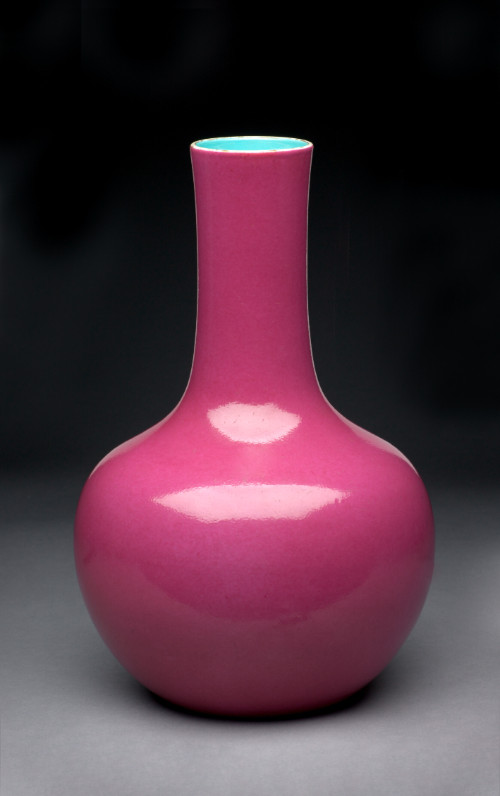
The well-potted body of globular form with a tall, slightly flaring cylindrical neck, the exterior all under a rose-pink glaze with a slight 'orange-peel' effect, the interior and base around the reserved iron-red seal mark all with a turquoise glaze, traces of gilt along mouth rim.
Vase
Courtesy of the Harn Museum of Art, Photography by Randy Batista

Vase

Artist Chinese Artist
DateQing dynasty (1644-1911), Qianlong period (1736-1795)
Place of originChina, Asia
MediumPorcelain with tea glaze
DimensionsHeight x Diameter: 12 1/2 x 8 in. (31.8 x 20.3 cm)
ClassificationsFurnishings and Equipment
Credit LineBequest of Dr. David A. Cofrin
Object number2009.48.307
Collections
Visual DescriptionThe well-potted body of globular form with a tall, slightly flaring cylindrical neck, the exterior all under a rose-pink glaze with a slight 'orange-peel' effect, the interior and base around the reserved iron-red seal mark all with a turquoise glaze, traces of gilt along mouth rim.
Vase
Chinese Artist
Qing dynasty (1644-1911), Qianlong period (1736-1795)
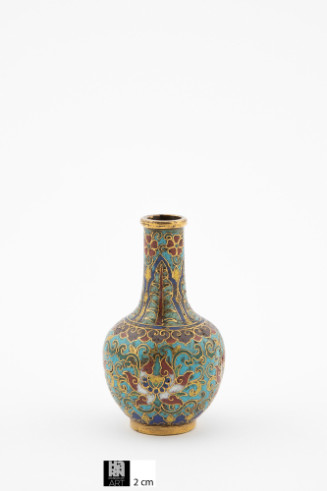
A fine cloisonné enamel vase of globular bottle form with a cylindrical neck and low gilt foot rim, decorated with ruyi-head lappets at the foot and around the shoulder; the body decorated with formalized lotus flowers, leaves and stems; the neck decorated with flowers above tall leaf-form lappets; all enameled in red, yellow, white, lapis blue, light and dark green, and aubergine on a turquoise ground.
Chinese Artist
18th Century
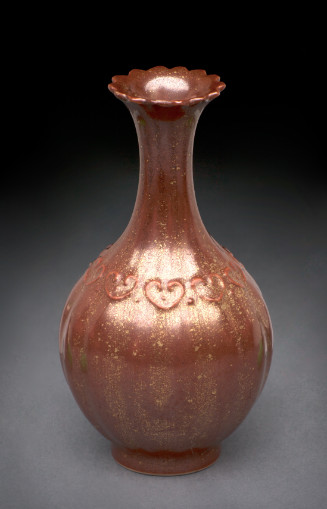
Delicately potted, the fluted ovoid body with molded ruyi lappets adorning the shoulder, extending up towards a tall slender neck with flared mouth and serrated rim, glazed overall in a rich russet brown glaze further accented with gold flecks, the four-character mark written in gilt
Chinese Artist
Qianlong Period, 1736-1795
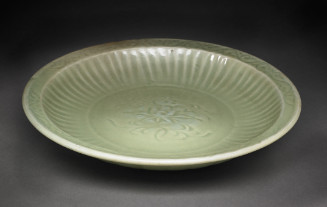
Charger with central carved design floral medallion, wide rim with rolled edge and scrolling motif, and curved cavetto with vertical ribbing (fluting). Heavy charger with thick celadon glaze completely covering interior; exterior foot ring and base glazed except for unglazed irregular wide ring for firing. Where glaze is omitted, the red-brown clay body is exposed. Designs include interior central medallion with well defined traditional floral motif and intermittent abstracted floral pattern und…
Chinese Artist
Ming dynasty (1368-1644), 14th-15th century (possibly late Yuan Dynasty, 13th century)
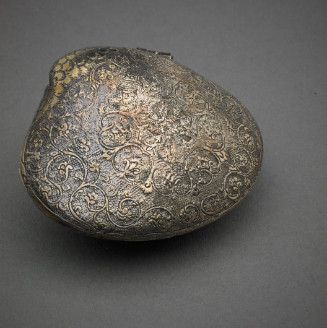
Realistically formed inside and out as a clam shell, each side engraved with a large central flower head encircled by a border of eight foliate lobes surrounded by leafy foliate scroll, all reserved on a ring-punch ground, the hinged area engraved with feathers bearing traces of gilding
Chinese Artist
Tang dynasty (618-907)
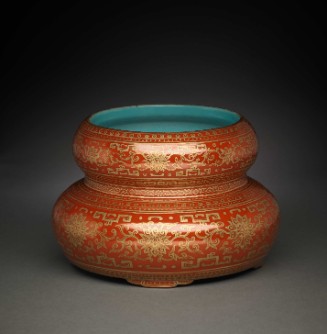
The compressed body raised on four shallow ruyi supports and painted in gilding with bands of lotus sprays and fretwork set within multiple decorative borders, all reserved on a deep coral ground continuing onto the base, the interior covered in a rich matte turquoise glaze
Chinese Artist
Qing dynasty (1644-1911), Qianlong period (1736-1795)
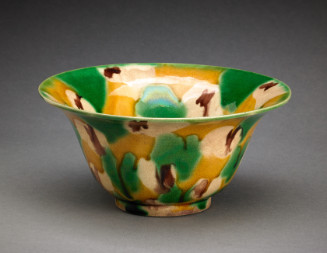
Bowl with sloped sides and striking vivid mustard yellow and green abstractly patterned glaze on interior and exterior. Thinly-potted, with flaring lip, well-formed footring, with minute crackle in glaze overall.
Chinese Artist
Qing dynasty (1644-1911), 18th-19th century
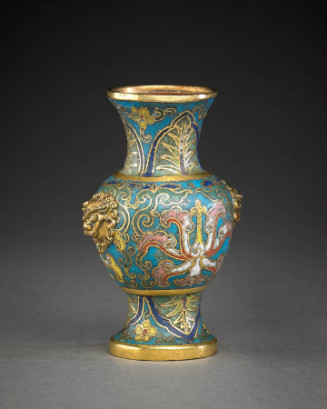
A fine miniature cloisonné enamel vase of baluster form, the rounded body set with two high relief gilt-bronze mask handles and decorated with lotus flowers and leaves, the tall flared foot decorated with flower heads and leaf lappets, the tall flared neck similarly decorated. All enameled in red, yellow, white, light and dark green, pink, and lapis blue on a turquoise blue ground.
Chinese Artist
18th Century
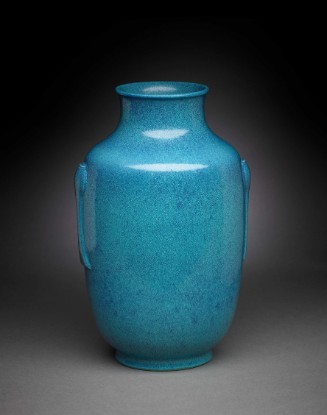
The tapering cylindrical body with a pair of molded handles formed as inverted trumpet necked vases below the sloping shoulder, covered all over and on the base with a finely mottled opaque glaze of turquoise and dark blue color
Chinese Artist
Qing Dynasty, Daoguang Period (1821-1850)
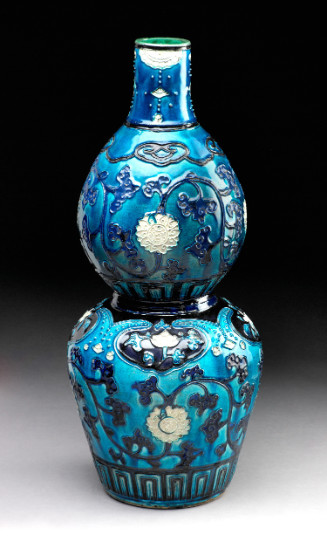
Made in the Ming style, both the lower and upper body decorated with slip in thread relief outline with lotus meander set between lappet borders below and ruyi collars above, all in white, blue and blackish purple reserved on a turquoise ground.
Chinese Artist
18th century
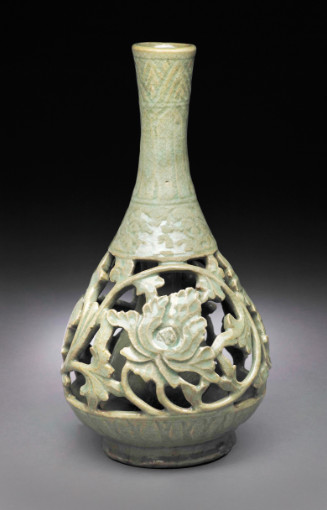
Double-walled vase, the outer wall carved with an openwork floral design. The whole vase covered with a bluish-green celadon glaze.

A rare reticulated 'Longquan' celadon bottle vase, the pear shaped body set with a tall neck carved with flowers and upright leaf lappets, the belly pierced through to the smaller inner vase to reveal on the exterior two elegant peonies borne on an undulating leafy stem, applied overall with an unctuous bluish-green glaze pooling in the recesses, all supported on…
Chinese Artist
Ming Dynasty (1368-1644)
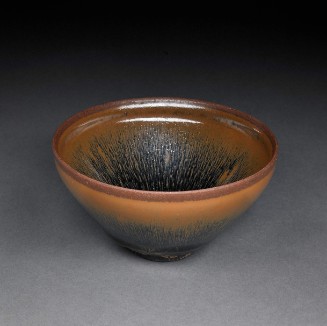
Thickly potted, flaring sides, covered inside and out with a lustrous blackish glaze densely streaked in russet with hare's fur markings falling short in a pooled line above the shallow, circular foot exposing the dark gray stoneware, the indented mouth rim covered with a matte, iron-rich slip.
Chinese Artist
Southern Song Dynasty (1127-1279)
null