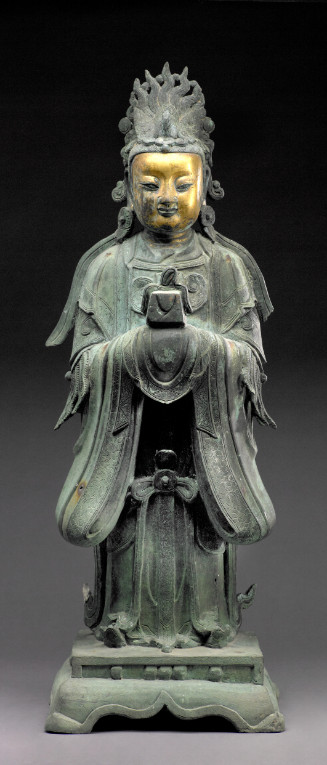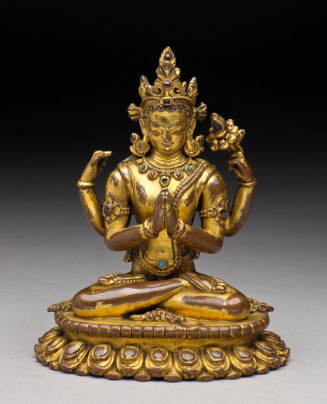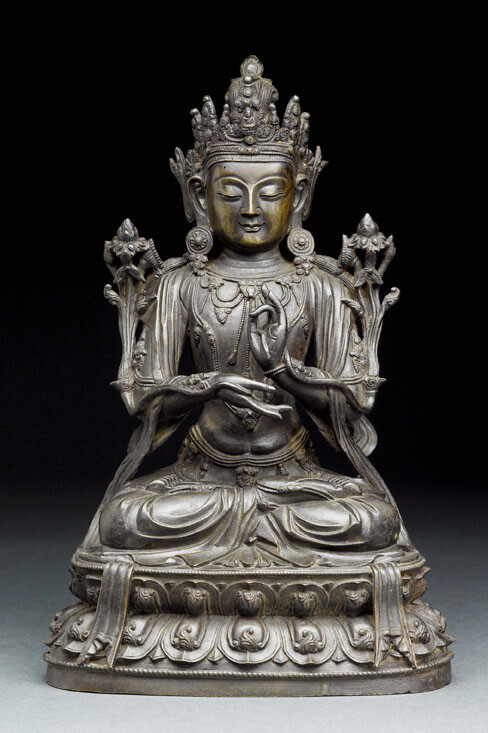
Figure of Avalokiteshvara seated in padmasana on lotus plinth. Right hand in varadamudra and left hand in vitarkamudra. Lotus stems held in each hand. Body adorned with beads and 5-pointed crown has image of seated Amitaba Buddha in center.
Seated Guanyin 青銅觀音坐像
Courtesy of the Harn Museum of Art, Photography by Randy Batista

Seated Guanyin 青銅觀音坐像

Artist Chinese Artist
DateMing Dynasty (1368-1644), 15th-16th century
Place of originChina
MediumBronze
Dimensions13 3/4 x 9 1/2 x 5 1/2 in. (34.9 x 24.1 x 14 cm)
ClassificationsSculpture
Credit LineGift of Dr. and Mrs. David A. Cofrin
Object number2003.8.1
Collections
Visual DescriptionFigure of Avalokiteshvara seated in padmasana on lotus plinth. Right hand in varadamudra and left hand in vitarkamudra. Lotus stems held in each hand. Body adorned with beads and 5-pointed crown has image of seated Amitaba Buddha in center.
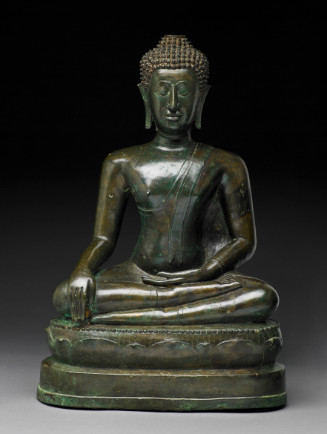
Seated historic Buddha Shakyamuni, with downcast eyes and his right hand pointing downwards in the earth-touching hand gesture (mudra).
Thai Artist
15th-16th century
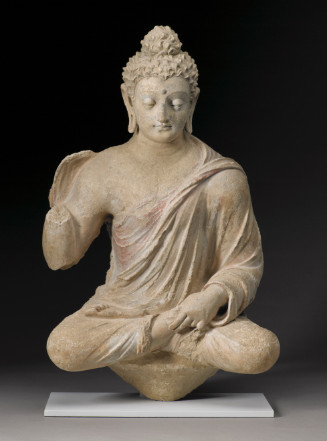
Seated Buddha, right forearm missing, his left hand holds the end of his robe, wearing a toga-like garment.
Gandharan
4th-5th Century
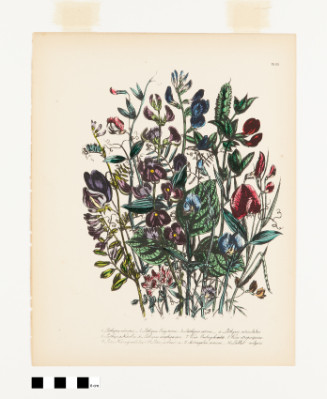
23 Lathyrus Odoratus
Jane Webb Loudon
1840
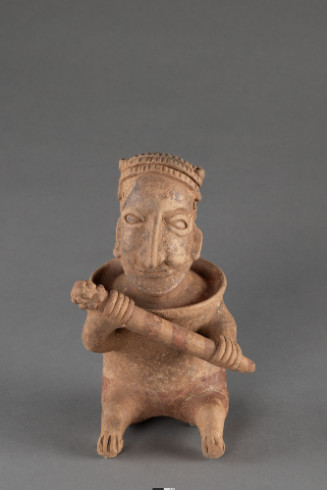
Hollow buff gray potter figure; red paint around collar of armor and on upper legs and alternating with strips of cream paint on club.
West Mexican Artist
1-200
Goddess figure wearing an elaborate robe.  Hands holding a symbol in front of her.
Chinese Artist
Qing dynasty (1644–1911), 17th century
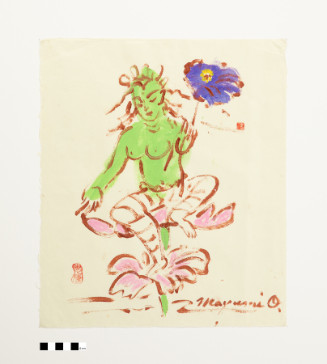
A Buddhist goddess sits on a lotus in a “royal ease” posture, with the left leg being tucked inwards and the right one dangling and resting on another lotus blossom. She holds a stem of flower in her left hand.
Mayumi Oda 小田檀
20th century
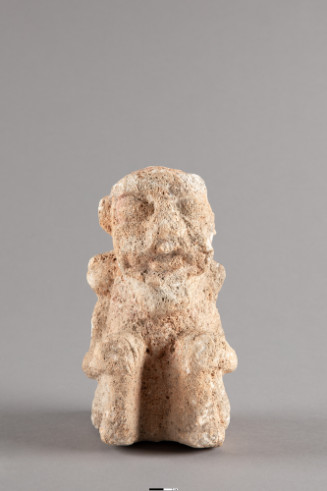
Seated male figure with legs flexed and pulled up torso, arms at side, hands on knees, wide bony shoulders, large head, jutting jaw, were-jaguar mouth with extended tongue, wide flat nose, bulbous rectangular eyes, low crown of head, back of figurine is very rough; traces of pigment on surface of figure.
Olmec Artist
1000-300 BCE
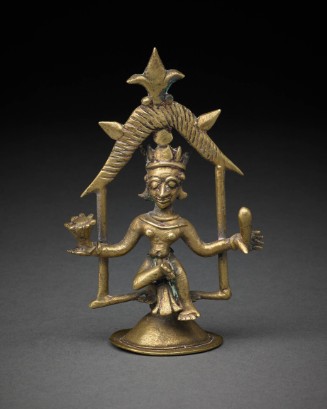
A small brass sculpture of a figure seated beneath an arch topped with a finial. The figure wears a crown and holds objects in both raised hands.
Indian Artist
20th century
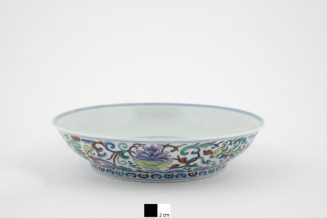
Interior of dish decorated with design of three phoenixes surrounding a stylized lotus blossom; the exterior also decorated with a band of phoenixes; six-character mark on base.

With shallow rounded sides rising to a slightly everted rim, brightly enameled with a central medallion of three archaistic phoenixes encircling a stylized lotus blossom borne on curling stems repeated in a frieze on the exterior, a border of C-shaped motifs enclosing a dot encircling the foot.
Chinese Artist
Qing dynasty (1644-1911), Daoguang reign (1821-1850)
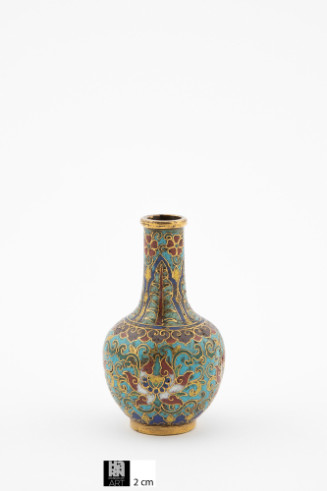
A fine cloisonné enamel vase of globular bottle form with a cylindrical neck and low gilt foot rim, decorated with ruyi-head lappets at the foot and around the shoulder; the body decorated with formalized lotus flowers, leaves and stems; the neck decorated with flowers above tall leaf-form lappets; all enameled in red, yellow, white, lapis blue, light and dark green, and aubergine on a turquoise ground.
Chinese Artist
18th Century
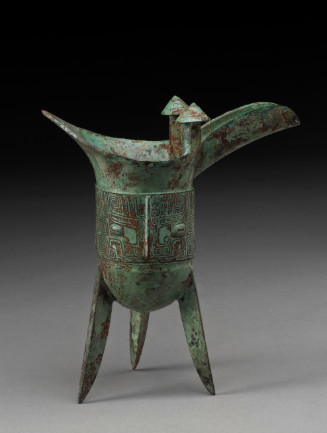
A wine vessel with narrow pouring spout and peaked pointed lip set with two posts, single loop handle emerging from a bovine head, rests on three sharply tapered legs.
Chinese Artist
Shang dynasty (ca. 1600–1100 BCE), 12th–13th century BCE
null