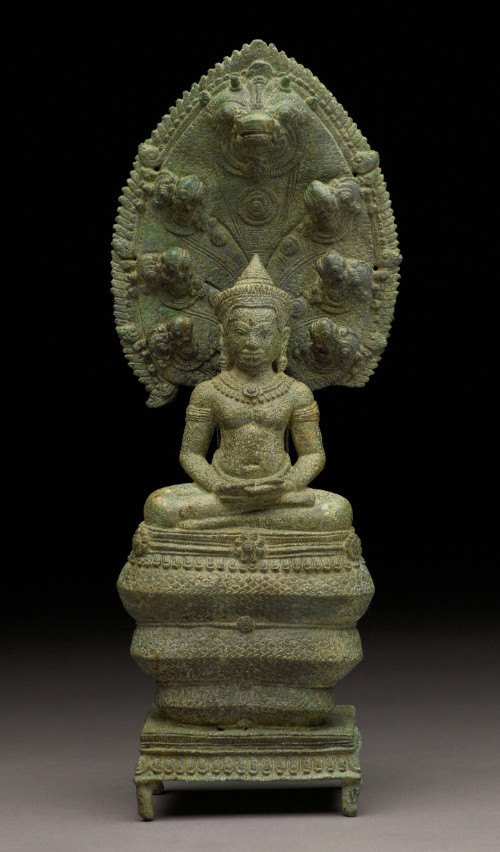
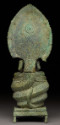
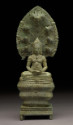
A sculpture cast in two parts, one being the seated bronze Buddha, deep in meditation, the other the seven-headed Naga snakes shielding surrounding Buddha’s head like a halo.
Naga-Enthroned Buddha
Courtesy of the Harn Museum of Art, Photography by Randy Batista

Naga-Enthroned Buddha

Maker Thai Artist
DateBayon period, 12th-13th century
Place of originThailand, Asia
MediumBronze
Dimensions14 x 4 3/4 x 2 3/4 in. (35.6 x 12.1 x 7 cm)
ClassificationsSculpture
Credit LineMuseum purchase, funds provided by the Robert H. and Kathleen M. Axline Acquisition Endowment
Object number2001.7
Collections
Visual DescriptionA sculpture cast in two parts, one being the seated bronze Buddha, deep in meditation, the other the seven-headed Naga snakes shielding surrounding Buddha’s head like a halo.
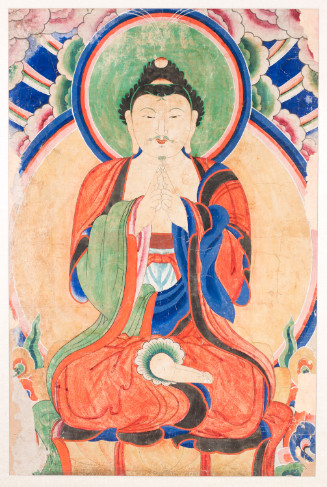
Seated Buddhist figure with colors
Korean Artist 작자미상 作者未詳
Early 20th century
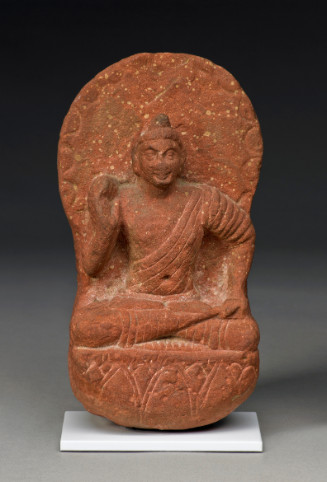
Sandstone sculpture depicting the Buddha siting on a throne with his robe worn over the left shoulder. His right hand is raised in the gesture of reassurance. A large halo is behind his head.
Indian Artist
Late 1st - early 2nd century
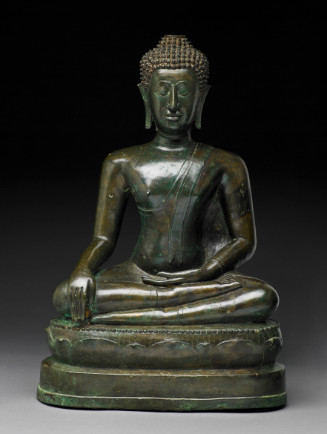
Seated historic Buddha Shakyamuni, with downcast eyes and his right hand pointing downwards in the earth-touching hand gesture (mudra).
Thai Artist
15th-16th century
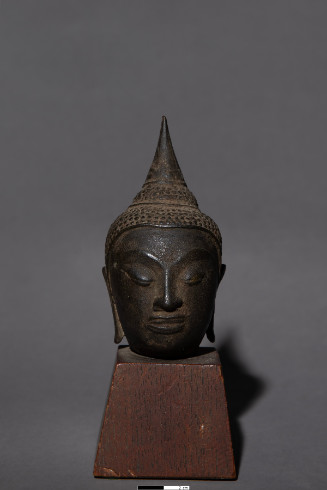
Buddha head on pedestal
Thai Artist
16th century
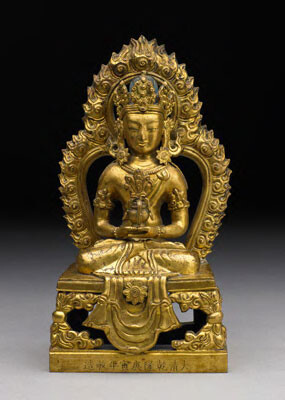
The Buddha of Infinite Life seated on a platform throne holding a vase surrounded by a flaming mandorla.
Chinese Artist
Qing dynasty (1644-1911), 1770
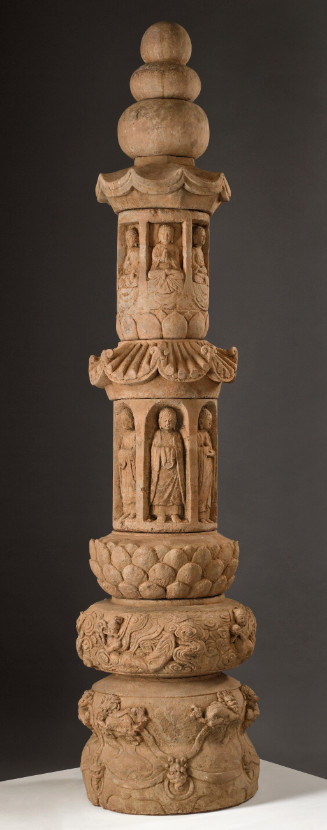
A tall sandstone pagoda with two relief bands of Buddhas resting on a lotus base and three ovate spaces on top.
Chinese Artist
Song Dynasty (960-1279), 11th-12th Century
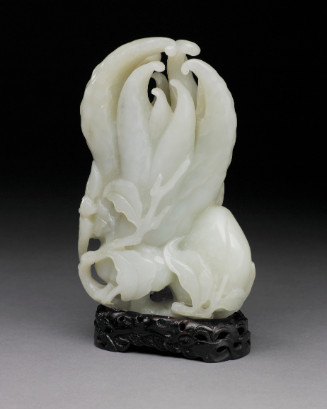
The emphasis on the smooth sensuous surface, fluidity of lines and the attention to detail are all typical elements of the eighteenth century carving tradition.  Fashioned of a pure white jade, the citron is entwined with leaves and accompanied by a bat and a peach. The long delicately carved tendrils bend gracefully at the tips, resembling Buddha's hand in the classic position. The citron symbolizes wishes for longevity as well as wealth, since it illustrates the gesture of grasping money. The …
Chinese Artist
18th-19th century
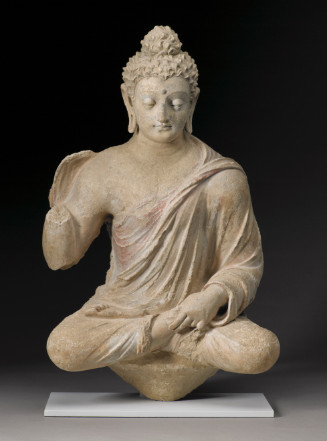
Seated Buddha, right forearm missing, his left hand holds the end of his robe, wearing a toga-like garment.
Gandharan
4th-5th Century
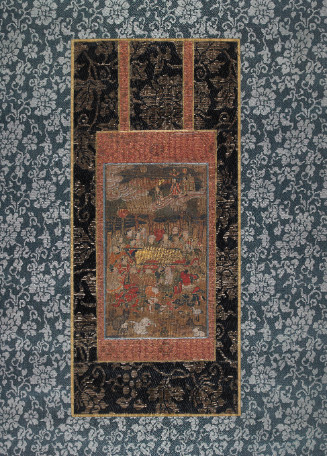
Miniature hanging scroll depicting parinirvana of the Sakyamuni Buddha
Japanese Artist
17th century
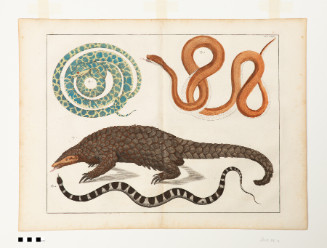
Four drawings of animals. In the center, a Sri Lankan armadillo casts a shadow below. Above the armadillo is a blue and yellow African viper and a brown African grass snake. Both snakes curl and entwine their bodies. Below the armadillo is a brown and white African grass snake, which stretches its body across the composition. Plate 54 from Volume I of "Locupletissimi Rerum Naturalium Thesauri," Amsterdam: Wetsten, Smith and Waesberg, 1734-1755.
Albert Seba
1734-1755
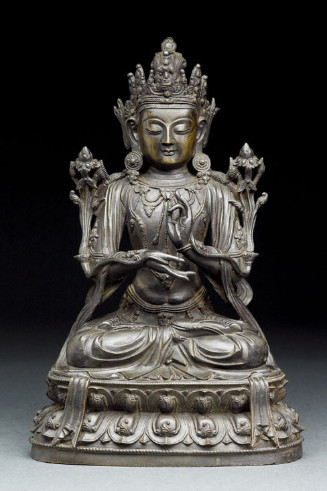
Figure of Avalokiteshvara seated in padmasana on lotus plinth. Right hand in varadamudra and left hand in vitarkamudra. Lotus stems held in each hand. Body adorned with beads and 5-pointed crown has image of seated Amitaba Buddha in center.
Chinese Artist
Ming Dynasty (1368-1644), 15th-16th century
null