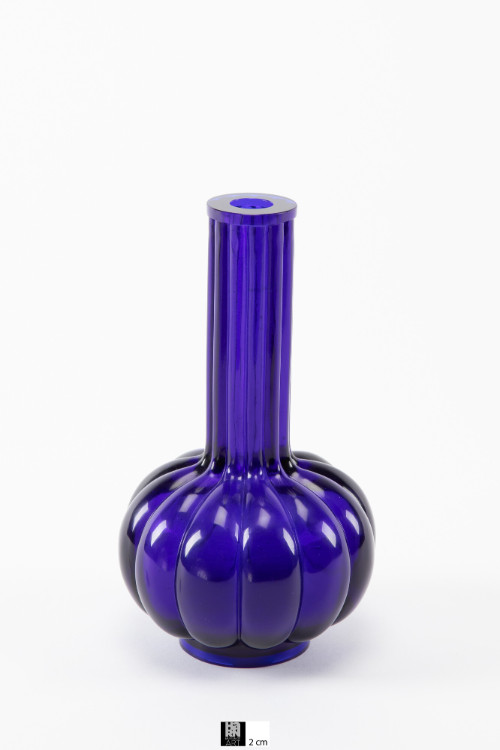
The bottle vase is exquisitely carved with twelve rounded lobes forming the globular lower body, continuing up the tall neck, surmounted by a disc-shaped mouth rim, all raised on a circular ring foot, the transparent glass of a deep sapphire-blue tone
Vase
Courtesy of the Harn Museum of Art, Photography by Foad Seyed Mohammadi

Vase

Artist Chinese Artist
DateQing Dynasty (1644-1911), Qianlong period (1736-1795)
Place of originChina, Asia
MediumGlass
Dimensions7 3/4 x 4 1/2 x 4 1/2 in. (19.7 x 11.4 x 11.4 cm)
ClassificationsFurnishings and Equipment
Credit LineBequest of Dr. David A. Cofrin
Object number2009.48.264
Collections
Visual DescriptionThe bottle vase is exquisitely carved with twelve rounded lobes forming the globular lower body, continuing up the tall neck, surmounted by a disc-shaped mouth rim, all raised on a circular ring foot, the transparent glass of a deep sapphire-blue tone (Christie's 2010 appraisal).
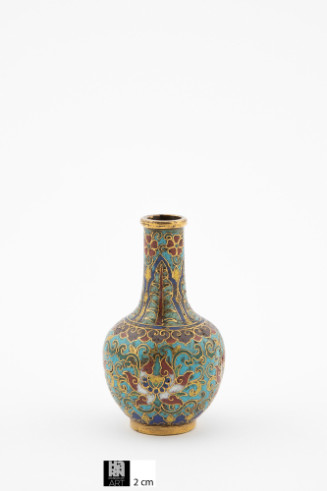
A fine cloisonné enamel vase of globular bottle form with a cylindrical neck and low gilt foot rim, decorated with ruyi-head lappets at the foot and around the shoulder; the body decorated with formalized lotus flowers, leaves and stems; the neck decorated with flowers above tall leaf-form lappets; all enameled in red, yellow, white, lapis blue, light and dark green, and aubergine on a turquoise ground.
Chinese Artist
18th Century
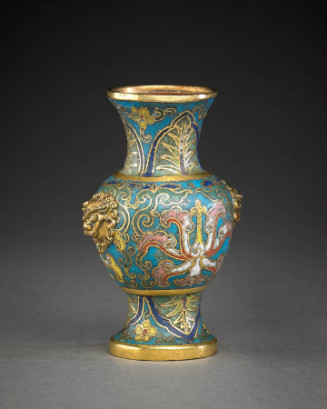
A fine miniature cloisonné enamel vase of baluster form, the rounded body set with two high relief gilt-bronze mask handles and decorated with lotus flowers and leaves, the tall flared foot decorated with flower heads and leaf lappets, the tall flared neck similarly decorated. All enameled in red, yellow, white, light and dark green, pink, and lapis blue on a turquoise blue ground.
Chinese Artist
18th Century
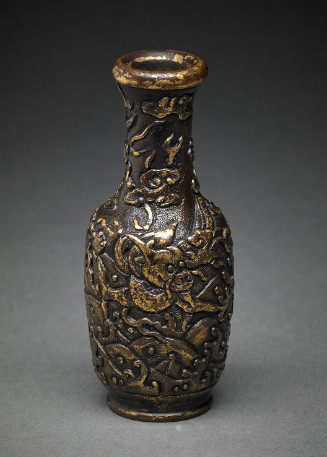
A fine and rare cast and chased parcel-gilt bronze incense tool vase, supported on a low foot rim, the body and slender neck decorate din gilded low relief with dragon amid clouds above a carp swimming amidst crested waves on a ring-punched ground. The underside of the recessed foot with a chiseled four-character mark in rounded seal script hu wen ming zhi (made by Hu Wenming) in a square gilded reserve.
Hu Wenming
17th century
Covered Vase with Imperial Inscription
Chinese Artist
18th-19th century or later
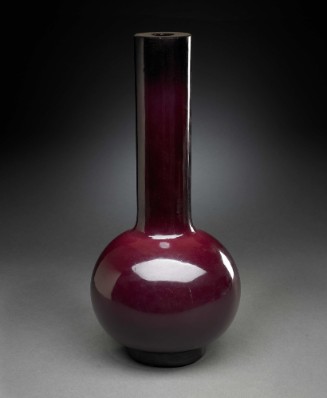
Of bottle form, the globular body surmounted by a tall cylindrical neck, the metal of deep burgundy tones, tiny chips
Chinese Artist
18th-19th century
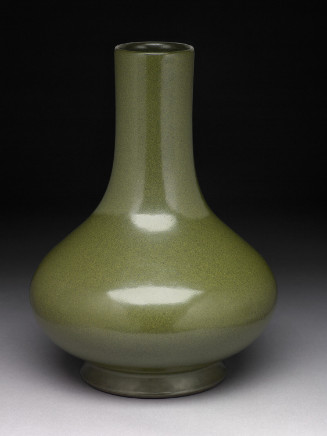
Teadust Glazed Pear-Shaped Bottle Vase
Chinese Artist
Qing Dynasty (1644-1911), Qianlong period (1736-1795)
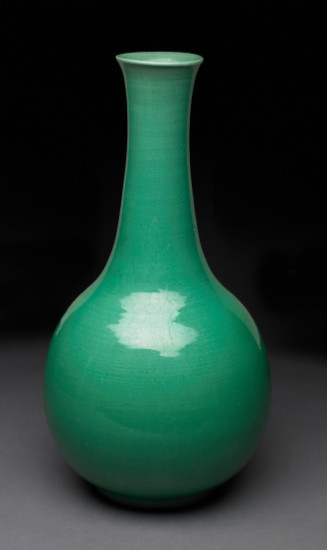
A rare apple green-glazed pear-shaped vase of globular form tapering at the shoulder and up into the neck before it flares out towards the rim, covered overall with a than glaze of soft apple-green tone continuing over the foot to cover the base.
Chinese Artist
Qing dynasty (1644-1911), Kangxi reign (1662-1722)
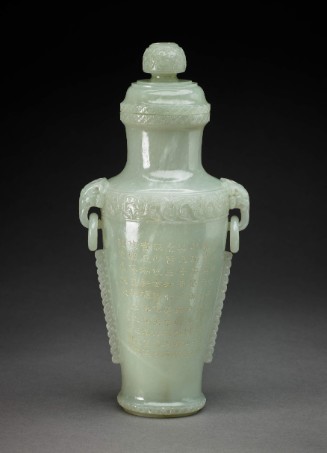
A Mughal-style vase and cover carved from celadon green nephrite with lighter inclusions. The vase is carved in an unusual flattened and fluted form that is elliptical in cross-section. Either side of the vase is carved with three leafy acanthus scrolls and hanging loose rings. The long flaring neck is carved on either side
Chinese Artist
19th century or later
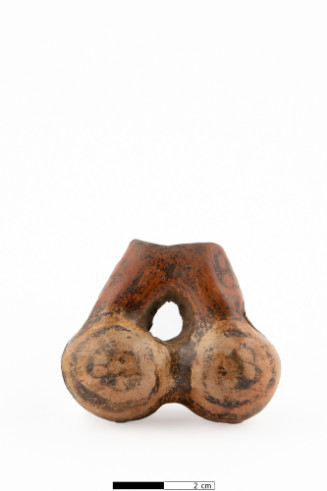
A ceramic whistle featuring two bulbous, tan lower lobes and reddish-brown arms that angle upward to meet at a single top opening, leaving a central hole. Dark brown painted circular designs decorate the lower lobes.
Panamanian
undated
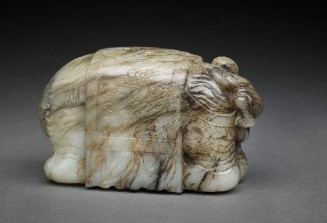
Well carved with an attendant holding a brush clinging to the rear haunches of the stocky elephant as it turns its head to the side, the blanket draped over its back decorated with fish leaping from waves below a yinyang symbol, the greyish-buff stone with dark brown veining (description taken from Christie's auction results, not donor appraisal
Chinese Artist
17th-18th century
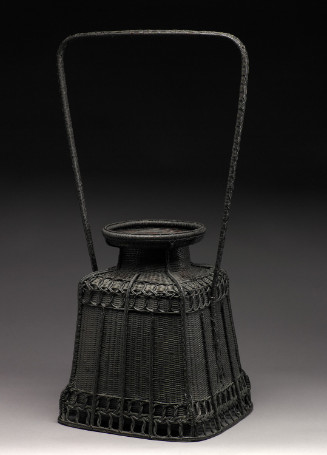
Flying Cranes Antiques: Rare ikebana basket of unusual form. Reminiscent of ancient bronze vessels, it has an elegant, tall and removable trapezodial handle sculpted with geometric wrapping. The flared skirt and neck are woven closely with thin strips of sooted bamboo, elaborate wraps and unique knots in the form of shrimp bordering the lower four sides at the base. Original kiriwood tombako signed "Made by Chikuyuusai I, karamono utsushi with handle, Tokugawa Family."
Chikuyuusai I
c. 1910-1920
null