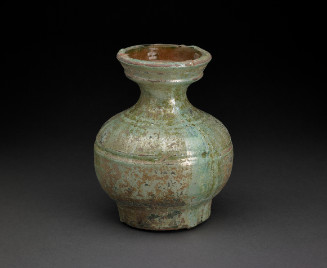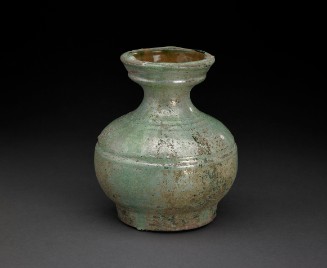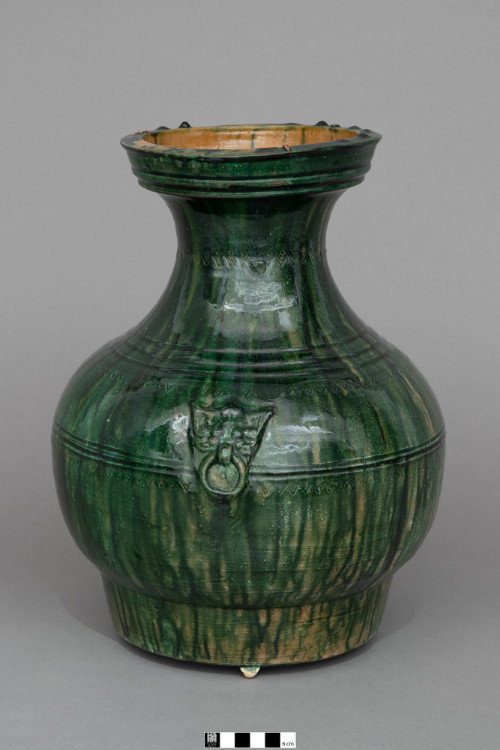
Vase with round body rising from a narrower base; incised rings around the middle and lower neck; pattern on the upper neck; substantial flaring.
Vase (hu)
Courtesy of the Harn Museum of Art, Photography by Foad Seyed Mohammadi

Vase (hu)

Artist Chinese Artist
DateHan Dynasty (206 BCE - 220 CE)
Place of originChina
MediumStoneware with green glaze
Dimensions14 3/4 x 11 3/4 x 11 1/4 in. (37.5 x 29.8 x 28.6 cm)
ClassificationsFurnishings and Equipment
Credit LineMuseum purchase, gift of Dr. and Mrs. David A. Cofrin
Object number1994.27
Collections
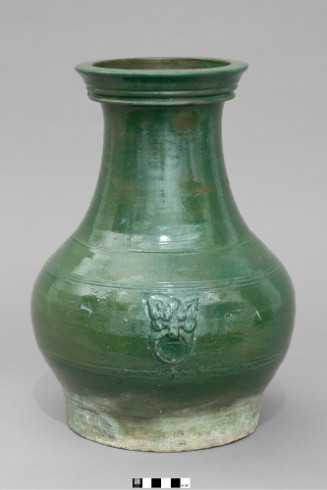
Visual DescriptionVase with round body rising from a narrower base; incised rings around the middle and lower neck; pattern on the upper neck; substantial flaring.
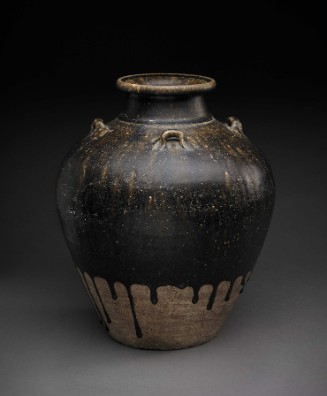
Large jar with broad base, tapered neck and flaring lips, applied mask/ring decoration.
Chinese Artist
206 BCE - 220 CE
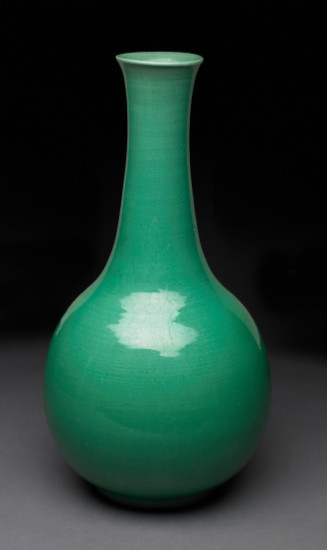
A rare apple green-glazed pear-shaped vase of globular form tapering at the shoulder and up into the neck before it flares out towards the rim, covered overall with a than glaze of soft apple-green tone continuing over the foot to cover the base.
Chinese Artist
Qing dynasty (1644-1911), Kangxi reign (1662-1722)
Carved with archaistic motifs
Chinese Artist
19th century
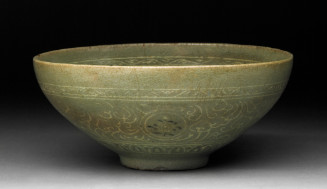
Exterior: large scale floral scroll with four roundels with chrysanthemums, enclosing rings with lappets (bottom ring) and scroll (upper ring); interior: interesting floral and scarf motif with inner circular floral device.
Korean Artist 작자미상 作者未詳
Goryeo Dynasty (918‑1392), 13th century
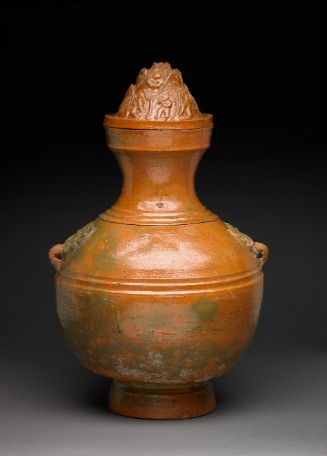
A bulbous ceramic jar with a sculpted, conical lid. It features an amber glaze with mottled green patches, a narrowed neck, horizontal bands around its middle, a short base, and two small loop handles on its shoulders.
Chinese Artist
Han Dynasty (206 BCE-220 CE)
A small greenish-grey ceramic vase with a flared rim, narrow neck, and round body. It features horizontal bands around its center.
Chinese Artist
Han Dynasty (206 BCE-220 CE)
A small greenish-grey ceramic vase with a flared rim, narrow neck, and round body. It features horizontal bands around its center.
Chinese Artist
Han Dynasty (206 BCE-220 CE)
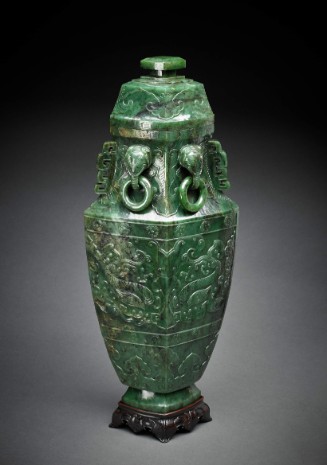
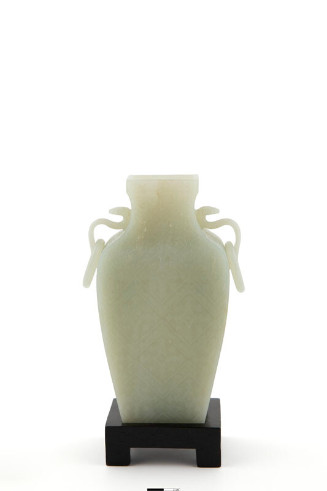
A jade vase of rectangular section, the sides gently tapering towards the slightly recessed base, the waisted neck with straight mouth rim, and worked in relief with two ruyi-sceptre handles from which loose rings are suspended. They body decorated overall in sunken relief with a geometric design of chevrons, clouds and squares. The stone a pale celadon stone. The base with an incised six-character reign mark Qianlong yu yong (for imperial use).
Chinese Artist
18th-19th century
A Mughal-style vase and cover carved from celadon green nephrite with lighter inclusions. The vase is carved in an unusual flattened and fluted form that is elliptical in cross-section. Either side of the vase is carved with three leafy acanthus scrolls and hanging loose rings. The long flaring neck is carved on either side
Chinese Artist
19th century or later
Vase
Chinese Artist
Qing dynasty (1644-1911), Qianlong period (1736-1795)
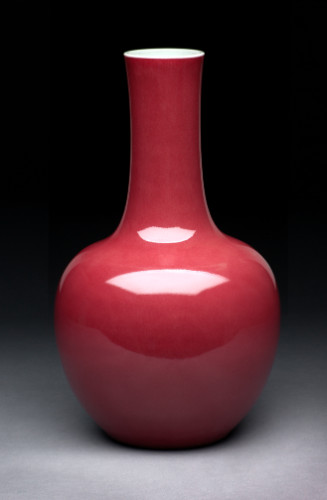
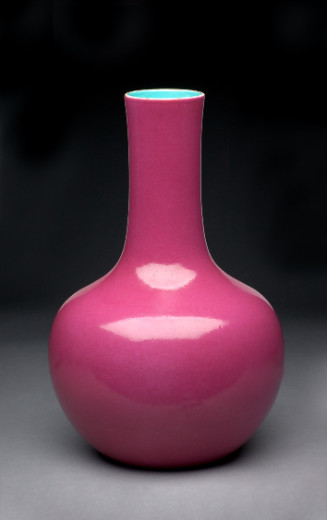
The well-potted body of globular form with a tall, slightly flaring cylindrical neck, the exterior all under a rose-pink glaze with a slight 'orange-peel' effect, the interior and base around the reserved iron-red seal mark all with a turquoise glaze, traces of gilt along mouth rim.
Chinese Artist
Qing dynasty (1644-1911), Qianlong period (1736-1795)
null